Watch this blog for Anaerobic Digestion News and information. This blog is unique. It is independent and carries News from all AD sources. We are not allied to any particular manufacturer or product, so you will see all the Anaerobic Digestion News here first.
Make no mistake, there have been significant advancements in food waste depackaging and separation equipment in recent years.
The industry is moving away from first-generation equipment, which consisted of repurposed machines originally designed for MSW sorting, milling, pulping, paper, and card and shredding, and toward purpose-built models that are the result of many years of innovative design.
List Criteria: Depackaging and Separation Machines
We looked for the following characteristics in the listed equipment:
Acceptance of a diverse range of biowastes, ranging from OFMSW (Organic Fraction of Municipal Solid Waste) to "Out of Specification." Food-processing-industry-related products
Off-the-shelf, tried-and-true designs are preferred over one-of-a-kind, custom-designed prototype equipment.
A process philosophy which avoids creating microplastics.
In contrast to suppliers who offer separate units for each function, such as bagging, the new generation of this equipmentis integrated and carries out multiple functions in a single process stage.
such as bag opening and shredding followed by separation and sometimes multiple other units
Suitability for the equipment to be used in conjunction with the anaerobic digestion process.
The best depackaging equipment will separate and capture organic packaging materials from food waste, and also separate and recycle as much of the reject material (e. g. plastics) as possible.
Subject to regulatory requirements, operators of the new generation of this equipment will be able to benefit from green credentials. These come from reclaiming the organic content of food waste and incorporating it into the highest purity quality, natural compost and sustainable soil products.
In the post CPO26 era, all businesses must not only act in a sustainable way but also make plans and publish targets to decarbonise their whole organisations by 2050 or earlier. One way to do this for any organisation which produces food waste, and even some other previously unused organic materials, is to carry out their own in-house depackaging and separation.
An example of government involvement in this process is the US Food Waste Management Program. This scheme is addressing a major issue of our time that directly affects the human and ecological balance of the environment. That is by reducing methane emissions while also creating renewable energy to displace the use of fossil fuels.
There is no doubt that climate change can be reduced by reducing food waste, and recycling more. Where unavoidable waste still occurs it makes sense to channel it back into the circular economy.
Efficiently depackaging food waste is a key component in this area.
According to the USDA, food waste represents 30 % of all American food manufactured. This can be due primarily to over-consumption in the homes and subsequently. In food production, there are evidently still many wastes generated in even the most sophisticated manufacturing facilities.
We have compiled our waste depackaging and separation equipment supplier list as a resource for all organic waste/ biowaste processors in the hope that we can assist in the selection of the most suitable equipment for their purchasing decisions.
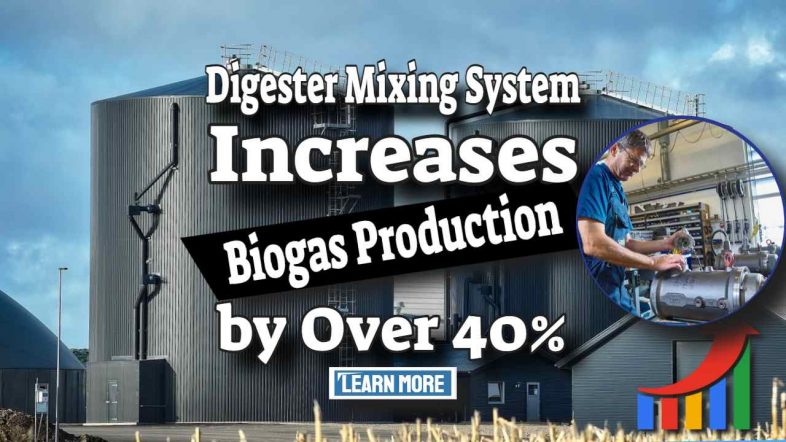
New digester mixing technology has helped a prominent food waste-to-energy plant enhance its biogas production by an average of more than 43%.
Biogas yields have been improved by Landia and Hayley Group working together closely.
Hayley Group, an engineering component supplier, was consulted about the availability of an alternative, superior mixing system for its customer's second digester; mixers that, unlike those in the first tank, would eliminate typical biogas process problems such as foam, blocking, and crusting – and in doing so, help boost the levels of methane in the gas.
Hayley Group’s Engineer, Rob Bentley, said:
“We constantly look to help customers improve efficiencies. This project is of particular note because, with the new, superior mixing system, the increase per cubic metre in gas from the second digester is over 40%. This is extremely encouraging, to say the least, especially when you consider that the second digester also has 10% less capacity than the older first tank”.
Depending on the size of the facility and the technology employed, a commercial microbial anaerobic digester can cost anywhere from $400,000 to $5,000,000 to develop. An anaerobic digestion plant on a farm costs about $1.2 million dollars on average.
Operating Costs
In 2022, a medium-sized commercial on-farm digester with 250 cows will cost around $0.30 to run all-in. Electricity sales will bring in around half of that.
Upgrading to biomethane raises costs, but in the appropriate circumstances, it can pay for itself.
Profitability in power generating is dependent on additional revenue from sources such as:
Entrance fees
Subsidies from the government
Sales of digestate as a natural fertiliser (liquid and fibre), bedding material (fibre), and insulating product (fibre)
On-farm or through delivery to a local greenhouse, business, or housing complex, combined heat and power (CHP) is used for home heating.
It is often possible to assure the profitability of a biogas plant by creative thinking and even by coming up with a unique "out-of-the-box" solution.
When compared to competitors, the Twister Food Waste Depackager and Separator
is breaking into new markets thanks to its low microplastics output and low
energy consumption.
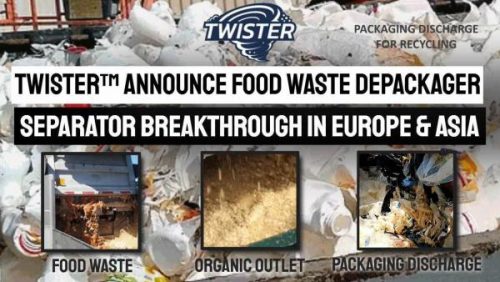
Twister announced today that their innovative Food
Waste Depackager and Separator has been purchased by new customers in Europe
and Asia. In the increasing EU and Asian markets, the small-footprint,
low-energy-use plastic waste reprocessing facility has established itself.
Since 2016, it has been in the works. It's a
decentralised organic processing system with exceptional separation performance
that was recently introduced in Canada.
Each opened, empty, and full box is ejected. The
"Twister" effect produces clean food waste that is free of
microplastics and suitable for anaerobic digestion.
"We wanted something distinctive for Drycake's
Twister," explains Mark Vanderbeken, Chairman and Founder of Drycake®.
"Anyone familiar with the food waste
depackaging industry will have noticed that everyone else looks to start their
depackaging and separation of source-separated organics by reducing particle
size." This is how most competing depackagers avoid congestion. They mill,
macerate, cut, or shred the plastic to make it into little pieces. Larger
pieces, on the other hand, are easier to separate than tiny ones, so why not
combine the depackaging and separation processes?"
Food Waste
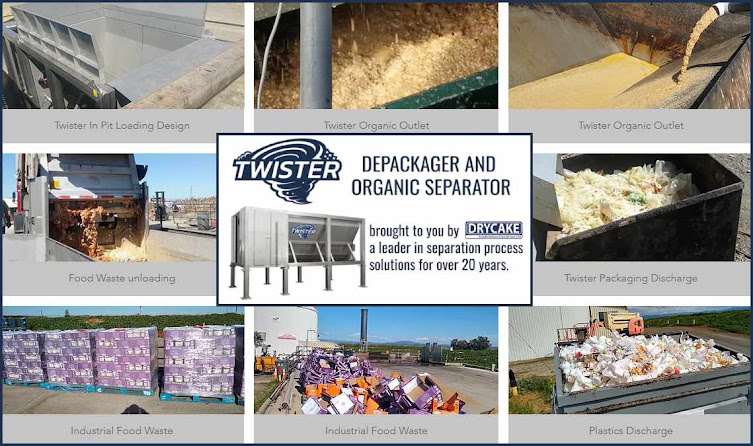
Depackager Separator from Twister (TM)
So DryCake went back to the drawing board and came
up with a method that doesn't require any cutting and isn't dependant on reducing
particle size by processing plastic. In actuality, they use shear forces and
vibration to open and remove biological matter in a high-speed vortex, causing
as little injury as possible while making as little microplastics as possible.
As a result, it has established itself as a market
leader in terms of sustainability by reducing the risk of environmental damage
caused by plastic pollution. Due to rising evidence of "ocean microplastic
ingestion," which is hurting ocean plankton and the food chain that
sustains all marine life, Drycake adopted this course of action.
Slicing, bashing, and crushing these materials
likewise consumes a lot of energy. Hammer mills, blades, and knife openers all
have moving components that wear out and need to be replaced. As a result, the
Twister only has a few moving parts.
"It must be preferred to avoid breaking up
plastic wrapping wherever possible."
Mark continued, "Then you won't manufacture
those microplastic particles in the first place."
As a result, Drycake predicted that this invention
would be in high demand right away. This company has strong prospects to
disrupt the market and become the industry-standard depackager provider in
Europe and Asia, with considerable environmental benefits.
On the one hand, they want to provide their clients
the option of running sustainable plastic recycling businesses, reprocessing
garbage into resin for use in new packaging as part of the "circular
economy," which is vital to averting runaway climate change. While also
providing biogas facilities with a high-quality organic paste.
They may offer this mixture, or "organic
soup," as feedstock to anaerobic digestion plant operators, allowing them
to create renewable energy in the form of biogas refined to biomethane.
Renewable Natural Gas (RNG) is compressed biomethane that may be injected into
town and city gas mains to heat our homes.
It's also ideal for use as a low-emission
transportation fuel throughout the transition to hydrogen technology.
Twister is also a novel concept, as its target
market is larger than city/regional MRFs and ERFs (Energy Recovery Facilities/
Incinerators). The small size is ideal for several locations around a city,
reducing RCV travel distances, lowering collecting costs and emissions, and
improving food waste collection efficiency.
Waste collection employees will spend more time on
the street collecting rubbish and less time sat in the cabs of their RCVs en
route to the MRF ERF or transfer station as a result of the Twister unit
distribution. Drycake will also design the entire process, as well as the
facility, if necessary.
Twister's low energy use, low carbon footprint,
simple maintenance, and high uptime are all features they wish to impress their
clients with. It's a sound long-term investment that's also environmentally
friendly.
In fact, supermarkets, organisations, and
institutions that run catering facilities, as well as clients in the food and
beverage industry, may discover that purchasing just one Twister unit will help
them achieve their sustainability goals. As a consequence, their company's
carbon footprint is reduced, and they may proudly showcase their really green
achievements for years to come.
It's always a risk to try anything new, but they
feel it's one worth taking. In this circumstance, not least to contribute to
the global environment's preservation and to develop a product that would help
in the attainment of Net-Zero Carbon 2050 emission targets.
How Twister, a vortex-based food waste depackager, Outperforms Rivals
Twister Food Waste Depackager technology
accomplishes this in four different ways:
1. Combining two operations into a single unit to
save energy and water.
2. Reducing dependency on fossil fuels (e.g., oil),
which produce much more "greenhouse gas" carbon when things are made
from virgin plastic resins instead of recycled.
3. By transforming food waste into a plastic-free
paste or slurry that may be used to power a biogas plant, which provides
sustainable energy while emitting very little net carbon dioxide. This
eliminates the need to develop oil or gas geological deposits once more.
4. When organic slurry is digested and applied to
agricultural land, it decreases carbon emissions by reducing the requirement
for chemical fertilisers on the part of the farmer. Traditional fertilisers are
derived from geological deposits. They need a lot of fossil fuel to extract and
transport them, therefore this notion contributes even more to environmental
preservation.
Conclusion on the Twister Food Waste Depackager
Drycake has been a global leader in separation
solutions since 1995. Since its founding, it has provided market-disrupting
process equipment and design for sustainable waste reuse, recycling, and energy
recovery on a global scale.
This isn't the first time Drycake has gone against
the grain. They previously made a splash with the Plastifloat, a waste reuse
and materials recovery system for municipal and industrial wastewater. A
straightforward yet effective method for extracting plastic from liquids.
Drycake has grown into Europe and Asia, in addition
to previous sales in the Americas, and the Twister Food Waste Depackager is
aiming for global recognition. More information may be found in the following
article: Vortex Depackager and Separator by
Twister
Visit https://www.twisterseparator.com for more
details.
Also see https://drycake.com for more information.
“Methane Mitigation”which can be defined asusing the anaerobic digestion (i.e. biogas production process) to help humanityin the fight against climate change, is the core subject announced for theWorld Biogas Summit 6 -8 July 2021.
It will be “All About Methane”!
Find out more by reading the ADBA Press Release reproduced below:
WBA Press Release 29 June 2021:
International Energy Agency and Climate and Clean Air Coalition to headline the “It's all about the methane” World Biogas Summit 2021
Held online from 6th to 8th July, the World Biogas Summit 2021, organised by the World Biogas Association (WBA), will feature Keisuke Sadamori, Acting DeputyExecutive Director of the International Energy Agency and Drew Shindell, Special Representative for Action on Methane, Climate and Clean Air Coalition as keynote speakers – leading an impressive line-up of eminent figures from not only the global biogas sector but also from the worlds of finance, retail and urbanism.
Entitled “It's all about the methane”, the 2021 Summit programme will review how to efficiently capture organic wastes, recover the gases and nutrients they contain and recycle them in the form of clean energy and natural fertilisers – achieving GHG emissions savings, displacing fossil-based equivalents, restoring soil health and helping reduce the carbon footprint of hard-to-decarbonise sectors such as heat, transport, agriculture and waste management – thus contributing to countries meeting their Net Zero targets.
Ahead of his address, CCAC's Drew Shindell said: “
Methane mitigation is one of the most significant climate actions the world can take this decade. There are cost-effective solutions that can be implemented immediately, and the benefits far outweigh the costs. The world needs to make 2021 a ‘methane moment,’ by committing to implement policies and measures to rapidly reduce methane emissions and working to drive a decade of methane action.”
Click on the image above to find out more!
There's no Net Zero without Biogas: ending waste, delivering the circular economy, tackling the climate crisis.
"Biomethane the key option to decarbonise heavy vehicles immediately";
says trade body in a new publication
Biomethane: Fuelling a Transport Revolution reviews how the anaerobic digestion and biogas industry can help decarbonise heavier modes of transport, such as trucks and buses, much sooner than electricity or hydrogen.
· The Policy Briefing report by the Anaerobic Digestion and Bioresources Association (ADBA) details the GHG emissions issues facing the UK transport sector and explores the solutions available for heavy goods and public transport vehicles, which alone generate 20% of current emissions per year.
· Rapid deployment of biomethane for HGVs could reduce GHG emissions by 38% over the next 10 years. Current technological barriers to powering heavy vehicles with electricity or hydrogen mean these future fuels could only cut emissions by 6% over the same period.
· Major fleet operators are already making the transition to biomethane trucks and buses.
· Fuelling HGVs with biomethane can cut well-to-wheel emissions by 80% per km driven and greatly improve air quality.
· As well as decarbonising transport, biomethane can boost an entire economic sector, with ROI for hauliers achieved within two years of operation.
Earlier this month, the Anaerobic Digestion and Bioresources Association (ADBA) launched a Policy Briefing report demonstrating the crucial role biomethane could play in decarbonising transport in the UK in the short-term.
In the first of a series of Policy Briefing Events, the trade body presented Biomethane: Fuelling a Transport Revolution, which analyses the UK transport sector's issues and explores the options presented by electric vehicles, hydrogen and biomethane.
The research highlights the value of biomethane in providing a green fuel alternative for heavy good and public transport vehicles - immediately. Trucks and buses currently generate 20% of the UK's greenhouse gas emissions from transport, which is itself the highest GHG emitting sector in the UK (27%).
" Transport is the most polluting sector and its GHG emissions levels have not changed over the past decade. "
, explains Charlotte Morton, ADBA's Chief Executive.
"Biomethane is ready to be produced, ready to be used, and can decarbonise heavy vehicles transport here and now. At time when the pollution levels exceed WHO guidelines on 97% of UK roads, we can not afford to wait 15-20 years for electricity or hydrogen solutions to become ready."
A 2020 report by Element Energy shows that rapid deployment of biomethane for HGVs would reduce emissions by 38% over 10 years, whilst waiting for hydrogen/electric HGVs to be manufactured would deliver only 6% over the same period.
Biomethane is particularly appropriate for public transport, long-haul logistics and food distribution vehicles. Household names and cities such as ASDA, Royal Mail, Nottingham City Transport and Liverpool City Council are already making the transition for their delivery fleets and buses.
The report reveals that fuelling HGVs with biomethane can cut well-to-wheel emissions by 80% per km driven, compared to diesel, and that the Return On Investment (ROI) for fleet operators is achieved within two years.
"Using biomethane as a transport fuel is an immediate “no regrets” option that not only contributes to significant cuts in GHG emissions from HGVs, but also stimulates continued growth in the UK biomethane sector."
says Philip Fjeld, CEO of CNG-Fuels.
"As the refuelling network expands across the UK, biomethane as a transport fuel will become a win-win solution that is available to all hauliers and that continues to reduce the carbon footprint of a sector that has always been seen as very hard to decarbonise".
With the launch of the CNHi Biomethane tractor and small scale on-site methanation units, agriculture could be the next sector to benefit from the availability of biomethane to reduce its GHG emissions. The biomethane sector is therefore primed to play an increasingly crucial role in helping the UK achieve its Net Zero targets by 2030.
The World will fail to meet promised Paris 2015 Accord Climate Targets unless action is taken now to reduce organic-waste methane emissions.
Globally all governments must act now to start cutting highly damaging methane emissions from the breakdown of organic waste now, or they will be by default simply abandoning their pledges – is our interpretation of the latest WBA report just published.
All those hard-won ‘Paris Accord' promises will simply go for nothing and the fervent hope of all people, especially the young, that global warming can be defeated will be hit a body blow.
That's because although carbon dioxide (CO2) is most often talked of as the climate-changing gas most worrying, methane (for a long while quoted to be 32 times worse – but is now known to be 85 times1 worse due to it's longer persistence in the atmosphere.
Read our full article including the Press Release by the World Biogas Association in full here: