Wednesday, September 09, 2020

Home Cooking with Gobar Gas - Biogas Stoves for Small Scale Digesters

An in-depth article about biogas stoves, covering everything for small scale digesters and home cooking with what in India is known as gobar gas. Read on for the info on biogas stoves:

What is a Biogas Stove?

A biogas stove is a specially adapted, stainless steel, countertop, or built-in, biogas fuelled stove.

Using a stove which is either intended or modified, to run on biogas (gobar gas) is the easiest method for home and small scale, biogas digester beginners. These stoves are small, most have no more than two burner rings, and are often portable. They can usually be positioned as needed in order to accommodate other kitchen appliances on the countertop.

They are most often manufactured from stainless steel or cast-iron. Some can be used as a built-in single burner stove specially adapted to cook with biogas. One brand of biogas stove is designed to slide into a stove range or be built into a countertop and is perfect for those who have limited kitchen space.

Biogas is the gaseous product of breaking down organic matter in the absence of oxygen (see "Anaerobic Digestion"). It can be used to meet the energy need for cooking and baking in individual households as well as in small businesses.

Stoves and ovens for biogas application are similar to conventional appliances that run on commercial fuels such as butane and propane. However, special modifications (particularly in the design of the burners) are required in order to ensure proper combustion and the efficient use of energy.

At this website, we have received so many queries regarding the non-availability of Biogas Stoves, and we are not quite sure why so few are on the market for sale. We assume that the reason is that the demand for biogas stoves is so low compared with other fuels that stores do not consider it worthwhile to stock them. It is difficult to buy biogas stoves both in rural areas and in big cities.
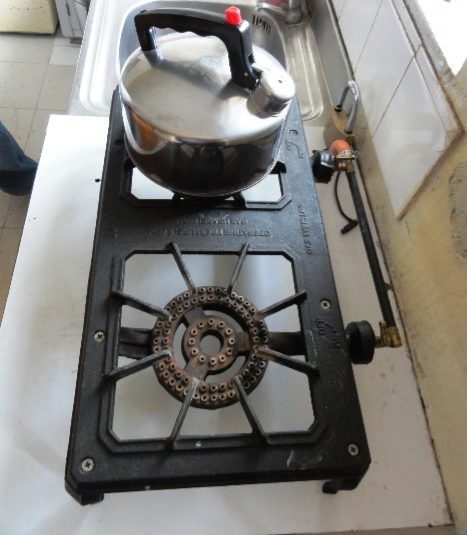
Close up of one of the biogas stoves discussed.
CC BY by Sustainable sanitation

However, not many people are aware that you can use a normal LPG stove to run on biogas with simple modifications. In fact, you will not find much difference if you look at both an LPG Stove and a Biogas Stove normally.

Most of these conventional appliances can be adapted for the use with biogas by the modification of the burners to ensure proper combustion and efficient use of energy.

Several grassroots and nonprofit organizations (such as Heifer International and it's partners) have in recent years started biogas fueled stove manufacturing projects to allow people in impoverished communities to have a sustainable way to cook their food and heat their homes.

Stoves for Small Scale and Home Biogas

By far the biggest demand for biogas stoves comes from the millions of small scale domestic and smallholding type biogas plants ranging in design from digesters based upon oil drum sized vessels all the way up to the community (e.g. village) biodigesters built in-pits with masonry walls and covers.

The gas pressure at which these stoves must operate is low and highly variable, and the same goes for the proportion of methane present.

One thing that doesn't change though, is that biogas burns over a narrow range of mixtures containing 9 to 17 per cent of biogas in the air. If the burning flame has too much gas, the burn will be poor and incomplete, giving off poisonous carbon monoxide and contain a lot of soot particles. via babiogas

A good biogas stove design aims to maximize the conversion of methane and to reduce unburned methane and soot from incomplete combustion. For this reason, a biogas stove design should burn on the lean side with a small amount of air to avoid the flame becoming rich. In a good biogas stove design, the air is mixed with the gas prior to when it is burned to ensure the correct air-gas mix is obtained. There are other problems to solve which are known as:

  • lighting back,
  • flame lift,
  • pressure drop at the burner manifold.

A successful biogas stove design must avoid those problems and deliver the flame where the heat of combustion can efficiently conduct its warmth into the cooking vessel.
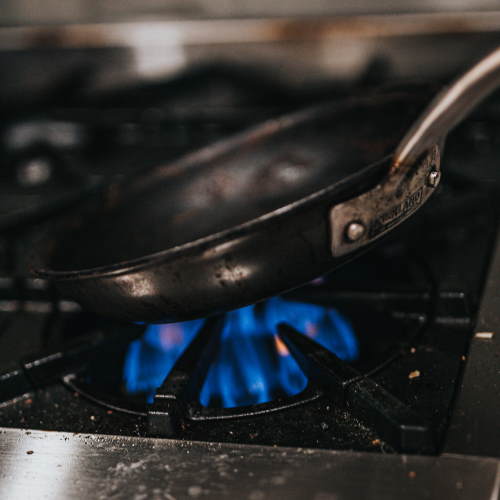
Cooking on a biogas stove.
Potential Improvements from Biogas Stoves

Stoves and ovens using biogas have the potential to improve the wellbeing of marginalised people. They offer an excellent opportunity to put an end to the indoor air pollution generated in the kitchens of many poor families around the world, as well as treating organic waste that commonly represents health and environmental threats.

Local manufacturers of biogas stoves are, therefore, emerging in many countries. There appears to be significant potential to improve the combustion efficiency and overall quality of the stoves which are currently being offered on the market. It is hoped that as sales increase competition will become greater and the sellers with then match the quality of today's best gas stove brands.

Domestic Appliances Running on Biogas

As a gaseous fuel, biogas can be used for many domestic tasks. A common practice is the adaptation of commercial appliances that originally ran on fossil fuel gases, such as liquefied petroleum gas (LPG) or natural gas.

Biogas from small digesters may contain carbon dioxide and water vapour and is at low pressure flows out of burner holes. It flows through stoves with less volition and therefore has a lower calorific value than LPG (or natural gas) and therefore cannot be used to run normal LPG gas appliances. Regular appliances can be modified to run on biogas by enlarging apertures (theoretically a simple process, but a lot more tricky in practice).

There are a number of domestic appliances in addition to Stoves and Cookers which can be fuelled biogas. These are:

Cost of Household Biogas Systems

Costs for any plant require initial investment costs and once built, they also incur running costs. Considering the initial capital cost versus the financial and environmental benefits is important. It is estimated that an 8 m3 household biogas tank can treat the manure from 4 to 6 pigs, yielding around 385 m3 biogas annually. That suggests that such a plant can save 847-1,200 kg of coal-based on the calculation of effective heat equivalent. According to the methodology recommended by IPCC in 2006, if a household biogas digester treats the manure of 4 pigs, it can reduce GHG of 1.5~5.0 tonnes CO2e.

The initial equipment purchase and installation costs of each household biogas digester (8-16 m3) range from US$500 to US$1,000 depending on the digester size. Most rural households within developing countries have low disposable income and weak financial capacity for making such a large investment. In addition, the household will continue to pay a biogas digester maintenance cost. By contrast, the current practice of deep-pit treatment method is by far considered the most attractive option for manure treatment given that it requires very limited additional investment and labour input. via www.ctc-n.org

The cost functions for a biogas plant are thought of by one research group as being:

  1. The economies of scale
  2. The ratio of the cost of a given size of the plant to the cost of a reference plant (this remains almost constant over time)
  3. The effect of retention time and other factors on the capital cost
  4. The costs of the material (if it must be brought in from outside the farm or home).

Using a Biogas Stove

Biogas can be used in gas appliances for energy production which is then used for heating, lighting, the supply of steam plants, in water boilers, gas stoves, infrared radiators and internal combustion engines.

The simplest method of biogas utilization is using it in burners, as it can be directly supplied from low-pressure gas holders, but it is more preferable to use biogas for mechanical and electrical energy production. The best biogas stove sellers offer designs that are specifically developed for the low-pressure gas burners needed to burn biogas direct from small digesters or from storage holders containing biogas.

Gas pipes are also needed that can effectively connect the point where you collect the accumulated biogas and the stored gas through gas lines to the home stove.

The stainless steel, built-in single burner stove is specially adapted to cook with biogas. The HomeBiogas stove is designed to slide into a stove range or be built into a counter-top and is perfect for those who have limited kitchen space.

After selecting the type of digester, the retention time, which is a key parameter in determining digester size, is chosen to maximize the percentage of production of biogas with respect to the retention time. 10 to 30 days is often chosen as the minimum amount of time for sufficient bacterial action to take place to produce biogas and to destroy many of the toxic pathogens found in human waste, considering the diameter and height of the mixing pit are equal.

At the household level, biogas systems can also be used to produce fertilizer and for providing energy for cooking and lighting.

Safety pilot and air filter Biogas-fueled radiant heaters should always be equipped with a safety pilot, which turns off the gas supply if the temperatures go low i.e. the biogas does not burn any longer.

Biogas consumption can be calculated from assuming that household burners consume 0.2 to 0.45 m3 of biogas per hour and industrial burners – from 1 to 3 mof biogas per hour. Biogas volume, necessary for food preparation can be determined from the time spent on daily cooking.

Using a Regular LPG Stove

Using 1-2 burners for biogas in addition to your current LPG stove is a good way to set up a kitchen to use biogas whenever possible. If a user chooses to connect a "HomeBiogas"™ digester to a regular stove, the user should be aware of the energy requirement of the stove.

The Biogas stove is different from the LPG regular stove since low compressed bio-methane is a far less compressed gas than LPG, the gas burner flame openings need to be wider for better combustion.

The first time that a new digester set-up is used, the gas in the tank won't burn as it contains Carbon Dioxide gas. If, fortunately, it burns then good, or else wait for the second time after draining the first tank-load of gas. The second use will be likely to be much better quality biogas, and thereafter will usually be good methane. You can detect how much gas there is in the system when the gas holder tank rises up as the gas is produced.

How to Modify a Normal LPG Stove to Run on Biogas

So it is very difficult biogas stoves in big cities. However, you can use a normal LPG stove to run on biogas with simple modifications. You will not find much difference if you look at both LPG Stove and Biogas Stove normally.

The Biogas Burner I am showing has 3 mm holes in it. Take an LPG stove, unscrew and remove the nozzle, and this may be enough, also close any air-entraining/ mixing gap provided for LPG use. You can control the pressure and required amount of biogas with the gas control knob provided.

Check by comparison with existing burner the operation of it with biogas after removing the nozzle. If it is burning properly, then leave it as it is otherwise necessary to search for a burner of the same diameter. Burners are of different sizes. So take your LPG burner when searching. In our locality, there are hardware stores fabricating and selling local-made stoves for biogas use.

[caption id="attachment_4664" align="alignleft" width="500"]Featured image text biogas stoves CC BY by DFID - UK Department for International Development[/caption]

Once you did the modifications, Connect Biogas pipeline to your stove and check your stove and it should run on biogas properly. via ww.instructables.com

Do not add anything other than cow dung slurry and organic waste. Once gas formation starts, you can feed organic waste in small quantities. Make sure there is no leakage. Also, be aware that the initial gas produced will not burn as it will be mostly carbon dioxide.

Release the gas 2 to 3 times before testing. Use a Bunsen burner to test and DO NOT use a lighted match stick for testing. If the gas pressure is too low to fuel the bunsen burner, add some weight on top of the gas holder to get a better pressure.

LPG Stoves Versus Biogas Stoves

Almost any gas stove can be converted to support biogas by removing the pressure nozzle. However, one stove cannot supply both LPG and biogas.

For an LPG stove versus Biogas stove, the LPG stove wins for its low cost for a high-quality product. Lightweight and portable. Check that the one you buy has easy to use heat adjustment dials.

Against this background, for the biogas stove, you will most likely need a match to light the stove. In addition, heat adjustment is not precise.

If you're looking for something simple on holiday, a butane stove can be perfect for you. It's our favourite, for a solo camper looking to make a simple but delicious meal is a cheap LPG stove.

However, for the poor and any environmentally aware person, the biogas stove is considered far better with its wonderfully "green" environmental benefits and its value in reducing the unhealthy smoke found in so many developing nations in houses where wood would be the only economically alternative cooking fuel.

Methane Used in Puxin Biogas Stove

From its first decade, the Puxin methane program was a success. It installed more than 20,000 biogas stoves (or biodigesters) in that period. Digesters that enable rural households to turn the waste of their cows and pigs into a methane-rich gas suitable for both cooking and lighting, as well as bio-slurry (predominantly used as a substitute for fertilizer).

To begin explaining biogas stoves, it is probably useful to first think about what "biogas" is? biogas is essentially another word for

For instance, the 5,000l package comes with the digester, one purifying biogas (methane purifier) MP 12 135 (PVC), a gas holder with a capacity of 5 m3, one generator bg 2500 w (biogas power generator 2500 watts), bacterial methane activators gp-7 for 1 month, installation of equipment, and stoves. a gas mixture that is predominantly made up of methane (CH4) and carbon dioxide (CO2).

Puxin Biogas Oven

Cookstoves and ovens for biogas application are similar to those of conventional appliances running on commercial gas-fuels. A biogas stove usually has a single or double burner with varying gas consumption rates, which is influenced by the pressure provided by the biogas plant and the diameter of the inlet pipe.

Stoves and ovens for biogas application are similar to conventional appliances that run on commercial fuels such as butane and propane.

Biogas Fuel Stove with Single Burner

Biogas combustion is so much cleaner than other fuels, such as solid biomass and kerosene, that it must be considered. However, for these advantages to make it worth buying a biogas stove it depends on the quality of the biogas stove (particularly the burner).

The HomeBiogas™ stainless steel, built-in single burner stove is specially adapted to cook with biogas. This stove is designed to slide into a stove range or be built into a countertop and is perfect for those who have limited kitchen space.

Friday, August 14, 2020

Biogas Potential Ignored in New UK Think Tank Report

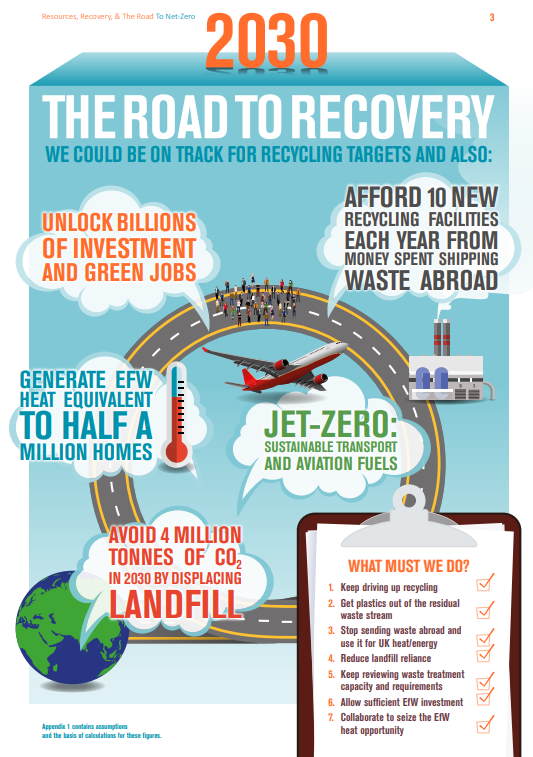
An influential Think-Tank report has now been published by experts who should know better, and which completely misunderstands and ignores the full scope and potential of the anaerobic digestion and biogas industry “on the road to recovery”.
Road to recovery graphic from "No Time to Waste" UK report in which Biogas Potential Neglected.
Only 1 mention of AD in the whole report: Click on the image above to enlarge it to read small text.


Referring to AD solely as a technology for the treatment of food waste and only once in the entire report, shows such a lack of knowledge that it simply has to be called out for the nonsense it is.

But, it doesn't stop there as unfortunately the omission of any proper recognition of the potential of biogas, results in a conclusion which lacks any reference to action on energy from waste by anaerobic digestion.

ADBA (The Anaerobic Digestion and Bioresources Association) has published their own reaction to this report, which is reproduced below:

It is time to understand AD: ADBA responds to Policy Connect report


ADBA Press Relase Posted on 06 Aug, 2020 by Giulia Ceccarelli:

Out of the 674 anaerobic digestion (AD) plants in the UK, just over 100 treat solely food waste, over three times as many treat agricultural wastes and 164 wastewater, while the rest treat a combination of different organic wastes. All are turning what we perceive as ‘waste’ organic material that would otherwise be causing a health hazard and emitting harmful methane emissions, into green energy and natural bio fertilisers, demonstrating AD’S role at the heart of the circular economy of organic wastes. AD, therefore, has a central role to play in waste policy in the UK. The first step is to understand this ready-to-use technology.

In mentioning AD, the latest Policy Connect report, which calls for a Scandinavian approach to waste policy in the UK and argues in favour of Energy from Waste (EfW) versus landfilling, commits the mistake of referring to AD solely as a technology for the treatment of food waste.

AD is a widely available circular economy technology (indeed it has been treating our sewage here in the UK for decades), which has been recognised as the preferred technology for managing residual food waste, as acknowledged in the Policy Connect report. However, its role in recycling wastes to generate energy goes far beyond that. AD treats, and most importantly, recycles, a much greater range of organic wastes into green renewable energy and a low carbon biofertilizer, digestate, that recovers nutrients and organic matter to help restore our depleted soils.

When pledging to achieve Net Zero by 2040, the National Farmers Union identified AD as a key technology to meet its ambitious target.


“AD has a role in agriculture across all scales”, said NFU Chief Renewable Energy Adviser Jonathan Scurlock, “using animal manures, crops and crop by-products to create low-carbon gas to replace fossil fuels and petrochemicals, while returning nutrients and organic matter to land – and perhaps in the future to actively remove CO2 from the atmosphere.”

AD is also a vital technology for the treatment of wastewater.

“EFW plants certainly have a role to play in recycling some wastes”, said Howard Burton from leading pump and mixer manufacturer, Landia, – “But with the increasing amount of digester mixing equipment that we are supplying to UK water companies, we can see first-hand just how valuable a feedstock wastewater sludge is for Anaerobic Digestion plants. AD/Biogas provides a tremendous opportunity to bolster both electricity and gas supplies, whilst also recycling a wide range of organic wastes (not just food waste), and producing a valuable fertilizer.” 
ADBA Chief Executive Charlotte Morton said:
“AD and the specificity of our sector remain widely misunderstood. Since this technology by definition has application in many different sectors, AD is often grouped with other technologies under various labels – EfW, Renewables, Bioenergy, Biofuels – without a clear understanding of AD’s role at the heart of the circular economy and its enormous potential. Lack of awareness is often the underlying cause, therefore we at ADBA call on the Government, civil servants and local authorities to attend ADBA’s L&D event “Introduction to AD” on 25th August to educate themselves on this incredible technology which can deliver a 6% reduction of total UK carbon emissions today, and with it 30,000 new green jobs.”
– ADBA Press Release ENDS –

Why The Policy Connect report “No Time to Waste” Needs Re-thinking to Add the Role of Anaerobic Digestion and Biogas Where It Should Be

Wednesday, July 15, 2020

Make Biogas from Rice Crop Residues and Stop the Burning of Rice Straw Throughout Asia

Rice straw biogas production from rice crop residues is a proven technology that is still completely untapped and at the same time stop the smoke from burning rice fields after each crop.

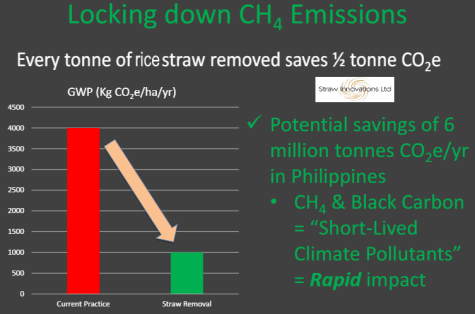
Around 300 million tonnes of waste rice straw is burnt in fields across Asia every year. Rice accounts for 48% of all greenhouse gas emissions from crops globally, or 1,000 MT of CO2e/yr. Straw burning is producing smoke so thick it can block out the sun for days on end in the main rice-producing regions. This comes at great cost in respiratory ailments and early deaths.

As the global population grows, more rice is produced, leading to yet more straw burning every year. And the sooty “black carbon” particles in the smoke are far more potent global warmers than the gases most people worry about, such as carbon dioxide.

Rice straw biogas diagram showing the CO2 reduction possible.

Straw Innovations

One company which believes it has the answer to this problem is Straw Innovations Limited, with biogas operations in Laguna in the Philippines.

What Straw Innovations are saying is revolutionary, because if implemented globally their plans for the anaerobic digestion of rice straw would transform this major waste into:
A major asset as a renewable fuel source: locally produced 24/7
Valuable compost or fertiliser that can build soil fertility
Increased rice productivity, enabling three crops per year instead of just two
A means of rural development and job creation, right where they are so much needed in the midst of the developing nations.

A Global Vision for Rice Straw Biogas from Anaerobic Digestion


It is hard not to be impressed by the vision of their Director, Craig Jamieson, who recently presented to the World Biogas Association's eFestival attendees stating that:

“If all available rice straw were to be digested, it would reduce global CO2 emissions enough to offset all of the CO2 currently emitted by the entire global aviation industry (918 MT of CO2e/yr), leaving the resulting biogas from the anaerobic digestion process to power their farms and localities.”

“It would also save a huge problem with rice straw stubble burning where 300 million tons are now being burnt every year, just in Asia. If you have ever visited cities such as Delhi in India during the rice straw burning season you will know just how appalling it is to have to live with the smoke that creates.”

“Governments are progressively banning the burning, but farmers frequently don't see any alternative, and therefore aren't complying. The race is on to find ways of using all global rice-waste in a way that doesn't simply end-up causing another problem to further impoverish the world's poor”.
Many local jobs would also be created to serve the biogas industry locally, and the need for importing energy from abroad in these nations would be greatly reduced.

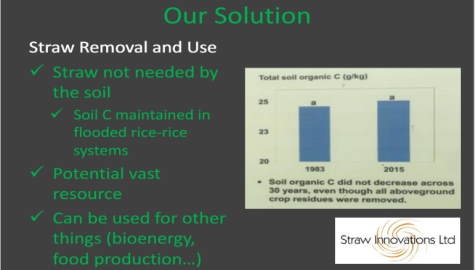
Diagram of rice straw removal and use.

Rice Agronomics and “To Burn or Not to Burn”

The most obvious solution would seem to be simply returning the rice straw back into the soil. The problem is that it then rots in waterlogged ground, producing methane emissions. Methane is a greenhouse gas, approximately 25 times more potent than CO2.

Another disadvantage of returning it to the land is that waiting while the previous crop decomposes delays the establishment of the next rice crop.

Burning the rice crop-waste in the fields reduces methane emissions by 50%, but results in local air pollution, including black carbon which also traps heat in the atmosphere.

“Upland rice” or “aerobic rice” can be grown instead, where the fields are not flooded. Then the straw can be returned to the soil without the high methane emissions. However, upland rice suffers from lower yields and much greater weed problems, which require hand-weeding or the use of herbicide chemicals.
Other Solutions – Alternate Wetting and Drying (AWD)

A compromise is to alternate between flooding and draining rice fields. This can enable higher yields and reduced weed growth (as with flooded fields), but with reduced water use and lower methane emissions (because it’s not continuously flooded).

However, AWD can increase emissions of N2O – one of the most potent greenhouse gases – especially if not well managed, and the drying phase is not always possible in countries with heavy rain seasons.


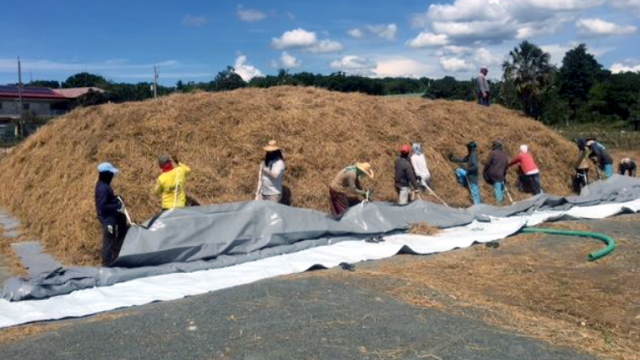
Sheeting over the dry straw for digestion.
Covering a new batch of rice straw to exclude air and produce biogas.

The “Straw Innovations Limited” Biogas Plant Solution

Straw Innovations Limited has been researching and developing rice straw biogas technology since 2017, partnering with Universities and other biogas companies keen to innovate in what, if their voice is heard, will become a $multi-billion industry.

Financial assistance has been provided by the UK Government, which has enabled them to trial an innovatively simple and low-cost dry anaerobic digestion process, with support from British universities and QUBE Renewables.

Their solution is to remove the rice straw from the fields and co-digest it with manure. With most crops, removing all the crop residues would lead to loss of organic matter in the soil, but with flooded rice-rice systems, this is not a problem. The lack of oxygen reaching the soil means that any organic matter breaks down more slowly.

Just leaving the crop roots in the soil after harvest provides enough organic matter to retain soil fertility; hence all the straw can be safely removed and used for other things. That being the case the collection and use of rice straw in the anaerobic digestion (AD) process can truly be a sustainable process.


straw-burning-in-vietnam
At the end of every growing season, rice farmers burn off all the leftover rice straw on Vietnam's fields. This process produces huge amounts of carbon emissions. – CC BY-NC-ND by Ratclimaa

Anaerobic Digestion of Rice Straw: a Big Opportunity

Anaerobic digestion has so far been adopted mostly in three areas of activity, using “wet AD technology” these being:

– Domestic and small community waste: in developing nations – especially China where several million low-tech biogas plants have been built and operated. They continue to provide much needed clean fuel and fertiliser to rural communities.

– Municipal Wastewater Sludge Treatment from the Activated Sludge Process: in industrialised nations, these have been in use for more than 50 years but are being installed now at an ever-increasing rate to enable water companies to decarbonise their operations. The best of them are using their AD plant biogas to help power operations and move rapidly toward corporate goals for compliance with global decarbonisation targets arising from the 2015 Global Accord signed in Paris.

– Commercial: Large CSTR type “Wet AD” Reactors for agricultural and food waste applications originally developed to be fed by specially grown food crops, but this has now become rare due to the removal of government subsidies and tax-breaks from food crop use. Nowadays such plants are fed with crop wastes instead, digesting what remains after the food has been harvested.

The numbers of these plants globally are rising each year and the pace of development is accelerating. The decomposed contents of the digester are returned to the land as fertiliser, creating a sustainable, ‘closed-loop’ cycle.

All 3 “wet AD” applications above are now well-proven and attracting mainstream investment. However, Straw Innovations are using a novel, “Dry AD” batch process.
Dry Anaerobic Digestion

“Dry AD” refers to biogas production using less water (20% dry matter or above) and is also now a mature technology, used until now mostly for local government-funded MSW pre-treatment. “MSW pre-treatment” is essentially anaerobic digestion/ biogas extraction which governments require to reduce the biological activity of the waste before the organic content of mixed MSW is allowed to be disposed to landfill.

Straw Innovations has adapted the dry AD process for rice straw biogas and if they have their way dry digesters will become far more popular.

Rice straw and biogas article featured image.

Rice Straw Biogas – The Next Big Opportunity for Anaerobic Digestion

The view of everyone at Straw Innovations Limited, is that now is the time for the AD industry to move into the Anaerobic Digestion of rice straw, and by so doing the rice-producing nations can also join with the rest of the world in using AD technology to decarbonise their economies at little or no net cost.

Dry AD technology is well-proven and should attract investment from banking institutions, as Straw Innovations prove its application for rice straw.

While implementing this technology for rice straw biogas they will also benefit from the many spin-off advantages of anaerobic digestion processes.

Not least will be the benefit in removing the deathly annual palls-of-smoke from straw burning, now blighting the rice-growing nations of the world.

The anaerobic digestion of rice straw must surely be a massive opportunity right in front of our eyes!
For more information, see Straw Innovations' at www.strawinnovations.com or on Facebook https://www.facebook.com/StrawInnovations/

Saturday, July 11, 2020

Demand Rises for Biomethane from Biogas Plants as Shell Signs Supply Deal

Biomethane from Biogas is in demand and it could hardly be better for biomethane producers that a major oil company such as Shell has signed up to take a biomethane supply from the Danish company Nature Energy.

Demand Rises for Biomethane from Biogas Plants


This deal among others is just a part of a consistent pattern of developing demand for this form of renewable energy biomethane which has contributed to the current high prices being obtained by biomethane producers for their climate change ameliorating energy. Read on for more details:

Nature Energy Press Release:

Nature Energy begins biomethane supply deal with Shell Energy Europe

Nature Energy has entered into a major agreement to sell biomethane to Shell Energy Europe Limited. The long-term agreement is the largest of its kind and demonstrates the important role that biomethane can play in Europe’s transition to a lower-carbon society.
“The agreement is a seal of approval of biomethane as a key driver in the energy transition globally. We are proud that a major energy player like Shell is investing in our biomethane,” 
states Ole Hvelplund, CEO of Nature Energy, and continues:
“This agreement is a commercial breakthrough for biomethane. The size of the agreement also gives us more strength to realize new biomethane projects. We have ambitions to build several large-scale biomethane plants in Denmark, North America and other parts of Europe, and the agreement with Shell is a crucial step for both Nature Energy and the energy transition,” 
Ole Hvelplund states and continues:

“In our dialogue with Shell, we have seen how important it is for them to contribute to the energy transition. For this reason, we have no doubt that it is the right thing to come together in pursuit of spreading biomethane across Europe.”

Shell welcomed the agreement as part of its wider drive to provide more and cleaner energy solutions for society.

“Biomethane has an important role to play in the energy transition. This purchase is an important part of our work to provide a range of lower-carbon energy choices for our customers across Europe,” 
states Jonathan McCloy, General Manager for gas at Shell Energy Europe. He continues:

”We are pleased to strengthen our relationship with Nature Energy through this biomethane supply deal.”

About Nature Energy 

Nature Energy is the biggest producer of biomethane on the European gas grid. Biomethane injected into the European gas grid can be stored, which is crucial to secure more renewable energy. Biomethane provides a direct path towards a green transport, industry, and heating sector by using existing distribution infrastructure. Read more about Nature Energy here.

Tuesday, June 30, 2020

Advancements in Technology that Converts Carbon Dioxide to Renewable Natural Gas Announced by SoCalGas, PG&E and Opus 12

Demonstration shows new electrochemical technology is commercially competitive with other methods of converting the unwanted carbon dioxide in biogas into pipeline-quality renewable natural gas


LOS ANGELES, June 22, 2020 /PRNewswire/ -- Southern California Gas Co. (SoCalGas), Pacific Gas and Electric Company (PG&E), and Opus 12 today announced they have demonstrated further advancement of a new electrochemical technology that converts the carbon dioxide content in raw biogas to pipeline-quality renewable natural gas, a critical improvement in the science of upgrading waste emissions to renewable gas. 

The single-step process is designed to use renewable electricity, and thus also provides a way for long-term storage of excess wind and solar power. The twelve-month research and development effort was funded by SoCalGas and PG&E and builds on the success of an initial feasibility study in 2018.

Illustrating our article about Carbon Dioxide to Renewable Natural Gas.


Raw biogas is produced from the anaerobic breakdown of waste from sources like landfills, sewage, and dairy farms. It contains roughly 60 percent methane (the main component of natural gas), and 40 percent carbon dioxide. While current biogas upgrading technology removes the carbon dioxide from biogas, this new technology captures the carbon dioxide and converts it into additional renewable fuel.

The new demonstration shows that improved catalyst activity could speed reactions by five times and nearly double conversion efficiency, making the technology commercially competitive with other new biogas upgrading methods. The core technology was scaled up and tested using commercially available electrolyzer hardware. The next step will be to test this technology for longer periods at an existing biogas facility.

"This cutting-edge method of using renewable electricity to convert carbon dioxide in biogas to renewable natural gas in a single-step process is significant to SoCalGas,"

said Yuri Freedman, SoCalGas' senior director of business development. "

As we work to meet California's ambitious climate goals, emissions-reducing innovations like these will help us protect the environment by providing a reliable carbon-neutral fuel."

"PG&E is deeply committed to meeting California's bold vision for a sustainable energy future in a reliable and cost-effective manner for customers. We continue to work toward advancing innovation that provides new possibilities in our quest to reduce greenhouse gas emissions and find alternative sources of carbon-neutral fuel. We are very proud to be part of this collaboration with Opus 12 and SoCalGas," 

said PG&E's Manager of Innovation and Research and Development, Francois Rongere.

"We achieved significant advances in reaction rate and demonstrated the scalability of our approach by moving from lab scale to commercial-grade components," said Dr. Etosha Cave, Opus 12 co-founder and chief science officer. "We look forward to continuing to work with our partners at SoCalGas and PG&E toward a field demonstration of this technology."

"Our vision for deploying this technology in California is to recycle CO2 emissions from industry and agriculture before they reach the air, and create valuable products such as renewable natural gas and feedstocks for everyday materials, chemicals, and even liquid fuels. They are compatible with existing infrastructure, and when produced with renewable electricity, these products will have significantly lower lifecycle emissions than conventional products."

Opus 12, a clean-energy startup with its origins at Stanford University and the prestigious Cyclotron Road program at Lawrence Berkeley National Lab, has created a new proprietary Polymer Electrolyte Membrane (PEM) electrolyzer that uses electricity to convert water and carbon dioxide into renewable natural gas in one step. The technology differs from those that use microorganisms.

The research is part of SoCalGas' and PG&E's respective development of cutting-edge technologies for storing excess renewable energy. Because gases can be easily stored for long periods of time using existing infrastructure, these technologies have distinct advantages over storing renewable electricity in batteries.

Tuesday, June 23, 2020

US Moving Forward Act Can Boost Biogas Industry in $1.5 Trillion Plan to Rebuild American Infrastructure

As part of the COVID-19 recovery, the US Moving Forward Act has been published amid the welcome news that, if passed by the House of Representatives, the act would at long last, bring the support for the US biogas industry in-line with the sort of tax incentive support which has long been available to some other renewable energy sources.

This would boost the US Biogas Industry as part of the $1.5 trillion plan to Rebuild American Infrastructure after COVID-19.

Read more in the PR published below:

American Biogas Council Press Release 23 June 2020 (Washington):

Moving Forward Act Can Boost Biogas Industry

CC BY-SA by EscoPhotog

The American Biogas Council (ABC) praised the release of the long-awaited infrastructure package by the U.S. House of Representatives entitled, The Moving Forward Act (H.R.2). The $1.5 trillion proposal to rebuild U.S. communities with infrastructure and innovation includes several tax provisions on which the ABC has long labored, to create a more equitable environment where natural market forces can work to build more biogas systems. Because the biogas industry intersects with so many sectors of our economy, when the Moving Forward Act helps boost the biogas industry, it will also surge growth in agriculture, wastewater and municipal recycling infrastructure, access to more renewable energy, and more.

Biogas systems recycle organic material into renewable energy and soil products using a natural microbial process called anaerobic digestion. Currently, the US has 2,000 operational biogas systems, and the potential to build nearly 15,000 new biogas systems. If fully realized, these new biogas systems will directly catalyze at least $45 billion in capital deployment which would result in approximately 374,000 short-term construction jobs to build the new systems and 25,000 permanent jobs to operate them. Indirect impacts along supply chains would be even greater.

“The American Biogas Council (ABC) thanks the House for responding to our requests to create more parity in our tax code. The Moving Forward Act can create an environment where the biogas industry can create billions of dollars of new investments to build new recycling and renewable energy infrastructure and simultaneously protecting our air, water, and soil,”

said Patrick Serfass, Executive Director of the ABC.
“The biogas industry plays one of the most underappreciated roles in the renewable energy industry, creating your choice of non-stop renewable electricity, gas, and/or heat, plus natural soil products from recycled organic waste.”

CC BY-SA by EscoPhotog

In particular, the Moving Forward Act includes three tax provisions of importance to the ABC including the creation of an investment tax credit (ITC) for RNG and heat-based biogas systems; the extension of the Section 45 production tax credit (PTC), and related ITC, for electricity-biogas systems; and the extension of the Alternative Fuel Excise Tax Credit for biogas and renewable natural gas used as a vehicle fuel. Furthermore, the bill also recognizes the volatility caused in tax equity markets by the coronavirus and establishes an elective payment for those entities utilizing the PTC or ITC.

Without the Moving Forward Act, the US tax code only supports a sector of the biogas industry which has rarely benefited from a tax credit extended into the future which would enable developers and investors to build more new projects.

During these times, other renewable and fossil energy technologies have often benefited from long extensions of their tax credits impacting their entire industry and accelerating growth in those sectors while making it difficult for others to obtain financing.

The Moving Forward Act takes a major step towards correcting many of those inequities.

Related resources:
H.R. 2 – The Moving Forward Act: Section by Section | Bill Text | Fact Sheet

The American Biogas Council is the only national trade association representing the entire biogas industry in the U.S. We represent over 200 companies in all parts of the biogas supply chain who are dedicated to maximizing the production and use of biogas from organic waste.

Saturday, June 13, 2020

Renewables Cheaper than Coal New Report Says


Is coal cheaper than renewable energy? Not anymore (!) "renewables cheaper than coal" is what a new report says, we are pleased to say. Renewable energy is here to stay. In a big way! Those readers that are hoping to hear that anaerobic digestion has also become cheaper and more competitive with coal are going to be disappointed we fear. There has been little to no news on that, although the increase in upgraded plants producing biomethane has undoubtedly reduced some upgrading equipment capital costs.
Read on to find out exactly how renewable energy and specifically solar and wind turbines, are on average now cheaper than coal.
This means that there will from now be no economic justification for building new power station capacity. 
This will also give a massive boost to solar and wind energy! 
(It will also help the world achieve Net-Zero 2050, as pledged by the nations of the world at the Paris 2015 Global Accord.)

Renewables Increasingly Beat Even Cheapest Coal Competitors on Cost


02 June 2020| Press Release:

Competitive power generation costs make an investment in renewables highly attractive as countries target economic recovery from COVID-19, new IRENA report finds.

Abu Dhabi, United Arab Emirates, 2 June 2020 — Renewable power is increasingly cheaper than any new electricity capacity based on fossil fuels, a new report by the International Renewable Energy Agency (IRENA) published today finds. "Renewable Power Generation Costs in 2019" shows that more than half of the renewable capacity added in 2019 achieved lower power costs than the cheapest new coal plants.

Renewable Power Generation Projects now Increasingly Undercut Existing Coal-fired Plants

The report highlights that new renewable power generation projects now increasingly undercut existing coal-fired plants. On average, new solar photovoltaic (PV) and onshore wind power cost less than keeping many existing coal plants in operation, and auction results show this trend accelerating – reinforcing the case to phase-out coal entirely. Next year, up to 1 200 gigawatts (GW) of existing coal capacity could cost more to operate than the cost of new utility-scale solar PV, the report shows.

Replacing the costliest 500 GW of coal with solar PV and onshore wind next year would cut power system costs by up to USD 23 billion every year and reduce annual emissions by around 1.8 gigatons (Gt) of carbon dioxide (CO2), equivalent to 5% of total global CO2 emissions in 2019. It would also yield an investment stimulus of USD 940 billion, which is equal to around 1% of global GDP.

An Important Turning Point in the Energy Transition to Renewables

“We have reached an important turning point in the energy transition. The case for new and much of the existing coal power generation, is both environmentally and economically unjustifiable,” said Francesco La Camera, Director-General of IRENA. “Renewable energy is increasingly the cheapest source of new electricity, offering tremendous potential to stimulate the global economy and get people back to work. Renewable investments are stable, cost-effective, and attractive offering consistent and predictable returns while delivering benefits to the wider economy.

“A global recovery strategy must be a green strategy,” La Camera added. “Renewables offer a way to align short-term policy action with medium and long-term energy and climate goals. Renewables must be the backbone of national efforts to restart economies in the wake of the COVID-19 outbreak. With the right policies in place, falling renewable power costs, can shift markets and contribute greatly towards a green recovery.”

Renewable electricity costs have fallen sharply over the past decade, driven by improving technologies, economies of scale, increasingly competitive supply chains, and growing developer experience. Since 2010, utility-scale solar PV power has shown the sharpest cost decline at 82%, followed by concentrating solar power (CSP) at 47%, onshore wind at 39%, and offshore wind at 29%.

Costs for solar and wind power technologies also continued to fall year-on-year. Electricity costs from utility-scale solar PV fell 13% in 2019, reaching a global average of 6.8 cents (USD 0.068) per kilowatt-hour (kWh). Onshore and offshore wind both declined by about 9%, reaching USD 0.053/kWh and USD 0.115/kWh, respectively.

Recent auctions and power purchase agreements (PPAs) show the downward trend continuing for new projects are commissioned in 2020 and beyond. Solar PV prices based on competitive procurement could average USD 0.039/kWh for projects commissioned in 2021, down 42% compared to 2019 and more than one-fifth less than the cheapest fossil-fuel competitor namely coal-fired plants. Record-low auction prices for solar PV in Abu Dhabi and Dubai (UAE), Chile, Ethiopia, Mexico, Peru, and Saudi Arabia confirm that values as low as USD 0.03/kWh are already possible.

For the first time, IRENA’s annual report also looks at investment value in relation to falling generation costs. The same amount of money invested in renewable power today produces more new capacity than it would have a decade ago. In 2019, twice as much renewable power generation capacity was commissioned than in 2010 but required only 18% more investment.

Read the full report Renewable Power Generation Costs in 2019

Tuesday, June 09, 2020

Food waste recycler Andigestion achieves prestigious ADCS certification

ADBA Press Release:


Food waste recycler Andigestion’s Holsworthy site in Devon has become only the third plant in the UK to achieve certification under a new scheme which recognises good operational, environmental, and health & safety performance.

Image shows AD Plant for which Andigestion has achieved prestigious ADCS certificationHolsworthy recycles up to 76,000 tonnes of the south west’s household and commercial food waste each year and through its anaerobic digestion (AD) process, produces 70MWh of clean, green, and eco-friendly electricity per day - enough to power 6,000 homes. The by-product of the process – a mineral-rich, liquid biofertiliser – is used by local farmers as a sustainable alternative to carbon-intensive chemical fertilisers.

The plant, near Bude, has now been certified under the Anaerobic Digestion Certification Scheme (ADCS), an industry-led initiative designed to raise standards and recognise good practice in the running of AD plants. The scheme provides an independent audit process and reports that help operators to ensure they are meeting required standards and identify areas for improvement. It is managed by the Anaerobic Digestion and Bioresources Association (ADBA), the UK’s trade body for AD.

“Andigestion has always been ahead of the curve in terms of innovation and processes, and the main driver for applying for ADCS certification is our wish to maintain continual improvement,” commented Tom Brown, Compliance Officer at Andigestion. “Certification goes some way to demonstrating that we are on top of things while the compliance system ensures that any changes to the way we operate are made the right way.”

And Mike Lowe, Operations Director at Andigestion added: “Naturally we’re delighted to be one of just three plants in the whole of the UK to be awarded this certification and I am extremely proud of our on-site compliance team and all members of staff whose high standards of management and professionalism enable us to deliver safe and sustainable practices each and every day.”

Sam Hinton, Technical Support Manager at ADBA said: "We congratulate Andigestion for achieving the ADCS certification, which demonstrates their commitment to operational excellence. They will reap obvious benefits from the recognition - not only improved performance and productivity, whilst adhering to high environmental, health and safety standards, but also confidence from their employees, customers, regulators, insurance companies, and neighbours. We're also delighted that, as the first plant to achieve ADCS certification in 2020, they lead the way in showing other operators how to conduct business during these uncertain times."

In addition to its Holsworthy site, Andigestion also operates the Bishops Cleeve AD plant near Cheltenham, Gloucestershire, which recycles up to 34,000 tonnes of food waste a year and which will also be assessed for ADCS certification.
 Through the production of biomethane gas which is fed into the national grid, Bishops Cleeve contributes enough energy for around 10,000 homes a year.

- ENDS -

Thursday, May 28, 2020

WBA Online Conference Saves Carbon Needing 6,650 Trees to Replace

Conferences are essential for the development of science, but global conferences unavoidably entail an enormous amount of travel and much of that is for high carbon-emitting air-flights. Through necessity, the WBA adapted to coronavirus by running an online eFestival of Biogas. I attended throughout and it was a raging success. The hope now is that post-corona their eFestival will become the most common way to hold such events.

Feature image for article about how a WBA Online Conference Saves Carbon


For once people are saying "life will never be the same after COVID-19", but in a good way, about this. Read-on to find out more. Don't forget to enrol and attend the next one!

WBA Press Release: 

First World Biogas eFestival keeps vibrant international dialogue going whilst making a carbon saving equivalent to planting over 6.5K trees

The World Biogas eFestival, organised last week by the World Biogas Association (WBA) to maintain the international dialogue amid global Covid-19 lockdowns, proved to be a great success with over 300 participants joining the four-day online event from 48 countries around the world.

WBA has estimated that this has prevented a carbon footprint of 402 tonnes CO2e which would have been generated if a physical event had been held. This is the equivalent of planting 6,650 trees, saving emissions from using 930 barrels of oil or removing the annual emissions of 180 cars.

Delegates attended the virtual event from all world continents (bar Antarctica) to hear representatives from United Nations bodies, US Congress, the World Bank, the International Energy Agency, as well as industry leaders, sharing insights into the opportunities and challenges faced by the biogas industry as it grows on a global scale.

Research by the WBA has shown that fully deployed, with the right support from world governments, the biogas industry could reduce global greenhouse gases emissions by 12% by 2030. This equates to the proportion of global emissions generated by the US in 2012. The sector would also create between 11 and 15 million jobs worldwide within that timescale, supporting a green economic recovery.

The content of the eFestival will feed into the WBA’s next report – Pathways to 2030 – which will draw a roadmap towards achieving the 12% objective. The report is scheduled for publication in the Autumn.

WBA President David Newman said: 
“We were delighted with the success of the first World Biogas eFestival. The number and calibre of the people from all over the world who engaged in the discussions demonstrates the appetite there is for biogas to play its part not only in ensuring a green recovery from the global recession caused by the COVID-19 pandemic, but also in securing the long- term response to the climate emergency. The content and expertise we gathered last week will be invaluable as we set the path towards realising our industry’s full potential.
Moreover, the carbon footprint reduction we gained from hosting this event online has showed that it is possible to host truly international events whilst protecting the environment – something that we can be very proud of.”
– ENDS –

Background Information

Launched at COP22 in Marrakesh in 2016, the World Biogas Association is the global trade association for the biogas, landfill gas, and anaerobic digestion (AD) sectors, and is dedicated to facilitating the adoption of biogas globally. It believes that the global adoption of biogas technologies is a multi-faceted opportunity to produce clean, renewable energy while resolving global issues related to development, public health, and economic growth. 
www.worldbiogasassociation.org @wbatweets
The industry’s ability to achieve 12% GHG emissions reduction by 2030 was established in the WBA’s Global Potential of Biogas report – highlighting the potential of AD as a technology to generate renewable energy, abate GHG emissions and recover organic nutrients and carbon for use on soil. The report also sets out the potential of AD to help meet the climate change targets under the Paris Agreement.

The carbon footprint saved by the eFestival was calculated as follows:

  • Emissions from theoretical international and domestic flights were estimated using BEIS (2019) conversion factors for average emissions (kgCO2e) per km of travel for an average passenger on either short- or long-haul flights.
  • For international travel, analysis was based on air travel and the distances between countries’ central points (e.g. centre of Australia to centre of UK, where a physical event would have been held). The analysis assumes that each attendee flies directly both to and from the UK. Distances were classified as short-haul for less than 2,750km and as long-haul for distances over than 2,750km, in line with the conversion factors’ methodology.
  • For domestic travel within the UK, the analysis was based on distances from countries’ central points to the Birmingham NEC. Again, BEIS (2019) conversion factors were used to estimate emissions (kgCO2e) per km of travel via theoretical car-travel to and from England, Scotland and Wales and domestic flights to and from Northern Ireland.
  • The estimated 11-15 million permanent jobs created by the biogas sector is based on direct and indirect jobs created per MW installed capacity, as estimated by NNFCC in their report “UK jobs in the bioenergy sector” (2013). The range of values represents the extent to which power-to-gas is integrated with AD plants to upgrade biogas to biomethane.
  • Countries represented at the World Biogas eFestival were:
Argentina, Australia, Austria, Belgium, Brazil, Canada, China, Columbia, Denmark, Dominican Republic, Ecuador, England, Finland, France, Germany, Ghana, India, Indonesia, Ireland, Israel, Italy, Japan, Kenya, Malaysia, Mexico, Morocco, Netherlands, Nigeria, Northern Ireland, Norway, Oman, Pakistan, the Philippines, Poland, Portugal, Russia, Saudi Arabia, Scotland, Singapore, South Africa, Spain, Surinam, Sweden, Switzerland, Thailand, the United States of America, Uruguay, Wales.

Saturday, May 09, 2020

Landia Pumps for Anaerobic Digestion and Biogas COVID-19 Silver Lining

Landia pumps for anaerobic digestion and biogas – ensuring global reach with online meetings
Landia’s Thorkild Maagaard – ensuring global reach with online meetings
The manufacturer Landia Pumps which produces high-quality pumps for Anaerobic Digestion and Biogas Plant use, and all slurry and solid/ liquid mixture pumping and mixing applications, has discovered a COVID-19 silver lining

As so far there have been precious few of those we decided to post that fact here, as in the following Press Release:

Press Release: 9 May 2020:


Three Continents on the Same Day

Landia keep pumping with Online Meetings

With global business travel looking so uncertain for the foreseeable future, a leading pump and mixer manufacturer says it is seeing considerable time and cost-savings with online meetings.

Landia, which is celebrating the 70th year of its inventing the chopper pump reports that it has been pleasantly surprised by the efficiency of online meetings and the number of positive outcomes.

Thorkild Maagaard, Landia’s Export Sales Director, commented:

“All of us want to get back to interacting with people, but in the meantime, we have no choice. For example, during the lockdown - via our Indian customer KIS Group, we have won a significant order to supply a digester mixing system for a municipal solid waste project in Nepal”.
He added: 
“Importantly, on-site commissioning will be online, so without all the usual costs and time, including long-haul flights, this is very much in keeping with an industry that wants to protect resources for a better and cleaner world”.

Maagaard also pointed to recent successful online presentations between Landia in Denmark and potential customers in Brazil, which prior to the Coronavirus lockdown would have meant a week away from the office.
“Now we can have meetings on three continents on the same day for a mere fraction of the cost”,
he continued.
“Of course, we can’t achieve everything online, but even though we are a solutions provider who doesn’t just sell pumps off the shelf, we are certainly seeing a new way of working. Realistically, it is going to take a very long time for travel and traditional meetings to be possible without numerous obstacles to overcome – yet even when that does

happen, online meetings can continue to provide a very cost-effective and efficient alternative – more than ever before”.

www.landiaworld.com
ends

Saturday, April 25, 2020

Surplus Organic Waste Generated by UK Covid-19 Lockdown - ADBA and REA Joint Survey Launched


Landfill Odour rises meme to show effect of COIVID-19 on UK landfill odour.


ADBA PRESS RELEASE 24 April 2020:

ADBA and REA launch joint survey to treat surplus organic waste generated by Covid-19 lockdown

  • The Environment Agency and devolved nations’ regulators have expressed concern over the issue of organic waste surpluses created by the Covid-19 lockdown.
  • In response, the Anaerobic Digestion and Bioresources Association (ADBA) and the REA have launched a survey to identify spare capacity across the UK AD industry for this additional feedstock to be treated.
  • Through this survey ADBA and REA will match organic waste producers with the nearest suitable AD operators for their surplus to be treated.
  • Operators are urged to complete the survey to support those efforts.
In response to the increase in organic waste surpluses caused by the Covid-19 lockdown, ADBA and the REA have launched a joint survey that will match organic waste producers to their nearest AD operators.

A consequence of the lockdown has been the large amount of additional organic wastes generated by the closure of markets for food and drink producers such as farms, fisheries and breweries.  To address this situation, regulators in England, Scotland and Wales have contacted ADBA and the REA to assess the AD industry’s capacity to take on this surplus waste for recycling into green energy and biofertilisers.

The UK-wide survey will help identify suitable AD plants for the various feedstock types. It also aims to assist Defra, the regulators and industries that generate biodegradable waste in identifying the overall spare capacity available to treat feedstock and prioritise recycling  through AD; favouring it over other types of disposal lower down the waste hierarchy, such as energy recovery, incineration and the most environmentally harmful option, landfill.

ADBA and the REA will use the information from the survey to match suitable AD operators with the farmers and other food/drinks supply chain organisations that have surplus that needs to be recycled. This aims to ensure that organic waste is correctly treated and that AD operators have more opportunities to source feedstock throughout lockdown measures.

Charlotte Morton, Chief Executive of ADBA, said:
"In these extraordinary times, everyone must pull together to address the difficulties caused by the Covid-19 lockdown. This survey of AD's spare capacity to treat various types of organic wastes shows how our industry can proactively play its part in supporting farmers and food and drinks producers with their surplus feedstock. Most importantly, it delivers a solution that not only tackles the current waste surplus crisis, but also, by recycling organic wastes into biogas for power, heat and transport as well as biofertilisers for agriculture, sustains the economy and establishes a building block towards a green recovery from the Covid-19 pandemic.  We are proud to deliver such a valuable service to society and urge all AD operators to complete the survey so that our industry's potential to help is fully assessed and realised, now and in the future."
Dr Nina Skorupska CBE FEI, Chief Executive of the REA, commented:
“It is our role as associations to ensure that our members and the wider industry can operate as normally as possible through these unprecedented times. With lockdown measures resulting in a drop in feedstock supplies in AD plants, this survey is a valuable tool that will not only aid the AD operators business continuity but prevent surplus waste from being disposed of in an inefficient and environmentally unfriendly manner.”

- ENDS -

Wednesday, April 22, 2020

Borger’s Waste Salmon Crush for Isle of Lewis Biogas

Press Release 22 March 2020;

A Multicrusher made by Borger is playing a key role in the continuing success of an award-winning waste-to-energy operation in the Outer Hebrides, Scotland.

Borger's Multicrusher is illustrated here.


At Stornoway’s Creed Integrated Waste Management Facility (IWMF) on the Isle of Lewis, the Borger Multicrusher consistently chops a 7-cubic ton batch per shift of coarse waste salmon. This has enabled the facility to integrate the fish with household food waste and garden waste for its AD/ biogas process.

Food Waste Management for Compliance with EU Standards


Guaranteeing the shred of waste salmon to meet BSI PAS 110 regulations – the Borger Multicrusher.


Crucially guaranteeing the shred of waste salmon to meet BSI PAS 110 regulations AND EU ABP regulation 1774/2002 [5a] for the safe use of digestate as a renewable fertiliser, the Borger Multicrusher cuts the waste to the required maximum particle size of 12mm.


This vital cog in the process has helped Comhairle nan Eilean Siar (the Local Authority for the Western Isles), together with its partners, The Scottish Salmon Company, Pure Energy Centre PEC, and Community Energy Scotland, win the prestigious Scottish Environment Business VIBES award.


Donnie Macmillan, Plant Manager at the Creed facility, said:
“Borger’s Multicrusher works extremely well for us in a very harsh environment. Some salmon waste can be quite tough and abrasive, so understandably we see wear on the cutters during our inspections, but that’s perfectly understandable”.
He added:
“Importantly, the Borger unit helps us meet all of our PAS 110 requirements, which is all part of what we set out to achieve here – optimising the methods of managing waste. In this case optimisation is achieved through not sending waste salmon to landfill sites, and not having to have it transported off the island”.
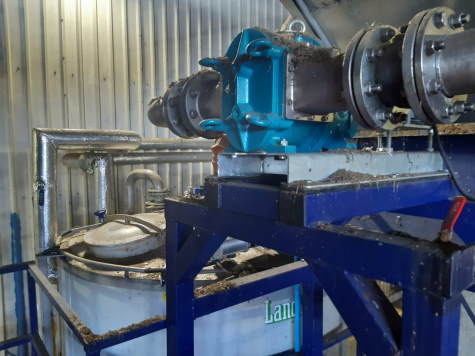
Based on the proven design of the Borger Rotary Lobe Pump, the twin-shaft Multicrusher homogenizes the waste salmon to facilitate the pumping and pasteurisation process at Creed, ensuring that downstream equipment can operate smoothly.

By inserting individual blade disks and defining the direction of rotation of the shafts, operators have the flexibility to choose which way the pumped medium flows. Various blade widths and cutting profiles determine the final cutting yield.
David Brown, Borger UK’s Managing Director, commented:

“We are very proud to play our part at Creed. It rightly deserves all the praise it gets for showing what can be done to protect the environment and reduce carbon footprint with good practice, forward-thinking and hard work”.

Biogas Production, CHP, Optimised Use of Renewable Electric Power, Thermal Storage and Hydrogen Technology

Also in Use at Creed Managing waste from the island’s population of approximately 22,000, the Creed IWMF has grown steadily to include a combined heat and power plant (CHP), electric boiler and thermal store, a wind turbine and a hydrogen system comprising electrolyser, storage and refuelling station, and a 960m3 AD/biogas plant.


Some of the electricity generated by the CHP is used to produce hydrogen and oxygen. This is captured, compressed and delivered to the salmon hatchery, where oxygenation is essential.

Hydrogen is used in a small fuel cell to provide electricity to the remote site, which sometimes suffers from electrical network failures. Previously, back-ups were provided by ageing diesel generators, meaning higher CO2 emissions and delivery costs. The hydrogen system at Creed also includes a refuelling station, where some of the hydrogen is used to refill a dual-fuel Refuse Collection Vehicle (RCV) operating on hydrogen/diesel.
Find out more at Borger.