Showing posts with label biogas. Show all posts

Saturday, November 07, 2020

In Sub-Saharan Africa Biogas Can Be A Replacement for Fossil Fuels

Biogas can have a central role in the replacement of fossil fuels in Sub-Saharan Africa and in providing affordable and clean energy as identified in the 2030 UN SDG 7.

Uniquely, biogas has a role in:
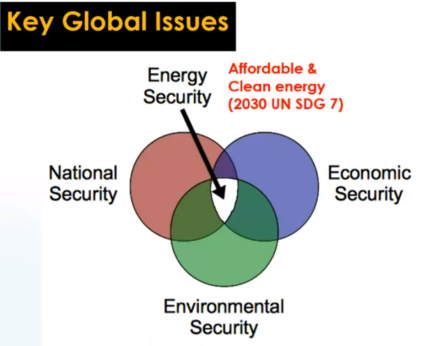
  • Image shows the key global issues and biogas, to explain How Biogas Can Be A Replacement for Fossil Fuels in Sub-Saharan Africa.
  • Environmental Security: being a cleaner fuel by far than the burning of fossil fuel so air pollution is reduced
  • Economic Security: reducing climate change and global warming due to its much-reduced greenhouse gas emissions and helping prevent the worst ravages upon crop production and human life with the resulting enormous cost to economic security throughout the region
  • Energy Security: by providing reliable and low-cost energy day and night from multiple distributed generation sources, biogas plants contribute to energy security
  • National Security: replacing fossil fuels can assist with providing jobs for and feeding the rising global population forecast to reach 9 Billion by 2050 (UN) which itself is essential for the maintenance of a stable society. National security requires a stable economy to pay for the police and army which can only exist when adequately supported by tax revenues.

The diagram above illustrates the inter-relationship between biogas and the 3 essential components of any civilized nation and the energy security which renewable biogas energy can provide. Biogas energy lies at the very heart of all three through its contribution to energy security and is required before any of the other forms of security can be achieved.

The Urgent Need to Decarbonize Every Economic Sector in Sub-Sharan Africa

Each of the following economic sectors presents a special challenge if society is to succeed in its aim for Net Zero Carbon Dioxide Emission to the Atmosphere by 2050:

  • Power and Electricity
  • Transport Fuel (land, sea and air)
  • Heat transfer (cookers, boilers)
  • Agriculture (compost, manure, crop residuals)
  • Waste management (landfills).

The Anaerobic Digestion and Bioresources Association has been attributed with the quotation which says it all: “There is no net-zero emissions without biogas” (EU).

What Is Biogas And What Are Its Benefits?
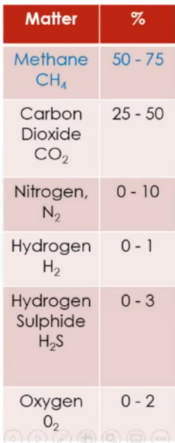
A composition table for biogas.

Biogas comprises 50 to 75% methane typically when produced plus Carbon Dioxide and small traces of Nitrogen, Hydrogen, Hydrogen Sulphide, and Oxygen. See image.

The benefits of biogas production are many and varied, as follows:

  1. It is a low carbon emission fuel source which can be used at the point of creation or after transportation, for cooking heating and power creation.
  2. Waste biomass used for its production is used locally to produce biogas. This means that it is inherently a distributed energy source. When each biogas plant is located across the grid area, and power is fed into the grid locally, power line losses are low as the distance to the point of use is short., This contrasts with large output regional power stations where the energy is distributed from a single location. Much of the power must be transported long distances with consequently large power losses (up to approximately 30%). In this way, biogas has an energy efficiency advantage of large fossil fuel power stations.
  3. The process of anaerobic digestion which produces biogas produces an output (known as digestate) which is a natural fertilizer. Therefore, biogas use with the resulting fertilizer production displaces chemical fertilizers, which entail high carbon emissions in order to produce them.
  4. Using the fertilizer provides for the recycling of nutrients essential for the long-term health of soils, and by not adding those nutrients to landfills the damaging emissions of methane escaping from landfills are reduced.
  5. For the nations of sub-Saharan Africa which have little or none of their own fossil fuels to use, creating power at home reduces the need to import energy. This has a beneficial effect on their economies as they no longer forced to spend as much of their hard-won foreign exchange on energy imports.
  6. Decentralized biogas electricity generation means that populations remote from the grid and small communities which cannot afford the costs of grid connection can electrify their homes, farms, and business premises through self-help. This has the benefit of speeding up the connection of rural dwellings to electricity sources.
  7. Rural farming receives a welcome boost when a biogas plant is commissioned because much of the wealth created remains within the community. This cannot fail but boost incomes locally and provide rewarding employment for the skilled labour force needed to run and maintain each biogas plant.

Specific Challenges Experienced in Sub-Saharan Africa
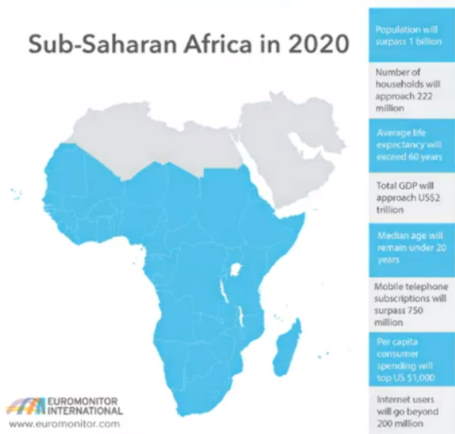
Map of Sub Saharan Africa.

The region is characterized economically by huge unemployment and low GDP. Despite the low rainfall of parts of Sub-Saharan Africa, this represents a huge potential in terms of the available biomass which could be used in the anaerobic digestion process if fully developed.

At the moment too much of the region’s export income is spent on energy import, and most must buy in fuel from abroad. This is a huge burden, for example, over 50% of its transport fuels are imported currently. Increases in home-made energy production through new biogas plant output is desperately needed to reduce reliance on imported fuel. The money released to the exchequer of these nations could then be used to put right a legacy of poor infrastructural development which daily results in the spread of lethal diseases. Such domestic problems in Sub-Saharan Africa tend to result in unrest which all too often spills over into wars.

Biogas supplied straight from landfill or fermentation chambers can be used as fuel for cooking or heating; however, this is mostly seen in developing countries, such as India or Bangladesh. For biogas to be used as fuel in engines, it must be refined, i.e. purified from unwanted components, so that it consists of 96–98% methane.

This is of course achieved through chemical processes, such as absorption and adsorption. Once biogas is refined, i.e. converted to biomethane that has practically the same composition as the gas used in cookers, it can be compressed and used for various purposes, such as fuel for motor vehicles. via euinmyregion.blogactiv.eu

Biogas methane (biomethane) is ideally suited for use as a transport fuel with trucks available on the market which run reliably on purified and compressed biogas.

The range of a biogas bus is up to 250 miles - the same as a diesel bus. Reading Buses and Stagecoach both have their own compressed natural gas (CNG) refuelling stations and Nottingham City Transport will operate one from next year. via www.scania.com

Image text: "Biogas in Sub-Saharan Africa".

With financial support from the Swedish government, between 2006 and 2009 Skånetrafiken introduced 140 buses fuelled by a combination of natural gas and biogas to its network, making it the public transport company with the largest number of gas-fuelled buses in Sweden.

Since then the company has bought a further 300 gas-fuelled buses, which means that more than half of its fleet of 1,000 buses now runs on gas. These new buses already produce far fewer emissions of carbon dioxide than traditional diesel-fuelled buses but Skånetrafiken now wants to go further and has pledged that its entire fleet of buses will operate entirely on biogas by 2020. via www.smartcitiesdive.com

Biogas as a Raw Material Replacement for Oil

Biomethane can be used as the raw material instead of oil for many chemicals and plastic production. Methane is the precursor organic compound from which oil, products are produced in oil refineries. It is produced from fossil fuel oil as producer gas and can be a replacement organic material for most fossil fuel-based oil use.

Once again, biogas production particularly well matches the need of all Sub-Saharan nations to reduce imports. This could mean that a large proportion of foreign exchange currently being spent on oil as the raw material for refineries, could also be moved into each nation’s economy.

Conclusion - How Biogas Can Be A Replacement for Fossil Fuels in Sub-Saharan Africa

The potential for biogas in the Sub-Sharan Region is exceptionally large and the benefits of biogas production also closely match the most pressing needs of the area.

If governments will recognize the true merits of full implementation of biogas production from the anaerobic digestion process and provide initial help to develop the local biogas industry the resulting benefits will be enormous.

Plus, doing so simultaneously moves the biogas adopting nations toward a much-reduced rate of carbon emissions. This can, in turn, allow them to make big strides toward the goals globally set for reducing all carbon emissions (the emissions which raise Greenhouse Gas levels) to “Net -Zero” by 2050.


[soc_panel color="orange"]This article is based upon a presentation given by Dr Vincent Ifeanyi Okudoh, Bioresources Engineering Research Group (BioERG), Department of Biotechnology, Cape Peninsula University of Technology, Cape Town, South Africa at the WBA Biogas Summit 2020.[/soc_panel]

Wednesday, September 09, 2020

Home Cooking with Gobar Gas - Biogas Stoves for Small Scale Digesters

An in-depth article about biogas stoves, covering everything for small scale digesters and home cooking with what in India is known as gobar gas. Read on for the info on biogas stoves:

What is a Biogas Stove?

A biogas stove is a specially adapted, stainless steel, countertop, or built-in, biogas fuelled stove.

Using a stove which is either intended or modified, to run on biogas (gobar gas) is the easiest method for home and small scale, biogas digester beginners. These stoves are small, most have no more than two burner rings, and are often portable. They can usually be positioned as needed in order to accommodate other kitchen appliances on the countertop.

They are most often manufactured from stainless steel or cast-iron. Some can be used as a built-in single burner stove specially adapted to cook with biogas. One brand of biogas stove is designed to slide into a stove range or be built into a countertop and is perfect for those who have limited kitchen space.

Biogas is the gaseous product of breaking down organic matter in the absence of oxygen (see "Anaerobic Digestion"). It can be used to meet the energy need for cooking and baking in individual households as well as in small businesses.

Stoves and ovens for biogas application are similar to conventional appliances that run on commercial fuels such as butane and propane. However, special modifications (particularly in the design of the burners) are required in order to ensure proper combustion and the efficient use of energy.

At this website, we have received so many queries regarding the non-availability of Biogas Stoves, and we are not quite sure why so few are on the market for sale. We assume that the reason is that the demand for biogas stoves is so low compared with other fuels that stores do not consider it worthwhile to stock them. It is difficult to buy biogas stoves both in rural areas and in big cities.

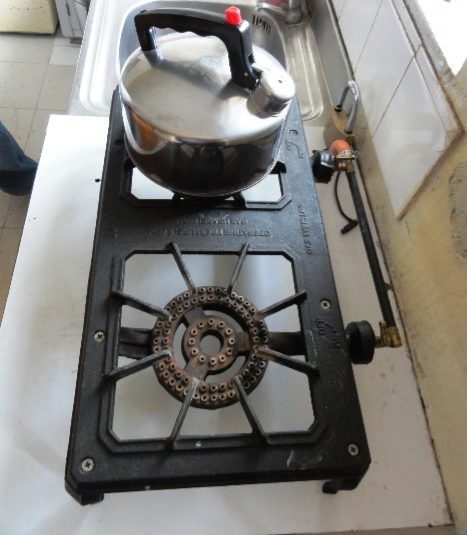
Close up of one of the biogas stoves discussed.
CC BY by Sustainable sanitation

However, not many people are aware that you can use a normal LPG stove to run on biogas with simple modifications. In fact, you will not find much difference if you look at both an LPG Stove and a Biogas Stove normally.

Most of these conventional appliances can be adapted for the use with biogas by the modification of the burners to ensure proper combustion and efficient use of energy.

Several grassroots and nonprofit organizations (such as Heifer International and it's partners) have in recent years started biogas fueled stove manufacturing projects to allow people in impoverished communities to have a sustainable way to cook their food and heat their homes.

Stoves for Small Scale and Home Biogas

By far the biggest demand for biogas stoves comes from the millions of small scale domestic and smallholding type biogas plants ranging in design from digesters based upon oil drum sized vessels all the way up to the community (e.g. village) biodigesters built in-pits with masonry walls and covers.

The gas pressure at which these stoves must operate is low and highly variable, and the same goes for the proportion of methane present.

One thing that doesn't change though, is that biogas burns over a narrow range of mixtures containing 9 to 17 per cent of biogas in the air. If the burning flame has too much gas, the burn will be poor and incomplete, giving off poisonous carbon monoxide and contain a lot of soot particles. via babiogas

A good biogas stove design aims to maximize the conversion of methane and to reduce unburned methane and soot from incomplete combustion. For this reason, a biogas stove design should burn on the lean side with a small amount of air to avoid the flame becoming rich. In a good biogas stove design, the air is mixed with the gas prior to when it is burned to ensure the correct air-gas mix is obtained. There are other problems to solve which are known as:

  • lighting back,
  • flame lift,
  • pressure drop at the burner manifold.

A successful biogas stove design must avoid those problems and deliver the flame where the heat of combustion can efficiently conduct its warmth into the cooking vessel.

Cooking on a biogas stove.
Potential Improvements from Biogas Stoves

Stoves and ovens using biogas have the potential to improve the wellbeing of marginalised people. They offer an excellent opportunity to put an end to the indoor air pollution generated in the kitchens of many poor families around the world, as well as treating organic waste that commonly represents health and environmental threats.

Local manufacturers of biogas stoves are, therefore, emerging in many countries. There appears to be significant potential to improve the combustion efficiency and overall quality of the stoves which are currently being offered on the market. It is hoped that as sales increase competition will become greater and the sellers with then match the quality of today's best gas stove brands.

Domestic Appliances Running on Biogas

As a gaseous fuel, biogas can be used for many domestic tasks. A common practice is the adaptation of commercial appliances that originally ran on fossil fuel gases, such as liquefied petroleum gas (LPG) or natural gas.

Biogas from small digesters may contain carbon dioxide and water vapour and is at low pressure flows out of burner holes. It flows through stoves with less volition and therefore has a lower calorific value than LPG (or natural gas) and therefore cannot be used to run normal LPG gas appliances. Regular appliances can be modified to run on biogas by enlarging apertures (theoretically a simple process, but a lot more tricky in practice).

There are a number of domestic appliances in addition to Stoves and Cookers which can be fuelled biogas. These are:

Cost of Household Biogas Systems

Costs for any plant require initial investment costs and once built, they also incur running costs. Considering the initial capital cost versus the financial and environmental benefits is important. It is estimated that an 8 m3 household biogas tank can treat the manure from 4 to 6 pigs, yielding around 385 m3 biogas annually. That suggests that such a plant can save 847-1,200 kg of coal-based on the calculation of effective heat equivalent. According to the methodology recommended by IPCC in 2006, if a household biogas digester treats the manure of 4 pigs, it can reduce GHG of 1.5~5.0 tonnes CO2e.

The initial equipment purchase and installation costs of each household biogas digester (8-16 m3) range from US$500 to US$1,000 depending on the digester size. Most rural households within developing countries have low disposable income and weak financial capacity for making such a large investment. In addition, the household will continue to pay a biogas digester maintenance cost. By contrast, the current practice of deep-pit treatment method is by far considered the most attractive option for manure treatment given that it requires very limited additional investment and labour input. via www.ctc-n.org

The cost functions for a biogas plant are thought of by one research group as being:

  1. The economies of scale
  2. The ratio of the cost of a given size of the plant to the cost of a reference plant (this remains almost constant over time)
  3. The effect of retention time and other factors on the capital cost
  4. The costs of the material (if it must be brought in from outside the farm or home).

Using a Biogas Stove

Biogas can be used in gas appliances for energy production which is then used for heating, lighting, the supply of steam plants, in water boilers, gas stoves, infrared radiators and internal combustion engines.

The simplest method of biogas utilization is using it in burners, as it can be directly supplied from low-pressure gas holders, but it is more preferable to use biogas for mechanical and electrical energy production. The best biogas stove sellers offer designs that are specifically developed for the low-pressure gas burners needed to burn biogas direct from small digesters or from storage holders containing biogas.

Gas pipes are also needed that can effectively connect the point where you collect the accumulated biogas and the stored gas through gas lines to the home stove.

The stainless steel, built-in single burner stove is specially adapted to cook with biogas. The HomeBiogas stove is designed to slide into a stove range or be built into a counter-top and is perfect for those who have limited kitchen space.

After selecting the type of digester, the retention time, which is a key parameter in determining digester size, is chosen to maximize the percentage of production of biogas with respect to the retention time. 10 to 30 days is often chosen as the minimum amount of time for sufficient bacterial action to take place to produce biogas and to destroy many of the toxic pathogens found in human waste, considering the diameter and height of the mixing pit are equal.

At the household level, biogas systems can also be used to produce fertilizer and for providing energy for cooking and lighting.

Safety pilot and air filter Biogas-fueled radiant heaters should always be equipped with a safety pilot, which turns off the gas supply if the temperatures go low i.e. the biogas does not burn any longer.

Biogas consumption can be calculated from assuming that household burners consume 0.2 to 0.45 m3 of biogas per hour and industrial burners – from 1 to 3 mof biogas per hour. Biogas volume, necessary for food preparation can be determined from the time spent on daily cooking.

Using a Regular LPG Stove

Using 1-2 burners for biogas in addition to your current LPG stove is a good way to set up a kitchen to use biogas whenever possible. If a user chooses to connect a "HomeBiogas"™ digester to a regular stove, the user should be aware of the energy requirement of the stove.

The Biogas stove is different from the LPG regular stove since low compressed bio-methane is a far less compressed gas than LPG, the gas burner flame openings need to be wider for better combustion.

The first time that a new digester set-up is used, the gas in the tank won't burn as it contains Carbon Dioxide gas. If, fortunately, it burns then good, or else wait for the second time after draining the first tank-load of gas. The second use will be likely to be much better quality biogas, and thereafter will usually be good methane. You can detect how much gas there is in the system when the gas holder tank rises up as the gas is produced.

How to Modify a Normal LPG Stove to Run on Biogas

So it is very difficult biogas stoves in big cities. However, you can use a normal LPG stove to run on biogas with simple modifications. You will not find much difference if you look at both LPG Stove and Biogas Stove normally.

The Biogas Burner I am showing has 3 mm holes in it. Take an LPG stove, unscrew and remove the nozzle, and this may be enough, also close any air-entraining/ mixing gap provided for LPG use. You can control the pressure and required amount of biogas with the gas control knob provided.

Check by comparison with existing burner the operation of it with biogas after removing the nozzle. If it is burning properly, then leave it as it is otherwise necessary to search for a burner of the same diameter. Burners are of different sizes. So take your LPG burner when searching. In our locality, there are hardware stores fabricating and selling local-made stoves for biogas use.

[caption id="attachment_4664" align="alignleft" width="500"]Featured image text biogas stoves CC BY by DFID - UK Department for International Development[/caption]

Once you did the modifications, Connect Biogas pipeline to your stove and check your stove and it should run on biogas properly. via ww.instructables.com

Do not add anything other than cow dung slurry and organic waste. Once gas formation starts, you can feed organic waste in small quantities. Make sure there is no leakage. Also, be aware that the initial gas produced will not burn as it will be mostly carbon dioxide.

Release the gas 2 to 3 times before testing. Use a Bunsen burner to test and DO NOT use a lighted match stick for testing. If the gas pressure is too low to fuel the bunsen burner, add some weight on top of the gas holder to get a better pressure.

LPG Stoves Versus Biogas Stoves

Almost any gas stove can be converted to support biogas by removing the pressure nozzle. However, one stove cannot supply both LPG and biogas.

For an LPG stove versus Biogas stove, the LPG stove wins for its low cost for a high-quality product. Lightweight and portable. Check that the one you buy has easy to use heat adjustment dials.

Against this background, for the biogas stove, you will most likely need a match to light the stove. In addition, heat adjustment is not precise.

If you're looking for something simple on holiday, a butane stove can be perfect for you. It's our favourite, for a solo camper looking to make a simple but delicious meal is a cheap LPG stove.

However, for the poor and any environmentally aware person, the biogas stove is considered far better with its wonderfully "green" environmental benefits and its value in reducing the unhealthy smoke found in so many developing nations in houses where wood would be the only economically alternative cooking fuel.

Methane Used in Puxin Biogas Stove

From its first decade, the Puxin methane program was a success. It installed more than 20,000 biogas stoves (or biodigesters) in that period. Digesters that enable rural households to turn the waste of their cows and pigs into a methane-rich gas suitable for both cooking and lighting, as well as bio-slurry (predominantly used as a substitute for fertilizer).

To begin explaining biogas stoves, it is probably useful to first think about what "biogas" is? biogas is essentially another word for

For instance, the 5,000l package comes with the digester, one purifying biogas (methane purifier) MP 12 135 (PVC), a gas holder with a capacity of 5 m3, one generator bg 2500 w (biogas power generator 2500 watts), bacterial methane activators gp-7 for 1 month, installation of equipment, and stoves. a gas mixture that is predominantly made up of methane (CH4) and carbon dioxide (CO2).

Puxin Biogas Oven

Cookstoves and ovens for biogas application are similar to those of conventional appliances running on commercial gas-fuels. A biogas stove usually has a single or double burner with varying gas consumption rates, which is influenced by the pressure provided by the biogas plant and the diameter of the inlet pipe.

Stoves and ovens for biogas application are similar to conventional appliances that run on commercial fuels such as butane and propane.

Biogas Fuel Stove with Single Burner

Biogas combustion is so much cleaner than other fuels, such as solid biomass and kerosene, that it must be considered. However, for these advantages to make it worth buying a biogas stove it depends on the quality of the biogas stove (particularly the burner).

The HomeBiogas™ stainless steel, built-in single burner stove is specially adapted to cook with biogas. This stove is designed to slide into a stove range or be built into a countertop and is perfect for those who have limited kitchen space.

Friday, September 07, 2018

Proof That Biomethane Is Cleaning-Up On The Biogas Market

Biomethane is cleaning-up on the Biogas Market. The business sector is growing rapidly with support and both political and monetary investment going forward in many countries.

This is demonstrating that building AD plants with additional equipment to produce biomethane, which is nothing more than thoroughly cleaned-up biogas, is thought to be worth the additional investment by many people.

Biomethane cleaning up on biogas market article feature image.
Biomethane Advances in popularity over raw biogas

Biogas has many uses, but the demand for biomethane which is a fuel equivalent to Natural Gas is simply insatiable!

Just consider the unimaginable amount of energy needed to run transport vehicles and the hype which is peddled daily by governments, to pollution hit city dwellers to convince us all that electric cars are the cure and are coming in just a year or two. Who truly believes that any more?

Now let's give you the PROOF that all manner of people, politicians and investors are now promoting biomethane and biogas plant projects which will produce biogas which will be upgraded to biomethane.

California Legislature Green-Lights Pair of RNG Bills

On the final day of California’s 2018 legislative session, a bill sponsored by the Coalition for Renewable Natural Gas (RNG Coalition) that would pave the way for a state renewable natural gas (RNG) procurement program was approved, passing 29-10 in its reconciliation in the Senate.

As approved, S.B.1440 authorizes the California Public Utilities Commission (CPUC), in consultation with the California Air Resources Board, to adopt a biomethane (RNG) procurement program that would benefit ratepayers, proves to be cost-effective, and advances the state’s environmental and energy policies, the coalition explains. The legislation was introduced this year by State Sen. Ben Hueso.

“A renewable natural gas procurement program would create market certainty that industry developers need to access investment capital and build new projects in California,” says Johannes Escudero, CEO of the RNG Coalition. “Nearly 30 states have [renewable portfolio standard] programs in place, requiring electric utilities to procure and use increasing proportions of renewable energy. States should set similar renewable natural gas targets for gas utilities to create new in-state jobs, decarbonize our pipeline systems, reduce emissions and improve air quality.”

The RNG Coalition’s other sponsored bill this year, A.B.3187, passed the legislature by comfortable margins, the group notes. The bill requires the CPUC to open a proceeding to consider options to promote the in-state production and distribution of biomethane, including recovery in rates of the costs of interconnection infrastructure investments, by no later than July 1, 2019. It was unanimously approved (38-0) by the Senate on Aug. 27 after having passed the Assembly earlier this year. via CaliforniaRNG

New Technologies in the Works for Onboard CNG Storage

More refuse companies are investing in compressed natural gas (CNG) sourced from cleaned biomethane (renewable natural gas), storing it on board in cylinders. For some time, storing this high-pressure fuel on trucks came with challenges for fleets, and though the industry has since taken down significant hurdles, there are new innovations in the pipeline for greater efficiency.

“Fuel storage on board gas vehicles is well proven and established. But with all industries and technologies, there is continuous improvement going on. And in coming years, there will be changes and improvements to natural gas fuel and dispensing systems,” projects Barnes. via OnboardCNGStorage

Renewable natural gas program for Minnesota customers

Centerpoint Energy filed a five-year pilot program proposal with Minnesota`s Public Utilities Commission (PUC) on Thursday, which will give customers the option to purchase renewable natural gas, or biomethane, as an alternative to traditional gas.

The pilot would be the first of its kind to offer distribution of renewable gas directly to customers, although other utilities use it in a more "decentralized sense," Margaret Cherne-Hendrick, senior policy associate at Fresh Energy said in an interview with Utility Dive.

If approved, customers will be able to choose renewable gas for approximately $4 more per therm, although the price won`t be set until after the PUC approves the pilot, according to Centerpoint`s website. The state`s PUC is expected to make a final decision on the program in January of 2019.

Many in the industry will likely favor biomethane because the infrastructural transition is easier and cheaper for utilities she says. However, customers should be aware of what they`re paying for.

In a survey conducted by CenterPoint, the utility found half the approximately 1,550 customers surveyed were willing to pay $5 and $25 more per month for renewable gas, according to the Minneapolis Star Tribune, and the utility is operating under the assumption that 1% of its 800,000 customers would be willing to participate. via CenterPoint Energy

UK John Lewis cuts CO2 fumes by over 80 percent in LARGEST ever green trial

JOHN LEWIS has teamed up with green gas supplier CNG Fuels to launch the UK’s largest-ever trial aimed at showing how biomethane, a low carbon alternative to diesel, can slash HGV emissions and costs, writes Maisha Frost. via John Lewis cuts CO2 fumes

Biogas Market Size, Share - Industry Share Report 2024

Global biogas market size is anticipated to witness substantial growth owing to government led stringent regulations pivoted towards greenhouse emissions. In 2016, Singapore government had led directive pertaining to carbon emission reduction by 36% by 2030 below 2005 levels.


Rising energy security concern due to depleting conventional resources will positively steer the global biogas market. In 2017, The Asian Development Bank has funded waste to energy (WTE) projects in agreement with Dynagreen environmental protection group across China.


Renewable resource integration with demand for cost effective clean source of energy will positively drive the global biogas market share by 2024. Government initiatives pertaining to waste management will propel the global industry. In 2017, Australian government in support to waste to energy technologies have launched a USD 2 million program in Victoria.


Inconsistency of waste composition and complex facility designs will hamper global biogas market. Urbanization and economic growth are diversifying the technology pertaining to lower generation rates, improved treatment technology and waste composition techniques. via Biogas Market 2024

Biomethane on the National Gas Grid – A First for Ireland’s Bio-Economy

In 2018, Gas Networks Ireland will introduce renewable gas onto the Irish gas network for the first time writes Pádraic Ó hUiginn. Renewable gas, also known as biogas or greengas, will be introduced into the Irish market as a means of further reducing emissions. As natural gas and biomethane are interchangeable, renewable gas can be used in the same way and in the same appliances as natural gas. Customers, business and domestic, would never be aware that the gas they are using is a renewable alternative. via A First for Ireland

More Reports:

The Biomethane Market to Witness Robust Expansion by 2025 released by QYResearch provides a basic overview of the Biomethane industry, ...
Global Biomethane market is growing at a CAGR of 6.3% between 2018 and 2025 – QY Research
Business Analyst
This report studies the Biomethane market size (value and volume) by players, regions, product types and end industries, history data 2013-2017 and ...
Biogas and Biomethane Market by Manufacturers, Regions, Types and Application and Forecast to ...
Journalist Book (press release) (blog)
Biogas and Biomethane Market report provides overall insights into the crucial and Industry chain structure, Biogas and Biomethane remarkable ...
Global Biogas and Biomethane Market 2018 – Industry Strengths, Weaknesses, Opportunities, and ...
Dynamic Reporter
Global Biogas and Biomethane Market Analysis Report ponders most recent industry patterns, improvement viewpoints, advertise picks up, and ...

Sunday, February 25, 2018

NAO Renewable Heat Report - Green Gas Industry Reaction

Green gas industry responds to the UK's national Audit Office (NAO) Renewable Heat Report

Image of the Renewable Heat Report thumb

This article is a little way off from our usual subject matter, so let us just say that by "Green Gas" we are referring to is simply renewable gas such as biogas, and its product after upgrading to raise its purity "biomethane". So, the green gas industry referred to is partly the anaerobic digestion and biogas industry. It also includes renewable methane from other processes.

One big benefit from green gas is that it is home-grown and reduces need for expensive natural-gas imports.

Before you start reading the Press Release below, we can tell you that green gas production has NAO support. It's not surprising that the anaerobic digestion, and bioresources industry is keen to publicise the NAO's advice.

The ADBA Press Release follows:

Industry echoes NAO call for govt. to address policy gap by providing long-term support for renewable heat and introducing effective carbon price

Report says successor policy to RHI will be announced this year.

Responding to a new report from the National Audit Office (NAO) on the cost-effectiveness of the Renewable Heat Incentive (RHI), Charlotte Morton, Chief Executive of the Anaerobic Digestion & Bioresources Association, said:

“As one of the technologies supported by the RHI, biomethane (or green gas) is currently heating over 300,000 homes and displacing almost 800,000 tonnes of CO2, the equivalent to taking almost a million cars off our roads."
"As a home-grown, renewable source of heat, it is helping to decarbonise the UK’s gas grid and improving energy security through reducing the need for expensive natural-gas imports from unstable parts of the world."
"With support for the RHI due to end in 2021, we’re calling on the government to put in place long-term support for renewable heat to help give certainty to the green gas industry. The government should also set an effective carbon price that would better demonstrate green gas’s excellent value for money in reducing emissions and producing home-grown renewable heat.”
Meg Hillier MP, Chair of the Committee of Public Accounts, said on the publication of the NAO’s RHI report:
“The government faces a huge challenge in cutting harmful carbon emissions. The NAO report shows how the government has massively cut back its ambitions for this scheme, and that as a result it will have to work even harder elsewhere.”
"But right now the government doesn’t know how it is going to cut carbon from heating systems in millions of homes and businesses around the country. There is a limited amount of time to work with, so it needs to start making real progress now.”

ADBA understands that some of the recommendations made in the report have already been incorporated into the RHI reforms that are currently going through Parliament, which, if passed, will give a vital boost to green gas production in the UK.

The report states that a decision on the successor policy to the RHI is due to be announced this year.


Sources: National Audit Office: https://www.nao.org.uk/

Anaerobic Digestion & Bioresources Association (ADBA) website: www.adbioresources.org

PRESS RELEASE: Anaerobic digestion industry welcomes laying of RHI legislation: http://adbioresources.org/news/press-release-anaerobic-digestion-industry-welcomes-laying-of-rhi-legislati


Saturday, August 05, 2017

Digestate Separation Using the Borger Bioselect Digestate Separator

In this article we suggest the five top Advantages of Digestate Separation using the Borger Bioselect digestate separation technology, available from manufacturer Börger GmbH, Borken-Weseke, Germany.

What are Borger Bioselect Digestate Separators?

Borger Bioselect Digestate Separator system is achieved using the proven system for digestate pumping, storage, and separation offered by this well-established company.


The Borger Bioselect separator brings to all AD Plant Operators the ability to separate solid fibrous digestate leaving the biogas reactor from the liquid, reliably and cost-effectively.

WHY SEPARATION?

1. Separating the solid fibres which leave the biogas reactor, from the liquid portion of digestate means that overall digestate storage capacity needed at the AD plant is reduced during the maturation period.
2. New uses emerge for both liquid and solid digestate. The separated solid is used by some as an energy source, but usually it is left in windrows for a period before being used as a soil improver and spread back onto the land
3. The Solid Phase can be dewatered to an optimum water content for use as bedding for cattle
4. Liquid Phase is most often used as a fast-acting crop fertilizer, and is easier to sell off-farm after separation.
5. The Liquid phase can then be injected into the soil, meaning no possibility of etching damage to the plants.

WHY NOT FIND OUT MORE ABOUT THE 'BORGER BIOSELECT' DIGESTATE SEPARATION SYSTEM?

The Borger Bioselect digestate separator is a purely mechanical device with low maintenance requirements and needs no chemicals to run, simply switch the system on and start separating!

What Others Are Saying About the Borger Bioselect Digestate Separator - A Web Roundup

The Bioselect BS is a combination of the separation machine and two Rotary Lobe Pumps. These three drive units are joined with a special control unit with various control and safety components.
The separator is load-triggered. The feed pump only conveys the volume which the Bioselect BS is able to process. The high density solids discharge pump determines the degree of thickness. via Pandct.com

“We had a great response to this new product at last year’s show”, said Borger UK’s Managing Director, David Brown, “so it’s time now to give it centre stage. AD operators and farmers seem to like it for the throughputs (up to 60m3/h) and because it can be very easily integrated into an existing system or used as a mobile separator”.
Combining a separator and two Maintenance-In-Place (MIP) Borger rotary lobe pumps, the Bioselect separator is load-triggered, whilst the feed pump ensures that volumes do not exceed capacity. The high density solids-discharge-pump determines the degree of thickness, so the user can (for example) thicken 4 per cent dissolved solids (DS) content liquid into 12 per cent DS to make it suitable for a tanker.
https://www.pinterest.com/pin/121597258672786521/
The Börger Bioselect Separator provides efficient separation technology. Using a purely mechanical process, liquid parts are separated from solid parts in the medium (such as digestate or liquid manure).

The installation options of the Börger Bioselect are as versatile as their requirements. Whether attached to a simple wall bracket, installed on a movable frame with an upstream macerator or as a mobile version with a conveyor belt – the application options of the Bioselect are unique. via AgricultureMachineryBusiness.com

Monday, July 17, 2017

Anaerobic Digestion UK - Reduce Biogas Cost Raise Biogas Yield Improve Hydrolysis

The Anaerobic Digestion UK market should dramatically decrease biogas production price, and also produce a big improvement in digester returns elevating them by an unbelievable 20 times current norms.

That's the vision of some in the UK market, that also point out that without a revolution in AD innovation performance there is little chance of the biological fermentation process accomplishing its full potential.

What's more, they make the point that biogas works best as an energy storage tool, yet to earn a distinction large amounts of biogas have to be readily available to (for instance) balance electrical energy grids during maximum demand loadings.


The Anaerobic Digestion UK industry needs to drastically reduce biogas production cost, and bring about a revolution in digester yields raising them by an astonishing 20 fold.

That’s the vision of some in the UK industry, who also point out that without a revolution in AD technology productivity there is little chance of the process achieving its full potential.

What’s more they make the point that biogas works best as an energy storage medium, but to make a difference very large quantities of biogas need to be available to (for example) balance electricity grids during peak loadings.

Most anaerobic digestion UK commentators would say that the UK anaerobic digestion as a whole has been very successful in the last few years, starting from a low base the year on year rises in installed AD Plant capacity have been impressive.

Those involved in building the plants, have worked very hard and achieved a great deal, and may understandably be wringing their hands in disappointment to be told that actually they may not have reached far above base camp, and Everest is still there to climb.

However, that in effect is what is staring the UK anaerobic digestion industry in the face, and there are people who are very willing to take that reality in hand and accept the challenge.

One such is AD&Bioresources Association Member, Tropical Power. Below we repeat part of a recent foreword in their magazine, by Mike Mason, Chairman, Tropical Power.

We liked the piece so much that we also created a video on the subject below, for those that prefer to watch a video rather than read text:

Storing Up The Benefits Of AD

AD BIORESOURCES NEWS – THE UK ANAEROBIC DIGESTION & BIORESOURCES TRADE ASSOCIATION’S BI-MONTHLY MAGAZINE NOVEMBER 2016

…If AD is to really deliver in those areas it needs to compete on cost with wind and solar – solar PV is achieving costs of £30-£50/MWh in places, with wind close behind. The first challenge for AD is therefore to drive down costs – not by 30 per cent but to one third or less of current levels.

That means serious, fundamental research leading to the revolutionary progress that is needed if the industry is to catch up with the rapidly falling costs of other technologies.

The clues that this might be achievable come from ruminants like cows, where the rate-limiting step of anaerobic digestion – hydrolysis of the cellulose – can take place up to 30 times faster than in an AD plant. Imitate this and the world of AD looks very different.

It speaks of plants built in factories as affordable machines, rather than in fields as expensive civil engineering projects.

But there is more to value than just cost. Storage is the energy world’s greatest challenge. Solar and wind cannot offer dispatchability, and batteries add perhaps £50-£60/MWh to the cost of delivering renewable electricity – doubling the cost of night-time solar. Storage is therefore AD’s ‘ace in the hole’.

Biogas is cheap to store, and larger engines are little more expensive than smaller ones, so AD can back up solar or wind and help stabilise struggling grids.

Perhaps the most important global role for low cost AD, therefore, is to be a key part of solving the critical storage and stability issues that future grids will face.

As well as driving down costs, we should be arguing for greater recognition of the value of our technology in a low carbon world. www.tropicalpower.com

Reducing Biogas Cost & Raising AD Yields 20 Fold  - The Technical Challenges 

There are two technological challenges which the anaerobic digestion industry faces, which if low-cost solutions can be found might go a long way to meeting the Tropical Power vision described above, and these are:

 a) Greatly improved hydrolysis of the cellulose content of all biomass feedstocks. In essence to replicate the speed in cows achieve hydrolysis in their stomachs.

If they can do it – why not man in his mechanical stomachs (biogas digesters)?

b) Finding a simple low cost solution to using those feedstock materials for biogas production which contain large quantities of nitrogen.

Such feedstocks are often avoided, because they may actually hamper biogas production by inhibiting the bacteria in charge of breaking down organic material.

A rate limiting factor in AD is the extent to which ammonia can be allowed to build-up within the process, before it inhibits growth of the organisms involved in biogas production.

Improving a) and b) would open the way to much higher yields of biogas per cubic metre of reactor volume.

If solutions to both of the above technological challenges were to be found which could be brought into widespread use, it would have a huge benefit to the take-up of AD, and go some way to making the “vision” we spoke of earlier, a reality.

To some extent solutions are already on the horizon. For a) there has already been thermal hydrolysis equipment on the market since CAMBI pioneered the concept as long as 20 years ago, and there are now many companies offering similar kit.

Other companies are also starting to offer enzymes for hydrolysing incoming cellulose, which looks promising.

For b) above there are fewer options, but one company is offering a process to separate nitrogen from high nitrogen feedstocks BEFORE biogas production.

They say that this is now possible, as a new approach using an additional fermentation stage to pre-treat feedstock. The technology has been EU funded, and has been developed in Finland by Ductor Corp. We will be writing an article about this interesting development soon.

Saturday, October 11, 2014

5 Most Critical Factors in the Design of Every Biogas Plant - Xergi List

The five design factors which can make or break the success of a Biogas Plant Project, is a list inspired by a pdf available on the Xergi website. Our interpretation of their list follows:

The 5 most essential aspects of the design of any anaerobic digestion plant can be listed as:

1. A High Degree of Flexibility

Biogas plants are complex even without consideration of the fact that the feed materials are waste products. They vary not only seasonally, but according to market forces and what the waste producer is doing in their business at any time. Not only that, as any biogas plant operator will tell you, it is necessary to feed the digester with the right mix of "woody" and "green" at all times.

If you perfer to view this on the YouTube website click here for this Xergi Biogas Top Design Success Factors video.

So, all biogas plant designs need to come with a huge dose of flexibility across just about any parameter that you consider. This is essential, when it comes to providing a plant which will be sufficiently adaptable to the clients needs throughout the lifetime of the biogas plant.

2. Dosing Equipment With The Ability To Handle All Types Of Feed Materials

No biogas plant can work well for long unless the operator is able to set the relative feed materials (substrate) proportions and overall input flows to what is needed for the good of the biomass in the digesters at any time, and for the equipment to reliably deliver that dose.

In most processes the input (raw material) is known (because it is bought-in to a specification). Waste deliveries to an AD Plant are the complete opposite. Nothing is the same for two days running when it is waste that is the raw material and is collected from the public and businesses.

This is a challenge for dosing equipment designers, and not all of them are up to scratch on the ability of their pre-treatment of waste arriving at the biogas plant to sort, mix, and break the material down into a transportable/ pump-able quantity of biogas plant feed accurately, and daily over long periods in-between maintenance dates.

3. Adopting an Ideal Process Temperature

Thermophilic AD Plants provide optimum gas yields within the shortest period of time (average particle residence time in the reactor), so it is important for the economic benefit of the biogas project that the best rates of reaction are achieved, and by experience a company like Xergi is well versed in balancing demanding cost factors for choice the best process operating temperature.

4. High Efficiency Mixing

Mixing demands are hard to meet in the fermentation process, as the mixture has a comparatively high viscosity, and fibrous materials can cause reduced equipment availability.

Within the biogas industry there are many ways to achieve biogas reactor mixing, some solutions are generic and have been around for many years. But, many of the best now, which are now avialable are compartaively cheap to run and provide the closest approximation to perfect mixing, are proprietory.

Xergi for example has its own in-house mixing technology to ensure that the mixing function is reliably available to provide something like the features of a fully-mixed reactor (fermenter).

5. Remote Control of Operating Systems

Biogas plants need to be readily accessible by remote control to operational managers 24/7, including at times while off-duty. Production of power has to continue all the time, so remote control must not only be available, but capable of being used easily on multiple computing device types, including from a small smartphone 

For further information visit the Xergi website here: www.xergi.com

Thursday, March 20, 2014

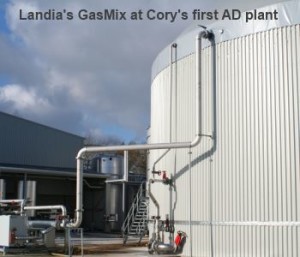
Cory’s First Anaerobic Digestion Plant Uses Landia GasMix System

http://images.anaerobic-digestion.com/meme/view/What a Load of Rubbish! A Plea for sustainable waste disposal./532ac7a2e794a

Cory Environmental, who with over 40 sites are one of the UK's leading recycling, waste management and energy recovery companies, has unveiled its first anaerobic digestion facility, with Landia’s acclaimed GasMix system at the heart of the process.

 Generating up to 500kw of energy per hour for on-site use and export to the National Grid, Cory’s inaugural digester at Weston-Super-Mare has the capacity to handle 12,000 tonnes of food waste pa. Around 7,500 tonnes of this is part of a seven year waste treatment contract with North Somerset Council. Alistair Holl, Cory’s Director of Resource Management, said:
“We are very proud of our first AD facility, for which our team were main contractors, as well as plant and site designers, achieving energy production just 18 months after planning consent was gained. This includes us recognising the importance of a highly effective and ultra-reliable mixing system, which is why we’ve chosen Landia’s GasMix. It mixes the digester throughout at a consistent temperature, which will optimise our gas generation”.
He added:
“GasMix is mounted externally on the digester so routine maintenance can be carried out with no interruptions, and from our past experience with Landia, we also have peace of mind in the back up service that they provide”.
Sustainable waste management servicesFor over a decade, Landia’s Chopper Pumps have been installed at other Cory sites – and at Weston-super-Mare, they are also in use in eight other process and storage tanks, where they perform a combination of process mixing and transfer functions. Paul Davies, Landia’s UK & Eire Sales Manager commented:
“Our relationship with Cory has grown steadily over the years as we’ve worked together to adapt the best possible pumping and aeration solutions for their wastewater needs. We are very pleased to see the faith placed in us and our equipment, with our GasMix system set to play a long-term role in the success of this impressive new facility”. Alistair Holl continued: “Initially, we’ll be producing enough energy to power around 1,000 homes, and will soon be working towards the second phase of the development, which will see an upgrade of the plant to a minimum of 1MW. This will double the volume of our green energy generation at Weston-super-Mare”.

Comprising three 18.5kW chopper pumps and a self-aspirating system that reduces solids to produce more methane in a much shorter time period, Landia’s GasMix (designed specifically for AD/biogas) has no mechanical equipment inside the digester. Simple to regulate, GasMix also offers significant energy savings because it only has to run for a maximum of 30 per cent of the installed capacity.

 Landia info@landia.co.uk
 +44 (0) 1948 661 200
www.landia.co.uk

Friday, September 28, 2012

Underground Coal Gasification and How It Could Compete With Biogas


Underground Coal Gasification is a process for exploiting coal that cannot be mined because the seam is too deep, thin or fractured. The process involves using the drilling technology usually used for fracking to get oxygen into the coal seam and then setting the seam on fire. By controlling the amount of oxygen injected it is then possible to only partially burn the coal and bring the gases produced to the surface where they can be burn to produce energy. The process is associated with serious groundwater contamination and massive carbon emissions.

When coal is gasified, rather than burned as at conventional coal plants, impurities such as sulfur and mercury can be stripped out of the gas stream, instead of otherwise being emitted into the air. The resulting fuels burn virtually free of these pollutants. Sulfur-free fuel means less smog and acid rain, among many other benefits.

No Smokestack!

Unlike conventional coal burning plants that ignite the coal and send pollutants up a smokestack and into the air, synfuel plants gasify coal and there is no direct smoke emission. This thermo-chemical conversion takes place in a contained reaction and creates only syngas, a mixture of gases which then can be made into liquid fuel. Just like biogas, syngas can be used for liquid fuel production, and syngas can also be upgraded to natural gas just as biogas can be upgraded into biomethane to be sold on the market or can be used directly as fuel for a power plant.

Now you will say that this is surely environmentally damaging due to the fossil fuel based carbon dioxide emissions, but the coal gasification industry has an answer to that. Plants using syngas could invest in what is known as Integrated Gasification Combined Cycle (IGCC) plants, and although these are currently rare and still in development, they are among the cleanest types of electricity generators.


So, rather than burning coal directly, gasification breaks down coal, or virtually any carbon-based feedstock, into its basic chemical constituents. In a modern gasifier, coal is typically exposed to steam and carefully controlled amounts of air or oxygen under high temperatures and pressures. Under these conditions, molecules in coal break apart, initiating chemical reactions that typically produce a mixture of carbon monoxide, hydrogen and other gaseous compounds.

Gasification is, as we said already  a thermo-chemical process which investors will like as there is no start up time of several weeks of the sort that anaerobic digestion plants need before they produce biogas.

Who Said That Underground Coal Gasification Was Not Environmentally Sound?

The environmental benefits of gasification in combination with the IGCC process during which the syngas is converted to energy by combustion. Its great advantages stem from the capability to achieve extremely low SOx, NOx and particulate emissions from burning coal-derived gases. Sulfur in coal, for example, is converted to hydrogen sulfide and can be captured by processes presently used in the chemical industry. In some methods, the sulfur can be extracted in either a liquid or solid form that can be sold commercially. In an Integrated Gasification Combined-Cycle (IGCC) plant, the syngas produced is to all purposes free of fuel-bound nitrogen.

NOx from the gas turbine is limited to thermal NOx. It is reported that diluting the syngas allows for NOx emissions as low as 15 parts per million. Selective Catalytic Reduction (SCR) can even be used to reach levels comparable to firing with natural gas if required to meet more stringent emission levels. Other advanced emission control processes are stated as being developed that could reduce NOx from hydrogen fired turbines to as low as 2 parts per million.

Carbon Capture is the Trump Card?

These benefits could be combined with carbon capture to prevent the climate changing effects of carbon dioxide emissions once carbon capture and long-term underground storage of the CO2 has been demonstrated to be effective. In which case investors may prefer to put their cash into these power plants, which can be built on a huge scale to allow underground coal gasification to rival the output of traditional coal power plants, so watch out anaerobic digestion for renewable energy!

The US Department of Energy is reported to be working with industry to keep the United States at the forefront of carbon capture, utilization, and storage technologies. An innovative clean coal demonstration project in Texas, supported by the Department’s Office of Fossil Energy, is underway.

The United Kingdom is well placed within Europe to develop underground coal gasification by having large reserves of indigenous coal both onshore and offshore in the southern North Sea. These reserves have the potential to provide security of future energy supplies long after oil and natural gas are exhausted. The UK is already building a part UK government and EU funded power station "retrofit" to demonstrate carbon capture and storage in old natural gas fields under the North Sea.

Furthermore, syngas or what is termed as hydrogen oriented Underground Coal Gasification (UGC) for Europe and its Environmental and Safety Aspects are being studied, HUGE2 is a R&D project (2011-2014) co-financed by the EU within the Research Fund for Coal and Steel. It is a follow-up of the project Hydrogen Oriented Underground Coal Gasification for Europe known as HUGE, which was completed in 2010. The EU has funds (although not a much cash as expected due to carbon offsets trading price drops) to fund more projects in carbon capture and IGCC.

Traditional mining methods however are not suited to working many of the UK's on land and offshore reserves, and development and infrastructure costs of new mines so without new technology like underground coal gasification, also known as fracking, many UK and indeed, worldwide reserves would be likely to remain unused, giving anaerobic digestion the best chance to thrive.

Watch Out Biogas? Another Competitor?

But, the concept of gasifying coal underground and bringing the energy to the surface as a gas for subsequent use in heating or power generation has considerable attraction, with spin-offs as a chemical production refinery feedstock instead of oil. So, watch out anaerobic digestion and biogas production devotees, because underground coal gasification (UCG) has the potential to provide a clean and convenient source of energy from coal seams where traditional mining methods are either impossible or uneconomical, and its development is gathering pace.

Sunday, August 05, 2012

Malaby Biogas Up and Running So Attention Turns to Waste Food Collection


Now that Warminster's new biogas plant is operating, the drive now is now on for the operating company to sign up more members to its waste food collection scheme. Long standing subscribers to this blog might think that once a biogas plant has been commissioned, that's the end of the story, whereas for those plants that will obtain their a large part of their feed stocks from the community, the daily round of bringing in the waste feed materials has only just begun. Staright away though, it is obvious that there are immediate spin off benefits from this project. The first comes from the fact that some waste producers will be able to replace the 80 mile round trip to the landfill, with a return journey to the AD Plant of less than 10 miles.


>
>


Here we bring you highlights from the recent report from the new anaerobic digestion plant, operated by Bradford on Avon firm Malaby Biogas:


Director Thomas Minter said: “Our local ‘Direct to AD’ collection scheme is now building and we give priority to local food waste, so we hope the support we received during construction will translate into active participation.”


Among the local businesses that has signed up for the scheme, in which food waste is collected twice-weekly by plant employees and delivered to the plant, is the Prince Leopold pub in Upton Lovell.


Landlord Chris Wood said: “We are finally able to do something that reduces our waste travel miles and makes our bins cleaner.


It is fantastic that we have a ground breaking business on our doorstep so now we can genuinely tell our customers we are being green and supporting local businesses.”


View the original article here

Saturday, August 04, 2012

WELTEC Constructs 370 kW Anaerobic Digestion Plant in Bure Switzerland

weltec biogas
WELTEC BIOPOWER has started the construction phase of a biogas plant with a planned electrical output of 370 kW in Switzerland. The plant will be a biogas with CHP cogeneration scheme will supply its heat surplus to heat the local training barracks which can be seen at the back of the photo provided here.

If you would like more information (this is only a small part of the article, plase visit the webiste by following the link below:


The “Bio.Etique. Energie SA” plant is located in the Swiss Canton of Jura. It is a major agricultural area as it has fertile soil. The WELTEC plant will process farm manure, dung, liquid manure, green waste, and grain waste.


>
>


The WELTEC plant will be feeding 3 GWh into the power grid annually. This amount will be able to provide continuous power for 900 residences. The plant will generate 2.6 GWh of excess heat annually and this will be used for heating the barracks housing around 1,400 trainees.

Switzerland has plenty of resources for anaerobic digestion plant expension. In agriculture - organic waste, crop residue, dung and liquid manure of about 20 million tonne are available. About 5% of Switzerland’s heating requirements and 4.5% of its power requirements can be generated from biogas. The use of biogas will have a positive eco-balance.


View the original article here

Saturday, July 21, 2012

Small Scale Food Waste to Biogas AD Systems New Dawn for UK Biogas Production

Things are hotting up on tyhe UIK biogas scene. Hard on the governments announcement yesterday of final consultations with the industry on the enewable Heat Incentive for AD, which is a new form of additional subsidy for AD, Burdens have made this announcement, which if successful and their small commercial scale biogas plant system becomes popular, could change the industry forever from a miraid of small companies with bespoke AD plant designs to an almost mass-produced market for food waste AD Plants.


The company will offer a "fully funded option". This will remove a huge problem from the small businesses that can make use of this, and is expected to raise a lot of interest.


>
>


Bristol, UK based small scale anaerobic digestion systems supplier, has announced their own patented design. What is more. Burdens Environmental informs us that it has completed its trials of a demonstrator facility in Wales, which is now accepting waste from Carmarthenshire Council and HRH Prince Charles' estate in Wales The floowing is the excerpt from the article which took our interest. You are reminded that the full article contains much fuller information about this biodigester, and can be access via the link below the quoted text which follows:


The company claimed that the facility is the UK's first commercial small scale anaerobic digestion (AD) system for localised food waste treatment, and that it now plans to roll out compact food waste treatment plant.


According to Burdens the system has been designed to speed up the adoption of AD food waste treatment plants in the UK by making them commercially viable and thereby increasing recycling rates for municipal and commercial food waste across the country.


Each Burdens system will be capable of handling between 3000 and 5000 tonnes of food waste per year, and the company said that it is offering a fully funded solution for the modular waste treatment plants, as well as an option to buy outright.


The fully funded package will involve the company paying its customers to run the operations, with a full maintenance programme and rent for the land on which it will be located being covered by Burdens.


In return, the company said that it will benefit from the Feed in Tariff and Renewable Heat Incentive linked to the renewable energy outputs of the recycling process.


In addition, full turnkey plants will be available for between £850,000 and £2 million, which the company said would provide a rapid payback through significant operational savings, as well as revenues from energy generation and gate fees.


The company added that its system is the first digester of its size to be Animal By Products Regulations (ABPR) compliant, which means that it can recycle general food waste, including meat.


It also claimed that the system meets compost, soil and land use regulations (PAS 100, PAS110). The biofertiliser generated is used as a beneficial fertiliser on local farm land.


View the original article here


If you apply for information. Come back and tell us more about your experience.

Wednesday, July 18, 2012

Siloxanes the Elephant in the Cupboard for MSW Biogas?

As more municipal waste biogas plants come on stream, which use mechanically separated "black bag" waste, there will be impurities persent, and there are concerns that one of those impurities "siloxane" will turn out to cost a lot of money to remove. Also, Anaerobic Digestion Plant operators will experience costly downtime for repairing badly damaged gas engines. We all know that unreliable power output costs in terms of the tarrif paid by the recieving electricity company, so this ends up as a double whammy. This could be an elephant lurking in the cupboard as the rapid uptake of municipal waste to energy fermentation just gets going.


That is why we were particularly interested to read the article excerpted below. We have included only part of this excellent and well-informed article below. So, we expect that many of you will follow the link below and visit the original web site for the full article. All comments giving your views on whether this danger is significant will be apperciated:


Siloxanes are a subgroup of silicones containing Si-O bonds with organic radicals. They are widely used for a variety of industrial processes. They are also commonly added to consumer products, including detergents, medical products and devices, shampoos, cosmetics, paper coatings, and textiles. Although most siloxanes disperse into the atmosphere where they are decomposed, some end up in wastewater (approximately 17,000 tons per year in the US).  Siloxanes do not decompose in the activated sludge process, but generally end up as a significant component in the sludge.


As sludge undergoes anaerobic digestion, it may be subjected to temperatures up to 60 C. At this point the siloxanes contained in the sludge will volatize and become an unwanted constituent of the resulting biogas.


List of Siloxane Removal Options


The author has provided the folloing list of methods for siloxane removal:


Currently, there are six primary technologies for removing siloxanes from biogas. These include the following:


–Activated carbon is widely used to remove organic substances from gases and liquids due to its superior adsorbent properties. An example of a product based on this technology is SAGPack from Applied Filter Technology.


–Activated alumina absorbs siloxanes from biogas. When the alumina becomes saturated, its absorption capability can be recovered by passing a regeneration gas through it.


–Refrigeration with condensation in combination can be used to selectively remove specific compounds by lowering the temperature or pressure of the gas, and then allowing the compound to precipitate out to a liquid, and then settle out.


–Synthetic resins remove VMS’s through adsorption. They can be specially formulated to remove specific classes of compounds.


–Liquid absorbents are used by a small number of landfill operators to treat biogas prior to use in combustion devices such as gas turbines. An example of a product based on this technology is Selexol from Dow Chemical.


–Membrane technology is a relatively recent development in siloxanes removal. At present, however, membranes are subject to acid deterioration from the acidic content usually found in raw biogas.


Of these technologies, activated carbon appears to be among the most dominant in the industry. This material can be purchased relatively cheaply, for less than $1 per pound when purchased in bulk form.


Although there are a number of options available for cleaning contaminants such as siloxanes from biogas, none has yet proven to be “ideal.” Therefore there is active interest in the development of new and better technologies for cleaning biogas.


It appears that siloxanes comprise a very significant problem for the production and use of biogas. End users are demanding efficacy, and they also require ease of use in terms of being able to drop the technology into existing biogas treatment processes without significant re-engineering. End users also demand adaptability to accommodate the varying nature of biogas streams and the various types and amounts of contaminants that need to be treated. And of course, as always users are looking for the most cost-effective options.


A technology that can satisfy these criteria appears well-positioned to be readily introduced and adopted into this market, and in turn could help biogas achieve its full potential as an important component of the worldwide energy mix.


View the original article here

Sunday, July 15, 2012

First Wiltshire Biodigester Opens for Business

Wiltshire’s first anaerobic digestion plant plant operated by Malaby Biogas, has opened for business. The first feed materials have fed into a new biodigester in Wiltshire, UK, after only 12 months of construction and commissioning trails.  The biodigester is Wiltshire’s first large scale biogas plant, which became viable when it's promoter it was able to get £5 million ($7.7 million) in loan funding from Clydesdale Bank and the UK government's own WRAP (Waste and Resource Action Programme), joined in with financial assistance as part of the government’s own £10 million loan fund for biogas and CHP projects.


We have provided a quotation from the full article below. At the end of the extract we have provided a link to the full article, and we suggest that you use that to visit the original web site:

The plant will look to process 17,000 tonnes of food waste a year and produce around 500KW of electricity for the national grid. It will receive bulk feedstock from both commercial and municipal sources, including local businesses like schools, pubs and restaurants.

Minter believes it will take up to six months to get the plant up to full speed based on biology growth and the completion of operational milestones: ‘It is important that we build a stable and robust process to ensure this is one of the best running plants around.’
View the original article here

Wednesday, July 11, 2012

Wisconsin State Program Subsidy for Biomass and Biogas Installations

I find this article somewhat confusing as the figures don't seem to tally. The item says in the headline that "Wisconsin State Program allocates $750,000 for biomass, biogas installations", which at under $1million isn't much money at all! I presume that a decimal point must have gone missig here somewhere. On that basis I would hail this as another step forward in the rising trend in the US, where individual states are picking up on environmentally beneficial, and hopefully also "economically viable" opportunities and providing them with encouragement. If anyone reading this can shed more light on the overall budget figures involved in this inititaive, we would be delighted to receive your comments. Please visit the original article via the link below the extract provided below:


Wisconsin residents and businesses that install biogas or biomass-based technology can receive up to $250,000 through a newly formed renewable energy utilities program. The program, Focus on Energy, is accepting applications until August 29, 2012. William Haas, program director for Focus on Energy, said the newly offered programs will better serve utility rate payers while adding to a mix of other incentive programs already offered in the state.


>
>


Through the Renewable Energy Competitive Incentive Program, Wisconsin businesses can apply through a request for proposal (RFP) process that details the stipulations for funding. For the biogas RFP, the applicant may not request more than $2 million. The funding may go towards energy generating equipment and materials, but previously acquired equipment or materials will not qualify for funding. All biogas systems must have an electronic method of measuring and tracking energy production, as well as a data exporting or uploading system. The RFP for biogas projects also encourages the use of biogas cleaning systems, and, methane meters are required.


For the biomass funding, all projects may not exceed $2 million. Like the biogas funding opportunity, only energy generation equipment or materials will be considered as part of the total project funding. Demolishing a wall to install a wood burner where a natural gas furnace could be installed, the RFP document explained, would not be considered eligible for funding. All systems must have energy monitoring methods in place, and, records detailing the fuel source inputs into the system. To learn more please about the program see the Focus on Energy website. 


View the original article here

Tuesday, July 10, 2012

Biogas to Power RCVs from Food Waste Plant in Sacramento

My goodness, another Anerobic Disgestion plant installation "first" is claimed by the Californians! Gold River, a California based organic waste to energy facility contractor is the claimant, and no doubt they are correct in what they say! Their new plant will be both a "dry" process AD Plant and the biogas will be upgraded for transport vehicle use, and the company achiving this is to be Clean World Partners (CWP) and waste and recycling company, Atlas Disposal of Sacramento.


>
>


The partnership of these two companies has recently broken ground on a $13 million food waste to waste biogas processing facility.anaerobic digestion facility in South Sacramento. We are told that a recent report in local newspaper, the Sacramento Been, has explained that CWP was formed in January 2009 to develop further opportunities arising from a new anaerobic digester technology. This technology has been developed by Ruihong Zhang of UC Davis. Zhang's research collaborator/partner. Just like many others they are reported to have focused on reducing the amount of time needed to convert waste material into valuable gas products. Read our quote from the artcile and visit the original website for the full store, using the link below: 


According to CWP it was awarded a $6 million grant from the California Energy Commission (CEC) to increase the capacity of its Organic Waste Recycling Center at the South Area South Area Transfer Station - making  it the largest commercial-scale, high solids anaerobic digestion (AD) system in the U.S.


The center initially will convert 25 tons of food waste per day collected by Atlas Disposal Industries from local food processing companies, restaurants and supermarkets into renewable natural gas. 


The CEC grant will support expansion of the facility to handle 100 tons of waste per day by early 2013, which will make it the nation's largest such system.


"This grant will help us quickly expand our newest facility and keep more waste out of landfills while we produce renewable natural gas for clean transportation fuel and clean power," explained Wong.


CWP claimed that once complete the expanded facility will replace 1 million gallons (3.8 million lites) of diesel per year with biogas and produce 2 million kWh of electricity per year - enough to power 200 homes.


CWP and Atlas have also broken ground on California's first AD-based Renewable Natural Gas Fueling Station - the South Area Transfer Station - which is claimed to be the nation's first digestion based Renewable Natural Gas Fueling Station.


The companies said that the Atlas Disposal Industries facility will use natural gas produced by Clean World's digestion system to fuel the company's clean fuel fleet, as well as vehicles from area jurisdictions and agencies.


The two facilities are expected to create 16 long-term jobs in Sacramento and generate more than $1.1 million in annual combined tax revenue for the City of Sacramento, Sacramento County and the state.


Clean World's Organic Waste Recycling Center is based on AD technology developed at UC Davis to convert food waste, agricultural residue and other organic waste into renewable energy, fertilizer and soil enhancements.


View the original article here