Wednesday, March 06, 2019

Biogas in India in 2019

Introduction to Biogas Plants and Production in India

While technically biogas in India can be produced from any kind of natural product, the majority of times, biogas is produced from natural waste.

This waste might make up farming and crop waste, human waste and animal waste (cow dung for example). With a calorific worth of about 5000 KCal/ m3, biogas is an exceptional fuel for heating functions along with for producing electrical power.

Biogas production has actually been quite dominant in India at home and community levels (especially in rural backwoods) than on big scales.

In towns especially, lots of little biogas crops utilize the livestock waste (especially cow dung) and offer biogas utilized for house heating and cooking. It is approximated that over 2 million such biogas plants have actually been put into use, all through India.

When organic matters like cow dung, agricultural wastes, human excreta etc. subjected to bacterial decomposition in presence of water in absence of air, a mixture of CH4, C02, H2, H2S etc. is produced. These gases together is known as biogas. The residue left after the removal of biogas is a good source of manure and biogas is used as a good source of non-polluting fuel.

A one-cubic-meter digester, primed with cow dung to provide bacteria, can convert the waste generated by a four-person family into enough gas to cook all its meals and provide sludge for fertilizer.

A model this size costs about $425 but will pay for itself in energy savings in less than two years. That's still a high price for most Indians, even though the government recently agreed to subsidize about a third of the cost for these family-sized units.

If a biogas plant is taken care off well, it can be used for up to 25 years.

" Dr Aggarwal set up the plant at his home 4-5 years back. Describing how it functions, he shares, "Everyday, 10 kg cow dung, along with 15 litres of water, is put in the mixing tank.
"The cow dung is brought from the cowsheds from nearby areas, where the owners want to dispose it anyway. This mixture is fermented inside the fermentation tank by the anaerobic bacteria. The mixture is then converted into slurry through which methane gas and carbon dioxide gas are released," 
he shares. via dnaindia.com
Image illustrates Biogas in India
The bio-gas is obtained from plant, animal and human waste, is also called as gobar gas in India. The main source of biogas is wet cow dung.

The other sources of biogas are sewage, crop residue, vegetable wastes, waste wood, dry leaves of the plants, broken branches of trees, garbage, waste paper, poultry droppings, pig manure, algae, ocean kelp etc.

These plants are commonly known as Gobar gas plants because the usual raw material is cow dung (Gobar). The methodology involves in the process is to prepare a slurry of cow dung with water. Water is also be added to the slurry.

Biogas in India - Conclusion

Home biogas plants produce biogas from cow dung and certain organic household waste. This allows families to cook without any worries. There is no smoke any more, and the tedious chore of collecting wood is also dispensed with. Many women and children were busy collecting firewood one day a week; now they have more time to work and play.

The systems used in the production of biogas today are not efficient. There are no new technologies yet to simplify the process and make it abundant and low cost. 

This means large scale production to satisfy a large population is still not possible. Although the biogas plants available today are able to meet some energy needs, most individuals and governments are not willing to heavily invest in the sector. This aspect has led many people to put up biomass systems in their homes, which are short on capacity.

The Pdf version available of our main biogas article (not this one) is at: anaerobic-digestion.com

Saturday, March 02, 2019

UK FiT Fade Out - 5 Anaerobic Digestion Advantages UK Tory Ministers Ignored

ADBA PRESS STATEMENT, Posted on 20 July, 2018: 

Anaerobic digestion industry response to Feed-In Tariff consultation

Responding to the government's new Feed-In Tariff (FIT) consultation, Charlotte Morton, Chief Executive of the Anaerobic Digestion & Bioresources Association (ADBA), said:
With the Feed-In Tariff (FIT) confirmed to close in just nine months’ time, this was an opportunity for the government to prove that it is committed to providing the investment that is absolutely critical to supporting small-scale renewables, which make a vital contribution to decarbonising and meeting increased demand for electricity in the UK. 
Unfortunately, this is an opportunity that has been well and truly missed. As well as providing renewable baseload power, anaerobic digestion (AD) combined heat and power (CHP) under the FIT has been vital in helping to decarbonise the farming sector. 
With the government no longer providing direct for support for the generation of renewable electricity, on-farm AD will struggle to deliver its numerous non-energy benefits, which include reducing emissions from wastes, improving air quality and resource management, and restoring soils through the production of nutrient-rich biofertiliser. 
This also puts at severe risk the more than 300 AD CHP plants currently in the planning pipeline. It’s therefore vital that the government rethinks its baffling decision to have no new low-carbon electricity levies until 2025, which risks creating a valley of death that small-scale technologies such as AD could easily fall into.
So, how did we arrive at this point?

UK FiT (Feed-in-Tariff) Fade-Out Starts on 31 March 2019

The story so far on the UK government closure of the Feed-in-Tariff (FiT) which was introduced in the 2000s to encourage the adoption of renewable energy technology in the UK.

31 March 2019, marks the date after which no more new schemes will be considered for the subsidy. 

Existing schemes will be honoured. They will still be paid-out-on over the original individual durations of scheme agreements.

Nobody would seek to suggest that overall the FiT has not been successful, given that the UK is currently not only complying with its targets for renewable energy, but exceeding them.

However, many in the UK biogas industry would argue that the FiT or a replacement scheme for biogas, should have been introduced.

This is given the youthfulness of the technology (younger in development than wind and solar technologies), and the additional benefits of anaerobic digestion, which are unique.

These are benefits which will assist the government to comply with targets for climate change abatement, air quality, and agricultural emissions for example.

In the following excerpts, we have endeavoured to tell the story of the FiT wind-down which was started by the UK government started in the summer of 2018.

UK's Feed-In Tariff fade out confirmed

July 24, 2018: The UK’s Department for Business, Energy & Industrial Strategy has set out a proposal to close the country’s Feed-In-Tariffs (FITs) scheme.
In the proposal, the scheme would be closed to new applications after 31 March 2019. Feed-In-Tariffs are the UK government’s subsidy scheme for the generation of renewable electricity from small-scale low-carbon installations. Both anaerobic digestion and combined heat and power (CHP) agricultural installations have been greatly supported by the Scheme.

The government is hosting a consultation until 13 September 2019 on the proposed changes. An impact assessment has been released to accompany the consultation.

According to the consultation, the FIT scheme was introduced to support the widespread adoption of small scale (up to 5MW) low-carbon electricity generating technologies, intending to give the wider public a stake in the transition to a low-carbon economy.

Original 2010 deployment projections, ‘both in terms of numbers of installations and installed capacity’, have been exceeded, the government reporting over 800,000 installations confirmed on the Central FIT Register as of March 2018. via Bioenergy Insight

Meanwhile, other Nations have been Introducing Feed-in-Tariffs, and even increasing them, as in the following examples:

New Irish Feed-in Tariff Promotes Biogas Potential

In the course of 2017, Ireland intends to initiate the energy reform with a new feed-in tariff for renewable energies. The government plans to increase the amount of green electricity from the current figure of about 23 percent to 40 percent by 2020. 

Image shows Feed-in-Tariff Fade Out despite many anaerobic digestion advantages.
Watch on YouTube here.
The tariff system is to establish a favourable environment for biogas plant operation. In view of the extensive agricultural and waste resource potential available in Ireland, WELTEC BIOPOWER UK will showcase its AD plant technologies at the Energy Now Expo Ireland, which will be held in the end of October in The Hub in Kilkenny.

In early September, the Irish Department of Communications, Climate Action & Environment (DCCAE) announced the adoption of a new subsidy regime to promote renewable energies, to be known as the Renewable Energy Support Scheme (RESS). 

So far, Ireland has been the only European country without an incentive scheme for heat from renewable sources

However, the green island has to meet EU requirements by 2020. This means that 16 per cent of Ireland‘s total energy needs for power, heat and traffic must be provided from renewable energies. This is to be achieved by making use of all green energy sources available in the country. Biogas is to play a key role especially in meeting the individual goals for the heat and transport sector. via Ireland Promotes Biogas

France increases biogas tariffs

July 31, 2015: France is set to increase its feed-in tariffs for biogas installations and small photovoltaic (PV) systems, says the Ministry of Ecology, Sustainable Development and Energy.

The feed-in tariff for electricity produced by cogeneration installations running on biogas will be raised for both new and existing installations.

On a project basis, depending on individual size and feedstock used, the increase will be between 10 and 20%.

A 300 kW anaerobic digestion unit that uses cow manure from approximately 200 cows, for example, will increase its annual income by between €40,000 and €50,000.

France recently also adopted a law to set an ambitious target of sourcing 32% of its energy demand from renewable sources by 2030. via BioenergyInsightMagaz

Feed-in tariffs in Australia - Solar Only

Feed-in tariffs in Australia are the feed-in tariffs (FITs) paid under various State schemes to non-commercial producers of electricity generated by solar photovoltaic (PV) systems using solar panels. 

They are a way of subsidising and encouraging uptake of renewable energy and in Australia have been enacted at the State level, in conjunction with a federal mandatory renewable energy target.

Australian FIT schemes tend to focus on providing support to solar PV particularly in the residential context, and project limits on installed capacity (such as 10 kW in NSW) mean effectively that FITs do not support large scale projects such as wind farms or solar thermal power stations. via Wikipedia

FiT in Japan

Since its enforcement in 2012, purchase prices of FiT have been re-examined every year. As a result, that for solar PV has been lowered and some new categories have been created for wind, hydro and biomass.

On April 2017, the FIT scheme was partially amended. This amendment introduces a new approval system for renewable power generation projects that require grid connection agreement with the utility beforehand. via Solar PV auction

No FiT Schemes Exist in the US - Only Renewable Portfolio Standards


A state renewable portfolio standard (RPS) encourages or requires utilities to use or buy renewable energy or renewable energy certificates (RECs) to account for a certain portion of their retail electricity sales by a certain date. A REC is a tradable certificate documenting that 1 megawatt-hour of renewable electricity was generated at a specific facility. The goal of an RPS is to stimulate market and technology development so that renewable energy can become more competitive with conventional forms of electric power. A state RPS helps create market demand for renewable energy.

Generally, electricity suppliers can meet the RPS targets by:
Owning a renewable energy facility and its output generation.
Purchasing RECs.
Purchasing electricity from a renewable facility.

Biogas from anaerobic digesters often qualifies as renewable energy under the biomass category of state RPS systems. via AgSTAR

Read our 5 Anaerobic Digestion Advantages article here.

Attribution of Images in Video:

This video presentation (top of page) contains images that were used under a Creative Commons License. Click here to see the full list of images and attributions.

Friday, February 22, 2019

Fugitive Emissions of Methane Biogas and Landfill Gas Explained

Fugitive Emissions of Methane

Fugitive Emissions of Methane (Biogas and Landfill Gas) Explained

It is well known that unintentional escapes of methane and landfill gas (fugitive emissions) occur when methane escapes from a myriad of tiny leaks from production facilities, wells, pipes, compressors and other equipment.

Methane continually escapes through tiny leaks from the equipment associated with coal mining or natural gas extraction, landfills, landfill gas utilization plants, and biogas plants.

It is obviously very important to reduce all these fugitive methane emissions to an absolute minimum.

Methane is more than 80 times more damaging to the atmosphere and more powerful than carbon dioxide over a 20-year time frame.

It's the second leading contributor to climate change, after carbon dioxide.

Methane accounts for approximately 25 % of the world’s climate warming.

Accidentally released methane emissions are the inevitable byproduct of the oil and gas industry and agriculture, and occur from all methane equipment.

But, not only from the equipment it also gets released when cattle blow-off!

Vegans are right when they say reducing demand for dairy and meat will help the environment.

80 % of the Greenhouse Gas (GHG) emissions due to enteric fermentation (digestion in stomachs) are from the digestive systems of cattle.

But, that's enough about cattle emissions, what about biogas plants which imitate cattle to make methane.

Unintentional emissions will be occurring from all biogas plants.

Storage tanks inevitably leak a small amount, as do pipe joints, valves and other equipment.

Other fugitive emissions will occur when digesters are opened-up for maintenance, and during commissioning.

However, biogas plant and landfill gas utilization plants would be expected to be similar to those for the natural gas supply industry.

Fugitive emission research conducted within the natural gas industry estimates the US national methane fugitive emissions rate for natural gas at about 0.42%.

A not-insignificant amount overall, and it needs to be reduced.

However, the amounts are tiny when compared with the fugitive emission of methane from cattle, and landfills.

Municipal solid waste landfills are the third-largest source of human-related methane emissions in the United States, accounting for approximately 15% of these emissions in 2016.

Similar figures apply to all developed nations.

But, as Vegans can point out.

This is well below the 26% emitted from cattle through enteric fermentation.

Thanks for watching right through!

Sources of all quoted statistics are in our article here:

https://landfill-gas.com/fug
___________________________

This presentation contains images that were used under a Creative Commons License. Click below to see the full list of images and attributions:

https://app.contentsamurai.com/cc/243195

-------------------------------------------

CONNECT WITH US:

https://twitter.com/anaerobicnews

https://www.facebook.com/anaerobicdigestion/

https://uk.pinterest.com/radiman/renewables-anaerobic-digestion/

Wednesday, February 20, 2019

Dead Fish to Power Cruise Ships - Reducing Global Warming Using Biogas -...

Dead Fish to Power Cruise Ships

Waste fish parts will be used to power ships in a new initiative to use green energy for polluting cruise liners.

The leftovers of fish processed for food and mixed with other organic waste will be used to generate biogas, which will then be liquefied and used in place of fossil fuels by the expedition cruise line Hurtigruten.

Heavy fossil fuels used by ocean-going transport are an increasing problem as they are even more polluting than fuels for land-based vehicles, emitting sulphur and other contaminants.

The fuels contribute to air pollution as well as to climate change.

Converting vessels to use biogas will cut down on pollutants and reduce greenhouse gas emissions.

Hurtigruten operates a fleet of 17 ships and by 2021 aims to have converted at least six of its vessels to use compressed biogas, which is a renewable form of liquefied natural gas (LNG).

Biogas can be generated from most forms of organic waste by speeding up and harnessing the natural decomposition process to capture the methane produced.

Read the full article in the Guardian online.

Go to https://anaerobic-digestion.com/ships .

Shipping Industry, in General, Looks Set to Continue to Use Fossil (Bunker) Fuels


The shipping industry is being forced to convert to cleaner-burning fuels, however, or install scrubbers.

The European Union and China already have regulations in place that place caps on sulphur emissions for ships making port calls in Europe and China.

And starting in 2020, the International Maritime (IMO) will require all vessels operating in international waters to meet new emissions caps, which will mean they will either need to switch to lower burning fuels, like methanol, LNG or diesel, or install scrubbers.

Many are opting to install scrubbers and continue using bunker fuels, simply because bunker fuel is widely available at ports around the world. Other fuel sources, like LNG, aren't.

Ulrich said the continued use of bunker fuel and scrubbers simply moves pollution from the air to the water. Open-loop saltwater scrubbers remove pollutants from smokestacks, but she said some ships have been found to be releasing the pollution sludge that is captured into the ocean. via biv.com

Passengers on Cruise Ships Could be Inhaling Harmful Concentrations of Funnel Air Pollutants

Passengers on a cruise ship could be inhaling "60 times higher concentrations of harmful air pollutants " than they would in natural air settings, Naturschutzbund Deutschland (NABU), a German environmental association, has warned.

Measurements were taken at various spots on the ship and for this particular sample, the sun deck and jogging lane on the top deck were found to be most affected by pollution. "But of course this can vary along with the wind and weather conditions. So potentially every part of the ship can be affected significantly,"  Mr Rieger said.

For this reason, the German Lung Association and the Pneumologists Association have warned passengers against staying on the deck or inhaling ships' exhaust gases as this could cause acute exacerbations of chronic obstructive pulmonary disease (COPD) if you suffer from lung diseases, Mr Rieger said. via www.telegraph.co.uk

Air Pollution from Nautical Behemoths

But while the 6,780 passengers and 2,100 crew on the largest cruise ship in the world wave goodbye to England, many people left behind in Southampton say they will be glad to see it go. They complain that air pollution from such nautical behemoths is getting worse every year as cruising becomes the fastest growing sector of the mass tourism industry and as ships get bigger and bigger. via www.theguardian.com

Image is the featured thumbnail for "Dead Fish to Power Cruise Ships.
When the gargantuan Harmony of the Seas slips out of Southampton docks commercial voyages, the 16-deck-high floating city will switch off its auxiliary engines, fire up its three giant diesel engines and head to the open sea.

"These ships burn as much fuel as whole towns," Bill Hemmings, the director of aviation and shipping at Transport & Environment, told the Guardian earlier this year. "They use a lot more power than container ships and even when they burn low sulphur fuel, it’s 100 times worse than road diesel." via psmag.com

Conclusion

Cruise ships have been described as "floating cities" and like cities, they have a lot of pollution problems. Their per capita pollution is actually worse than a city of the same population, due to weak pollution control laws, lax enforcement, and the difficulty of detecting illegal discharges at sea. Cruise ships impact coastal waters in several US states, including Alaska, California, Florida, and Hawaii. via www.beachapedia.org

Wednesday, February 06, 2019

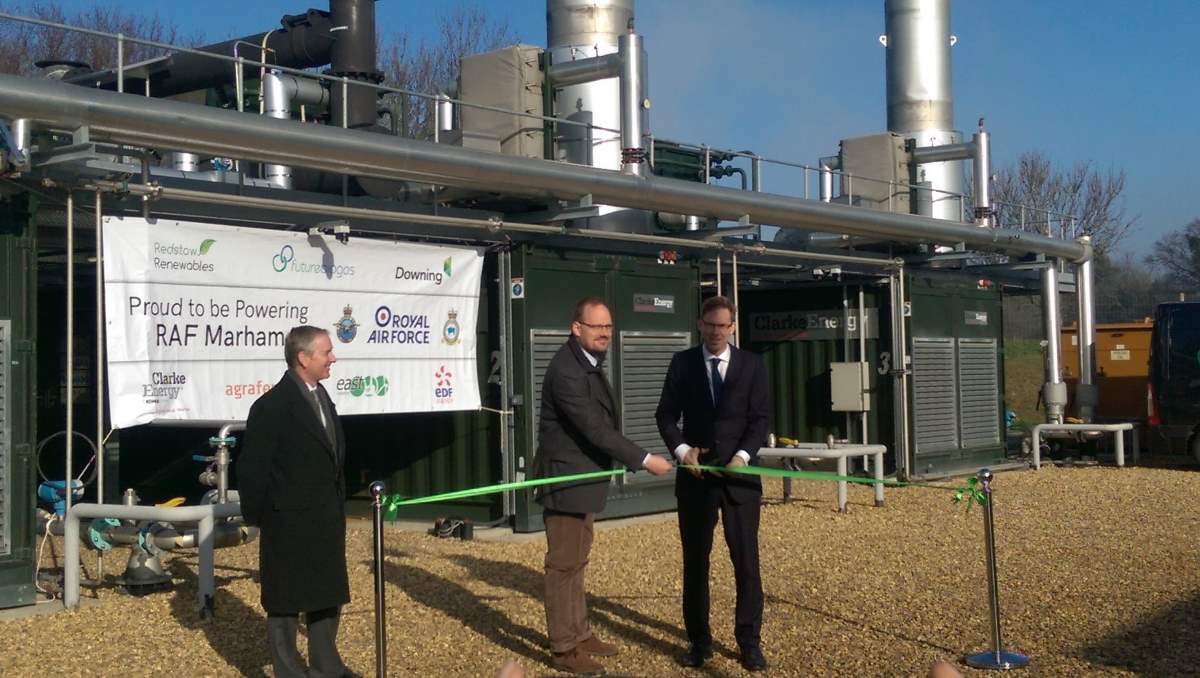
Biogas Power Means Green Electricity for Norfolk Military Base RAF Marha...

Biogas Power to Make Green Electricity for Norfolk Military Base

Biogas power will generate Green Electricity for a Norfolk Military Base, it has been announced.

An Anaerobic Digestion Plant RAF joint venture will result in almost all of the Norfolk base's electricity requirement.

It will from now on be supplied from a new on-farm green renewable energy resource NOW operating.
The RAF Marham military base will be supplied from the Biogas Plant Shown here.

Minister for Defence People & Veterans Tobias Ellwood MP has described anaerobic digestion (AD) as “a truly green and sustainable solution” as he launched a new deal that will see a Norfolk military base receive almost all its power from a nearby AD plant.

Future Biogas’s Redstow Renewables AD plant, which converts locally harvested crops such as maize, sugar beet, rye, and potatoes into renewable electricity (in the form of biogas made from the whole crop including the leaves and the stalks), and natural fertilizer. This will meet over 95% of the power needs of the nearby RAF military base.

The base will be the first in the UK to run almost entirely on green electricity.

The AD plant will generate 4.5 megavolt amperes of electricity every day, enough to power 350,000 LED bulbs.
The deal will save the Ministry of Defence nearly £300,000 every year and reduce its carbon emissions by 14,000 tonnes of CO2 annually.

The waste residue from the AD process will also be dried and used as fertilizer to help grow local crops.
RAF Marham is leading the way as Britain’s first green military airbase.

The biogas fuel is a truly green and sustainable solution, helping us tackle climate change, support the local economy and save taxpayer money.


"I hope that this plant can act as a model and we can see more sustainable energy schemes rolled out across other military bases."

Now we suggest that you watch the much more detailed Future Biogas video with more details at: http://ippts.com/fb 

For the full article visit: https://anaerobic-digestion.com/fb or for Future Biogas go to: http://www.futurebiogas.com
For the Future Biogas video (strongly recommended): https://vimeo.com/313985131

If watching this on YouTube, click on the links in the description below.

Help promote biogas production! Share this video!

Copyright images: Future Biogas

News of Biogas Power which is providing Green Electricity to a Norfolk Military Base, and high praise for the green credentials of biogas production. Why then is the same government ending the Feed-in-Tariff subsidy at the end of next month (March 2019)?

#anaerobicdigestion #renewableenergy #biogas

For the full article visit: https://anaerobic-digestion.com/fb or, for the Future Biogas website go to: http://www.futurebiogas.com

Friday, February 01, 2019

A Role for Biogas in Limiting Climate Change - Progress Since the Paris Agreement - IPCC Report Autumn 2018

Progress Since the Paris Agreement of December 2015, and Biogas Production Toward Limiting Climate Change

The 197 signatories of the Paris Agreement committed to curbing greenhouse gas emissions to prevent global temperature exceeding the pre-industrial average by more than 2°C.

Since the agreement was signed in December 2015, every signatory has ratified it into law and some 1,500 pieces of legislation have been enacted to drive compliance.

Three years ago, climate science indicated that beyond 2°C there was an increasing risk of passing a "tipping point"', where feedback loops within the climate system will propel runaway change.

But in October 2018 the Intergovernmental Panel on Climate Change (IPCC) reported its findings from a three-year study comparing the impacts of climate change if limited to 1.5°C, compared to 2°C. It drew on 6,000 scientific contributions and 42,000 expert and government opinions.

Halting global temperature rise at 1.5°C above pre-industrial levels would bring major benefits for the environment, society and economy, the report says.

It warns that the global impacts of climate change will be much more severe under a 2°C scenario than previously estimated.

The report highlights the need to adopt the 1.5°C threshold to prevent "dangerous climate change".

The IPCC emphasizes that the global temperature is already 1°C above the pre-industrial average.

That's the end of our progress update, since the Paris Agreement of December 2015.

So what can be done now, without waiting for new technologies, and also make a difference by helping all governments to comply?
The answer is to introduce ambitious targets to accelerate the installation of on-farm biogas plants.

That's because: Worldwide GHG emissions from livestock supply chains are estimated to produce 7.1 gigatonnes of carbon dioxide CO2 equivalent (CO2e) per annum. This represents 14.5% of all human-induced emissions.

Of the total, storage and handling of manure represent 10 per cent.

Featured Image Showing Limiting Climate Change - Progress Since the Paris Agreement of December 2015 and Biogas.
Therefore, On-farm anaerobic digestion (AD) of manures has significant potential to capture methane as a renewable energy source and, as a consequence, to reduce net global GHG emissions. 

UK biogas production in 2018 already created enough power to replace one major UK power station of which there are about 1 dozen in operation.


That's easily enough, to "make a difference"! So, we encourage you to promote anaerobic digestion and biogas to your politicians, and return here to comment, and tell us about the replies you get.

Sources: 1. New Civil Engineer, December 2018
and 2. the  IEA Bioenergy report, " Exploring the viability of small scale anaerobic digesters in livestock farming", by Clare Lukehurst and Angela Bywater (2015). Video by: www.anaerobic-digestion.com .
-------------------------------------------

CONNECT WITH US:

https://twitter.com/anaerobicnews
https://www.facebook.com/anaerobicdigestion/
https://uk.pinterest.com/radiman/renewables-anaerobic-digestion/

Monday, January 28, 2019

3 Types of Biogas Mixing Systems Advantages and Disadvantages of Use in ...

Biogas Digester Mixing Equipment

Biogas plant designers will tell you that the main factors that influence the rates (and, therefore, the success) of these biological transformations in the AD reactor are hydraulic and solids residence time (HRT/SRT), temperature, pH and the presence of toxic materials.

But, that omits one other essential requirement which can be left to chance on some occasions, and that is getting the tank agitation, or more commonly called 'mixing". right.

Unmixed, low rate AD reactors will stratify into four zones (layers): Floating scum; liquid supernatant; actively digesting solids; and digested and inert solids. Mixing systems for high rate AD reactors are typically designed to achieve a specified percentage of active working volume, typically defined as the total volume of the reactor minus an allowance (usually 10%) for the floating scum layer, and the inerts layer at the bottom. Mixing systems try to minimize the sizes of these two capacity-stealing layers. Working volumes less than 85 percent are inefficient digester reactors.

More energy is needed to keep heavy solids in suspension than to homogenize the reactor contents. via www.biocycle.net

Image shows delegates at an exhibition looking at a biogas mixing system.
Exhibition attendees looking at an in-tank propeller type biogas mixing system.

Mixing the digester requires a significant amount of energy, which becomes a parasitic load on the output of energy which can be used on-farm or sold. One possibility to operate biogas plants more efficiently is to reduce the energy consumption by avoiding constant stirring. AD Operators and water companies can reduce the energy usage of their digester pumps and mixers by up to 50%, according to leading manufacturer, Landia. While most operators find this to be the answer to high energy use during mixing, some say they can experience more foaming during intermittent mixing.

An advantage of gas mixing can be that the high velocity gas-liquid jet causes mixing of the tank at a higher level than the hydraulic mixing. The gas bubbles reduce the density of the liquor in the digester. The result of this is that, low-density materials, such as plant fibers that often float to the surface, will be forced to sink into the tank. This can reduce the floating scum on the surface, and be a very welcome result.

Operating an AD plant with lowest possible electricity consumption and minimized OPEX is a key factor in optimizing the total cost over the lifetime of the biogas plant, so the subject of anaerobic digestion reactor mixing is an important one.

Wednesday, January 23, 2019

Why More Water Companies Should Consider Adding Anaerobic Digestion Wastewater Treatment

The Need for More Water Companies to Add Anaerobic Digestion Wastewater Treatment Facilities to the Sewage Works

The following is an excerpt from the above pdf, which outlines why more Utility companies should consider installing Anaerobic Digestion Wastewater Treatment Facilities at sewage works:

Existing Infrastructure – Many wastewater treatment facilities in the Pacific Southwest (US Region 9) and across the country, use anaerobic digesters to reduce the volume of the biosolids (sewage sludge) before they are taken off-site. The anaerobic digesters produce biogas which is either flared or used onsite as an energy source. Therefore, the energy capturing infrastructure is already in place at many facilities.

Existing Expertise – Wastewater treatment facilities already have the on-site expertise and years of experience dealing with anaerobic digesters; vessels that are difficult to operate without thorough knowledge.

Located in Urban Areas – Wastewater treatment facilities are often located in dense, urban areas, where compost facilities are not. It makes logical sense for a highly-populated area to ship organic waste to a nearby anaerobic digester where the energy content is recovered and the volume reduced. The residual can then be trucked to compost facilities, which are typically located farther from urban areas. via USEPA.

Image shows Anaerobic Digestion Wastewater Treatment.
While many local governments and municipalities may be interested in processing food waste in anaerobic digesters at treatment facilities, they may feel that the cost is a limiting factor.

However, there are many things to remember before immediately discounting this technology based on cost.

Payback period: Although the initial costs may be large, the digestion of food waste can be quite lucrative and the payback period can be less than three years depending on the existing
infrastructure at the wastewater plant.

When a facility accepts food waste at a plant, they can charge the waste haulier a tipping fee for accepting the material. In addition, there is a significant amount of money that will be saved in energy avoidance due to methane production.

The excess energy can be sold back to the grid for profit. This article is provided via USEPA.

The full article is here.

Monday, January 21, 2019

Methanogenesis, Synthetic Biology and the Biogas Industry

Methanogenesis or biomethanation in a biogas plant is an important process resulting in the formation of methane. The methane can be collected and used as biogas, a renewable fuel.

Most of this biogas is produced from biomass on farms, but biogas can also be produced during anaerobic wastewater treatment. Wastewater treatment methods include methanogenic anaerobic digestion, and when used this technology results in the production of biogas and clarified effluent.

But, to be effective in producing biogas in quantity, anaerobic digestion needs to be conducted within the ranges which existed for millennia in nature, and these are called the mesophilic and thermophilic temperature ranges.

Methanogenic compositions in biogas reactors and methanogenic communities in reactors are only established in fully anaerobic conditions, and currently only when operated at those optimum temperatures.

But, does it always have to be like this? Could we alter when biogas is made, including make biogas efficiently low temperatures.

There would be massive benefits from this, especially for cold climate regions.

To go any further, let us explain a little about the all-important bugs (methanogens) needed to make biogas:

Methanogens are microorganisms that produce methane as a metabolic byproduct in hypoxic conditions. They are prokaryotic and belong to the domain of archaea. They are common in wetlands, where they are responsible for marsh gas, and in the digestive tracts of animals such as ruminants and humans, where they are responsible for the methane content of belching in ruminants and flatulence in humans.

The methanogenic archaea populations play an indispensable role in anaerobic wastewater treatments. via Wikipedia

Image shows featured image for synthetic biology to alter thermophilic and mesophilic methanogenesis conditions.
To create genetically engineered existing DNA sequences, through synthetic biology would allow scientists to build entirely new sequences of DNA and put them to work in cells.

This would allow the building of novel biological devices that would never exist in nature. This is known as synthetic biology.

Synthetic Biology and the Biogas Industry

Essentially a process operating by living organisms, the biogas industry is a natural target for synthetic biology. In terms of their genetic content, organisms are classified into three natural groups, Archaea, Bacteria and Eukarya. Most microbes are Archaea and Bacteria, while humans are Eukarya.

In an anaerobic digester, many different types of Bacteria convert the complex organic matter in waste or biomass to hydrogen gas, carbon dioxide, formate and acetate. A unique group of methanogenic Archaea then produce the invaluable part of biogas, methane, by eating hydrogen and carbon dioxide, formate or acetate.

One can imagine creating a super microbe to convert the complex organic matter directly into biogas, thus making anaerobic digestion faster, more efficient and easier-to-manipulate. Making a synthetic microbial community by reprogramming key microbes may also help them work together when a tough job (i.e., eating extremely complex waste) needs to be done.

Among numerous microbes in an anaerobic digester, methanogenic Archaea are one of a few microbial groups that have been extensively studied, and a number of genetic tools are available for engineering via synthetic biology.

Therefore, scientists have begun to reprogram methanogenic archaea, allowing them to eat organic matter such as sugars and directly produce methane. If they succeed, they may engineer a super microbe that never existed in nature and revolutionize the biogas industry by making anaerobic digestion much simpler and more efficient.

Concluding - The Huge Potential for Synthetic Biology in the Biogas Industry


Synthetic biology, applied to methanogenesis, holds great potentials to revolutionize the biogas industry.

To achieve this goal, joint efforts between the biogas industry and academia must be made.

The former side needs to understand what synthetic biology can achieve, while the latter side should identify which parts of the process in the biogas industry can be re-designed and optimized by synthetic biology. via BioEnergy Consult

Friday, January 18, 2019

How Manure Management Can Benefit from Anaerobic Digestion

There is significant potential for the anaerobic digestion industry to grow, assuming that the benefits of anaerobic digestion and the biogas it produces are fully appreciated. The anaerobic digestion of manure on livestock farms for manure management is a large possible growth area.

If it meets its full potential, the UK AD industry could meet 30% of the UK's household gas or electricity demand and create around 35,000 jobs, mainly in rural areas where AD plants tend to be located. AD also improves energy security and soil quality, both major government policy objectives, through producing home-grown renewable energy and a nutrient-rich natural fertilizer respectively.

"The UK AD industry has grown by more than 350% over the last ten years and the UK has established itself as a world leader in biogas, with UK companies already exporting biogas-related expertise and equipment. The UK has a real opportunity to be at the heart of the growing global biogas industry, which has the potential to be worth £1 trillion," said Charlotte Morton of the AD industry associations ADBA organisation.

Manure Management Can Benefit from Anaerobic Digestion

The energy produced from anaerobic digestion will come to play a greater role in the global energy mix as countries look to reduce GHG emissions and generate clean energy. The use of anaerobic digestion as a means to utilize organic waste means that it is being incorporated into waste management programmes, to reduce the amount of waste that we either send to landfill or to be incinerated. Through the process of anaerobic digestion, operators can produce a bio-fertilizer, proven to be a cost-effective and environmentally sensitive solution to increase crop yields. The main factors that dictate the potential for an anaerobic digestion market in countries across the world are linked to the availability of feedstock and the state of the regulatory environment.

The numerous benefits of anaerobic digestion to generate clean, baseload energy, improve waste management and produce a bio-fertilize to improve agricultural yields will result in large-scale adoption of the technology, as was seen in parts of Europe in the early part of the 21st Century. Anaerobic digestion facilities continue to receive high levels of investment, proving to be a cost-effective way to utilizing biological waste/organic material to generate energy, as well as achieving significant reductions in greenhouse gas (GHG) emissions.

Digestate can be used as fertilizer and soil conditioner as it contains nitrogen and potassium, both being plant nutrients that can significantly improve growth. It is made from dead micro-organisms and remaining indigestible material during the anaerobic digestion process. It can be used straight from the digester or separated into liquor and fibre.

By using digestate instead of synthetic fertilizers, you can save energy, reduce your carbon footprint as well as decreasing fossil fuel consumption. As none of the potassium, phosphorous or nitrogen is present in the biogas after anaerobic digestion, all of these nutrients are present in the digestate.

Image shows the Benefits of Anaerobic Digestion for Manure Management featured image.
Biogas can either be combusted to make heat and electricity or as mentioned earlier, can be purified and pumped into the mains gas grid or used as road fuel. You can find more information on how to use biogas for heat only purposes, electricity only purposes or to create combined energy.

Consumer demand for greener, lower-carbon products and services are on the rise. As a farm business, embracing renewable energy has many benefits.

Not only are farmers investing in the future of our planet with their anaerobic digestion derived energy choice, but they are also appealing to a modern market that is putting sustainability at the top of its priority list. Tie this in with waste reduction, manure management and other sustainability efforts and you'll have a well-rounded plan for becoming and staying environmentally friendly.

Sustainable Food Production A safe, nutritious, and affordable food supply is needed to sustain populations worldwide. Farmers work hard to meet the growing food demand and remain viable in today’s global marketplace. 

Efficiently using water and nutrients for crop and animal needs can cut costs, reduce environmental impacts, and contribute to a safer, more productive farm. Manure digesters on livestock farms can: Protect animal and human health by reducing pathogens. 

Convert nutrients in manure into a form that is more accessible for plants to use compared to raw manure. This can increase crop productivity and yield. 

Recycle nutrients on the farm, creating an economically and environmentally sustainable food production system. 

Produce heat, electricity, or fuel from biogas which can be used on-farm, lessening the agriculture sector’s dependence on fossil fuel energy. 

Accept food waste from places like restaurants and grocery stores. This means less food waste is sent to landfills. 

Food waste has the added benefit of increasing the efficiency of farm digesters.

Wednesday, January 16, 2019

Bioeconomy – What's the Meaning of it?

Bioeconomy – What's the Meaning of it?

That’s a good question.

Stay with us a moment and we’ll explain with our definition.

Novel new materials made from biology.
Plus, we tell you why it’s good for our planet, and can reduce climate change.

Our planet is getting more and more crowded.

As a result, we need to use our resources more sustainably.

The bioeconomy is making and selling useful things using renewable materials, which means that these are made from organic, carbon-based biological matter, instead of being produced from oil, and are refined in petroleum refineries to make plastics and synthetic fibers.

Most things you buy start out being oil. Even though many people are not aware of it, the bio economy is already part of everyday life.

Bioresource technologies are already being used to replace many goods and processes currently based on fossil fuel resources.

In some cases, bioresource based goods even have novel properties, which can make them superior to the goods we currently depend on.

In short, the bioeconomy means using renewable resources for innovative products, instead of the present oil-based economy.

Today, we depend on fossil fuels for things like clothing plastics and chemicals.

The goal of the bioeconomy is a circular economy producing reusable bio-based products.

Many nations in Europe are collaborating in EU wide research to become leaders in this growing market.

However, most people don’t realize that sustainable alternatives already exist, like the shoes you saw at the start.

We hope we have helped to raise your awareness of the bioeconomy.

Help promote biogas production!

The Bioeconomy Means Facing the Future With Real Sustainable Solutions 


The bioeconomy of bio-based development has actually shown up. Market can easily currently create bio-based plastics coming from vegetation oils as opposed to fossil-based resources. These bio-based plastics could be produced bio-degradable, also in seas, or even they could be produced tough, to substitute glass.

Swift is actually the modifications in scientific research and also production, and also therefore extensive are its own ramifications, that some recommend to the brand-new bio-economy, that utilizes bio-based resources for fairly a lot just about anything in our economic climate, as the 4th commercial reformation.

The cross-cutting mother nature of the bioeconomy offers a one-of-a-kind possibility. A possibility to adequately take care of linked popular problems like meals safety and security, fossil-resource dependency, raw material deficiency. it can also bring forward the achievement of environmental improvement while attaining lasting financial progression.

But, obtaining maintainable bioeconomy progression experiences several difficulties:

The foresight growth in weather disorders and also boosting the deficiency of nonrenewable energy resources need the economic situation to become located ideally on renewable energies. Getting international nourishment additionally requires a rise in performance along with as a result of respect to guarding sources as well as the atmosphere.

Innovative natural and also technical expertise as well as techniques for each but maintainable and also demanding development, arrangement and also handling of biomass might cause this modification in the commercial source foundation. As well as bring about lowering the worry on the atmosphere during climate change, as well as to preserving the planet's limited information.

Therefore, the bioeconomy supplies a potential chance to integrate financial development along with eco liable activity.

To preserve its own competition, Europe is going to need to have to make sure adequate products of basic materials, electricity and also commercial items under ailments of minimizing fossil carbon dioxide sources - oil and also liquefied gasoline manufacturing is actually anticipated to deduct around 60% through 2050.

Bio-waste (predicted at around 138 thousand heaps each year in the EU, of which approximately 40 % is actually landfilled) possesses higher possibility incorporated market value as a feedstock for various other effective processes. Biological sources as well as communities might be made use of in a much more lasting, incorporated as well as dependable fashion.

Meals refuse works with yet another significant issue. A projected 30 % of all meals made in industrialized nations is actually thrown away.

The bioeconomy features major creation, including horticulture, forestation, fisheries and also tank farming, and also sectors making use of and also refining natural sources, including the meals and also pulp and also newspaper markets as well as component of the chemical, biotechnological as well as electricity business.

Wednesday, December 26, 2018

Anaerobic Digestion Plant Training in Techniques Technologies Innovation

Anaerobic Digestion and Biogas Education and Training is often available as 1 day to one-week duration intensive training courses at various locations throughout the world, on anaerobic digestion for the production of biogas, digestate, and biochemicals.
If you are a research student or process engineer with the cash to spend on these and are looking for a good technical training course on anaerobic digestion, there is no doubt that these are the right courses to take.
However, there has been a gap in the training course market for some time, as there have been very few if any, intensive course on anaerobic digestion based upon the world wide web's ability to provide training courses cost-effectively.
That's where the new website to be known as the Anaerobic Digestion Training Club, will provide low-cost biogas training, which can be studied outside office hours, and can provide AD Training for many more than can afford residential courses. 
The demand for biogas training will continue to rise. An example of the likely future pressure can be seen by considering the following factors likely to influence future farming.
Today, many farmers in developed countries are using digesters primarily to improve the quality of their manure and to reduce manure odours, the energy content of the methane being simply a by-product.

Others are building digesters as energy plants, and all need Anaerobic Digestion Plant Training.
However, as the price of energy increases, more and more farmers are looking at using anaerobic digestion as a way to generate supplemental heat and electricity for their farms. 

Digesters are also popular technology in rural areas of the developing world, where electricity and petroleum fuels are often unavailable or not affordable. Their uptake will continue to rise.

All these factors suggest a healthy short-term future for a rising number of biogas plants to be built, and all involved will need great training courses.


AD training course online

That's just one reason for placing a high priority on AD Training.

Another is as follows:
There are safety risks in dealing with biogas, including explosion, asphyxiation, disease, or hydrogen sulfide poisoning.

Operators must be aware of the potential hazards and take preventative measures. Training courses on health and safety are vital for staff and operatives to ensure that everyone working and otherwise present on renewable energy sites, can behave in a safe manner.

We hope you found the article above, and/ or the video in this article useful. Your feedback via the comments section below is appreciated.

Visit https://adtraining.club/

Sunday, December 16, 2018

8 Biogas Uses List How Biogas is Used to Make Lives Sustainably Better

Check out our latest video "8 Biogas Uses" which is aimed at a common search term. If you know of any other uses we would be pleased to be informed and can then make another video with your suggested additional uses. #anaerobicdigestion #biopgas #biogasuses

8 Biogas Uses List – How Biogas is Used to Make Lives Sustainably Better.

Here is our list of 8 biogas uses point by point.

1. Electricity Generation as a Biogas Use.

2. Upgrading Biogas to Biomethane (RNG).

4. Burning Biogas in Domestic Gas Stoves.

5. Biogas Use as Fuel for Portable Electricity Gen-sets.

6. Using Biogas Carbon Credits as a Means to Obtain an Income from CDM Payments in Qualifying Countries.

7. Compression of Biogas to Fill Gas Cylinders.

8. Direct Conversion of Biogas to Electricity in a Fuel Cell.

8 Biogas Uses - video thumbnail image.

We hope you have been enjoying watching our list of eight biogas uses.

Have you ever thought of getting involved by producing biogas, or promoting the idea of large-scale commercial biogas production in your area?

Biogas is a sustainable renewable fuel which can be made for as long as man grows crops and eats food.

To read the full article visit the Blog.Anaerobic-Digestion.com website here:


Saturday, December 08, 2018

Co-disposal of Sewage Sludge with Food Waste Ofwat Opening Up UK WWTW Sludge

Co-disposal of Food Waste and Sewage Sludge

The idea of co-digestion by mixing food waste and sewage sludge is new to the UK, but it makes fairly obvious good-sense.

Currently, reforms from Ofwat in the UK, are separating the tasks of treatment and exploitation of sewage sludge into an individual new market.

Therefore, now is a good time to invest in sludge treatment.

When the UK water industry was privatized in 1989, nobody thought that sewage sludge would become a valuable source of bio-energy, with efficient anaerobic digestion plants, capable (as they are now) of powering sewage treatment works.

And, often with enough electricity left-over to export as well!

In those days (to allay public concerns about pollution from sludge) the privatized water industry was not allowed to send any sludge away to be disposed of by "irresponsible" sub-contractors.

In effect, the UK water industry has not been allowed, until now to co-dispose other wastes with their sludge, or indeed to contract-out sewage sludge treatment off-site to other companies, such as AD plant operators.

Image illustrates our video about sewage sludge co-disposal.
Not even for sludge from small and remote sewage works, close to existing AD plants.

And yet there are big gains to be made!

With energy costs making up a large proportion of the operational cost for water companies, the creation of green, renewable energy from what was previously considered a waste product can make a significant difference to the bottom line.

Back in 2016 Ofwat’s preliminary estimate put a £780M value on the sludge co-disposal market, said Elaine Coles, Editor of Waterbriefing.

Everybody involved in the UK water industry and biogas industries is now seeking benefits from the combined disposal of waste such as food waste with sludge, allowing improved biogas yields, from more efficient AD plants, and from better quality bio-solids.

Click here to read another article on the subject of sewage sludge co-disposal.


Wednesday, December 05, 2018

One Big New Advantage of Anaerobic Digestion to Replace Depleted Land Ca...

A Big New Advantage of Anaerobic Digestion

The UK’s Committee on Climate Change (CCC) is the body which advises on how the UK will meet its obligations to reduce climate change, in the “Paris Agreement”.

It has come up with a new advantage of anaerobic digestion, to raise carbon biomass in agricultural soils.

No-one can deny that all governments need to help reduce climate change.

Climate change threatens the land’s ability to provide critical services including clean water, healthy soils and timber, and ensure sufficient food production for an increasing population, and threatens to reduce space for new homes.

They say that a good way to reduce the climate change arising from excess carbon (CO2) in the atmosphere is to hold more carbon in the land (soil).

At the same time this would improve soil fertility, and provide more food.


So, they are recommending that fundamental reform is implemented to ensure land becomes a more effective carbon store.

To store this carbon a source of suitable organic material will be needed.

Biogas Plants (anaerobic digestion processes) are ideally suited to providing this, by creating the necessary carbon for return to the land, from their fertilizing output, known as digestate.

This is a newly discovered advantage of Anaerobic Digestion, to add to the existing advantages, the biggest of which is the production of renewable energy in the form of biogas.

See the full article, and the source of this information here.

Monday, November 19, 2018

Advantages of Biogas in Developing Nations - Benefits of Anaerobic Diges...

The Advantages of Biogas (in Developing Nations)

The advantages of biogas are many.

Among the greatest advantages are that the renewable energy produced, substitutes fossil fuels and thus reduces the emissions of greenhouse gases.

Plus, the anaerobic digestion process does it at a cost much lower than by most other techniques.

In addition to the multiple renewable energy advantages of biogas are the soil fertilizer and soil improvement products that can be produced as a result of digesting organic waste and converting it to renewable energy.

Perhaps the advantages we like the best are the social advantages of biogas.

These are major, including improving health by lessening indoor smoke inhalation when biogas is used for home cooking instead of firewood, reducing deforestation by lowering demand for firewood, and saving time collecting fuel-wood for women and children.

Primarily biogas is used for direct combustion and heat production, but farmers utilize biogas as well for:

- heating the farm,

- farm level electricity generation,

- organic waste recycling,

- efficient fertilizer production,

- waste disposal,

- sanitation,

- with water treatment and,

- we all benefit from the resulting greenhouse gas (GHG) emission reduction.

Read the full article at: https://anaerobic-digestion.com/advantages-of-biogas/

Another The main advantage of biogas is that it is obtained from residues and wastes. That means it has the ability to transform waste material into a valuable resource. This matters greatly in the present conditions in which many countries are facing enormous problems associated with overproduction of organic wastes from industry, agriculture and households.

The advantage of biogas which is seldom discussed is that it can be converted into electric energy through a relatively simple process. That is by using a reciprocating engine and a set of coils (known as an electrical generator). One can retrofit the ability to use it as the fuel easily to conventional combustion engines to be used for a new fuel.  But, until the hydrogen sulphide is removed the problem of some pollutant emission does remain.

Another advantage of biogas is that the technology which is used to produce biogas is quite a lot cheaper than from most other energy sources. And, on top of that is has the advantage of waste reduction capability and the potential it presents to divert waste away from landfill.

Also, biogas can be produced in all rural areas from readily available materials. Unlike other types of renewable energies, the process is natural, not requiring energy input for the generation process. Also, a major benefit of anaerobic digestion is the wide range of feedstocks a digester can receive and process.

There is a big social benefit of anaerobic digestion which is creating or maintaining local job opportunities for skilled technicians, and the potential exists for the stimulation of new industries to maintain and service the biogas plants.


We also so far have not mentioned that an advantage of biogas is the possible distribution via the public grid to enable efficient energy utilization.

Finally, another benefit of anaerobic digestion is that the energy that it recovers from the wastewater can often be used to generate heat and even electricity at the plant. It produces a bi-product known as digestate which can be used as organic fertilizer on arable crops.

Read the full article here.


Friday, November 16, 2018

3 Benefits of Biomethane Gas to Grid AD Plants

Biomethane production and anaerobic digestion gas to grid is a development which is of great interest and show just what improved technology can do. (The grid we refer to is the natural gas grid (i.e. the national natural gas pipeline system.)

It's a mature technology now, with about 100 active plants in Germany alone.

For those farms and business seeking to get started in the UK, CHP and gas to grid is probably close to a minimum 18 month project from inception to completion and new gas-to-grid plant RHI applications are only good until early 2020.

3 Advantages of Biomethane Gas to Grid AD Plants


The difference between a “gas to grid” biogas plant and a normal anaerobic digestion plant is that rather than use the biogas produced to make electricity, we take it a step further.


We clean up, the raw biogas from the digester in a process that we call “upgrading”.

The specification of upgraded biogas is for a product gas which is suitable to be injected into the natural gas grid.

1. Environmental Benefits

The integration of enriched biomethane into the national gas grid has several key environmental benefits.

On a full lifecycle basis Bio-CNG provides a 72% reduction in CO2 emissions as well as being exceptionally clean, with ultra-low particulate emissions and ultra-low NOx emissions.

2. Financial Benefit for the Transport Company/ User – CNG Fuel Costs Less

In fact CNG users commonly report about a 30% reduction in fuel costs.

3. The Biomethane Producer Makes a Profit

Image shows a bus powered by biomethane via Biomethane Gas to Grid

They get two sources of income:

First, there are UK Renewable Heat Incentive (RHI) payments.

Second, they are paid by the grid Company for the biomethane gas produced.

Those are just a few of the benefits of gas to grid AD plants.

For more information on this subject visit our AD website.

Support biogas! It's a Major Renewable Energy Source!