Tuesday, June 30, 2020

Advancements in Technology that Converts Carbon Dioxide to Renewable Natural Gas Announced by SoCalGas, PG&E and Opus 12

Demonstration shows new electrochemical technology is commercially competitive with other methods of converting the unwanted carbon dioxide in biogas into pipeline-quality renewable natural gas


LOS ANGELES, June 22, 2020 /PRNewswire/ -- Southern California Gas Co. (SoCalGas), Pacific Gas and Electric Company (PG&E), and Opus 12 today announced they have demonstrated further advancement of a new electrochemical technology that converts the carbon dioxide content in raw biogas to pipeline-quality renewable natural gas, a critical improvement in the science of upgrading waste emissions to renewable gas. 

The single-step process is designed to use renewable electricity, and thus also provides a way for long-term storage of excess wind and solar power. The twelve-month research and development effort was funded by SoCalGas and PG&E and builds on the success of an initial feasibility study in 2018.
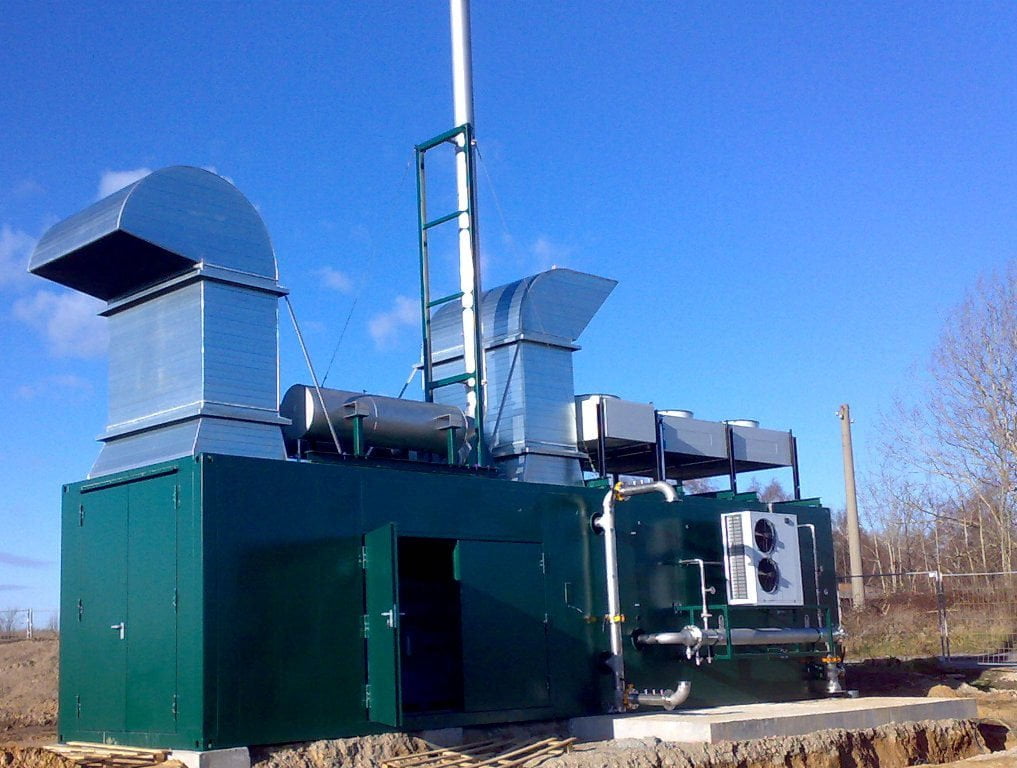
Illustrating our article about Carbon Dioxide to Renewable Natural Gas.


Raw biogas is produced from the anaerobic breakdown of waste from sources like landfills, sewage, and dairy farms. It contains roughly 60 percent methane (the main component of natural gas), and 40 percent carbon dioxide. While current biogas upgrading technology removes the carbon dioxide from biogas, this new technology captures the carbon dioxide and converts it into additional renewable fuel.

The new demonstration shows that improved catalyst activity could speed reactions by five times and nearly double conversion efficiency, making the technology commercially competitive with other new biogas upgrading methods. The core technology was scaled up and tested using commercially available electrolyzer hardware. The next step will be to test this technology for longer periods at an existing biogas facility.

"This cutting-edge method of using renewable electricity to convert carbon dioxide in biogas to renewable natural gas in a single-step process is significant to SoCalGas,"

said Yuri Freedman, SoCalGas' senior director of business development. "

As we work to meet California's ambitious climate goals, emissions-reducing innovations like these will help us protect the environment by providing a reliable carbon-neutral fuel."

"PG&E is deeply committed to meeting California's bold vision for a sustainable energy future in a reliable and cost-effective manner for customers. We continue to work toward advancing innovation that provides new possibilities in our quest to reduce greenhouse gas emissions and find alternative sources of carbon-neutral fuel. We are very proud to be part of this collaboration with Opus 12 and SoCalGas," 

said PG&E's Manager of Innovation and Research and Development, Francois Rongere.

"We achieved significant advances in reaction rate and demonstrated the scalability of our approach by moving from lab scale to commercial-grade components," said Dr. Etosha Cave, Opus 12 co-founder and chief science officer. "We look forward to continuing to work with our partners at SoCalGas and PG&E toward a field demonstration of this technology."

"Our vision for deploying this technology in California is to recycle CO2 emissions from industry and agriculture before they reach the air, and create valuable products such as renewable natural gas and feedstocks for everyday materials, chemicals, and even liquid fuels. They are compatible with existing infrastructure, and when produced with renewable electricity, these products will have significantly lower lifecycle emissions than conventional products."

Opus 12, a clean-energy startup with its origins at Stanford University and the prestigious Cyclotron Road program at Lawrence Berkeley National Lab, has created a new proprietary Polymer Electrolyte Membrane (PEM) electrolyzer that uses electricity to convert water and carbon dioxide into renewable natural gas in one step. The technology differs from those that use microorganisms.

The research is part of SoCalGas' and PG&E's respective development of cutting-edge technologies for storing excess renewable energy. Because gases can be easily stored for long periods of time using existing infrastructure, these technologies have distinct advantages over storing renewable electricity in batteries.

Tuesday, June 23, 2020

US Moving Forward Act Can Boost Biogas Industry in $1.5 Trillion Plan to Rebuild American Infrastructure

As part of the COVID-19 recovery, the US Moving Forward Act has been published amid the welcome news that, if passed by the House of Representatives, the act would at long last, bring the support for the US biogas industry in-line with the sort of tax incentive support which has long been available to some other renewable energy sources.

This would boost the US Biogas Industry as part of the $1.5 trillion plan to Rebuild American Infrastructure after COVID-19.

Read more in the PR published below:

American Biogas Council Press Release 23 June 2020 (Washington):

Moving Forward Act Can Boost Biogas Industry

CC BY-SA by EscoPhotog

The American Biogas Council (ABC) praised the release of the long-awaited infrastructure package by the U.S. House of Representatives entitled, The Moving Forward Act (H.R.2). The $1.5 trillion proposal to rebuild U.S. communities with infrastructure and innovation includes several tax provisions on which the ABC has long labored, to create a more equitable environment where natural market forces can work to build more biogas systems. Because the biogas industry intersects with so many sectors of our economy, when the Moving Forward Act helps boost the biogas industry, it will also surge growth in agriculture, wastewater and municipal recycling infrastructure, access to more renewable energy, and more.

Biogas systems recycle organic material into renewable energy and soil products using a natural microbial process called anaerobic digestion. Currently, the US has 2,000 operational biogas systems, and the potential to build nearly 15,000 new biogas systems. If fully realized, these new biogas systems will directly catalyze at least $45 billion in capital deployment which would result in approximately 374,000 short-term construction jobs to build the new systems and 25,000 permanent jobs to operate them. Indirect impacts along supply chains would be even greater.

“The American Biogas Council (ABC) thanks the House for responding to our requests to create more parity in our tax code. The Moving Forward Act can create an environment where the biogas industry can create billions of dollars of new investments to build new recycling and renewable energy infrastructure and simultaneously protecting our air, water, and soil,”

said Patrick Serfass, Executive Director of the ABC.
“The biogas industry plays one of the most underappreciated roles in the renewable energy industry, creating your choice of non-stop renewable electricity, gas, and/or heat, plus natural soil products from recycled organic waste.”

CC BY-SA by EscoPhotog

In particular, the Moving Forward Act includes three tax provisions of importance to the ABC including the creation of an investment tax credit (ITC) for RNG and heat-based biogas systems; the extension of the Section 45 production tax credit (PTC), and related ITC, for electricity-biogas systems; and the extension of the Alternative Fuel Excise Tax Credit for biogas and renewable natural gas used as a vehicle fuel. Furthermore, the bill also recognizes the volatility caused in tax equity markets by the coronavirus and establishes an elective payment for those entities utilizing the PTC or ITC.

Without the Moving Forward Act, the US tax code only supports a sector of the biogas industry which has rarely benefited from a tax credit extended into the future which would enable developers and investors to build more new projects.

During these times, other renewable and fossil energy technologies have often benefited from long extensions of their tax credits impacting their entire industry and accelerating growth in those sectors while making it difficult for others to obtain financing.

The Moving Forward Act takes a major step towards correcting many of those inequities.

Related resources:
H.R. 2 – The Moving Forward Act: Section by Section | Bill Text | Fact Sheet

The American Biogas Council is the only national trade association representing the entire biogas industry in the U.S. We represent over 200 companies in all parts of the biogas supply chain who are dedicated to maximizing the production and use of biogas from organic waste.

Saturday, June 13, 2020

Renewables Cheaper than Coal New Report Says

Renewable electricity costs have fallen sharply over the past decade, driven by improving technologies, economies of scale, increasingly competitive supply chains, and growing developer experience.

Is coal cheaper than renewable energy? Not anymore (!) "Renewables cheaper than coal" is what a new report says; we are pleased to say. Renewable energy is here to stay. In a big way! Those readers who are hoping to hear that anaerobic digestion has also become cheaper and more competitive with coal are going to be disappointed, we fear. There has been little to no news on that, although the increase in upgraded plants producing biomethane has undoubtedly reduced some upgrading equipment capital costs.

Read on to find out exactly how renewable energy and specifically solar and wind turbines, are on average now cheaper than coal.
This means that there will from now be no economic justification for building new power station capacity. 
This will also give a massive boost to solar and wind energy! 
(It will also help the world achieve Net-Zero 2050, as pledged by the nations of the world at the Paris 2015 Global Accord.)
Renewables Increasingly Beat Even Cheapest Coal Competitors on Cost
02 June 2020| Press Release:

Competitive power generation costs make an investment in renewables highly attractive as countries target economic recovery from COVID-19, new IRENA report finds.

Abu Dhabi, United Arab Emirates, 2 June 2020 — Renewable power is increasingly cheaper than any new electricity capacity based on fossil fuels, a new report by the International Renewable Energy Agency (IRENA) published today finds. "Renewable Power Generation Costs in 2019" shows that more than half of the renewable capacity added in 2019 achieved lower power costs than the cheapest new coal plants.

Renewable Power Generation Projects now Increasingly Undercut Existing Coal-fired Plants

The report highlights that new renewable power generation projects now increasingly undercut existing coal-fired plants. On average, new solar photovoltaic (PV) and onshore wind power cost less than keeping many existing coal plants in operation, and auction results show this trend accelerating – reinforcing the case to phase-out coal entirely. Next year, up to 1 200 gigawatts (GW) of existing coal capacity could cost more to operate than the cost of new utility-scale solar PV, the report shows.

Replacing the costliest 500 GW of coal with solar PV and onshore wind next year would cut power system costs by up to USD 23 billion every year and reduce annual emissions by around 1.8 gigatons (Gt) of carbon dioxide (CO2), equivalent to 5% of total global CO2 emissions in 2019. It would also yield an investment stimulus of USD 940 billion, which is equal to around 1% of global GDP.

An Important Turning Point in the Energy Transition to Renewables

“We have reached an important turning point in the energy transition. The case for new and much of the existing coal power generation, is both environmentally and economically unjustifiable,” said Francesco La Camera, Director-General of IRENA. “Renewable energy is increasingly the cheapest source of new electricity, offering tremendous potential to stimulate the global economy and get people back to work. Renewable investments are stable, cost-effective, and attractive, offering consistent and predictable returns while delivering benefits to the wider economy.

“A global recovery strategy must be a green strategy,” La Camera added. “Renewables offer a way to align short-term policy action with medium and long-term energy and climate goals. Renewables must be the backbone of national efforts to restart economies in the wake of the COVID-19 outbreak. With the right policies in place, falling renewable power costs can shift markets and contribute greatly towards a green recovery.”

Renewable electricity costs have fallen sharply over the past decade, driven by improving technologies, economies of scale, increasingly competitive supply chains, and growing developer experience. Since 2010, utility-scale solar PV power has shown the sharpest cost decline at 82%, followed by concentrating solar power (CSP) at 47%, onshore wind at 39%, and offshore wind at 29%.

Costs for solar and wind power technologies also continued to fall year-on-year. Electricity costs from utility-scale solar PV fell 13% in 2019, reaching a global average of 6.8 cents (USD 0.068) per kilowatt-hour (kWh). Onshore and offshore wind both declined by about 9%, reaching USD 0.053/kWh and USD 0.115/kWh, respectively.

Recent auctions and power purchase agreements (PPAs) show the downward trend continuing for new projects commissioned in 2020 and beyond. Solar PV prices based on competitive procurement could average USD 0.039/kWh for projects commissioned in 2021, down 42% compared to 2019 and more than one-fifth less than the cheapest fossil-fuel competitor namely coal-fired plants. Record-low auction prices for solar PV in Abu Dhabi and Dubai (UAE), Chile, Ethiopia, Mexico, Peru, and Saudi Arabia confirm that values as low as USD 0.03/kWh are already possible.

For the first time, IRENA’s annual report also looks at investment value in relation to falling generation costs. The same amount of money invested in renewable power today produces more new capacity than it would have a decade ago. In 2019, twice as much renewable power generation capacity was commissioned than in 2010 but required only 18% more investment.

Read the full report Renewable Power Generation Costs in 2019

Tuesday, June 09, 2020

Food waste recycler Andigestion achieves prestigious ADCS certification

ADBA Press Release:


Food waste recycler Andigestion’s Holsworthy site in Devon has become only the third plant in the UK to achieve certification under a new scheme which recognises good operational, environmental, and health & safety performance.

Image shows AD Plant for which Andigestion has achieved prestigious ADCS certificationHolsworthy recycles up to 76,000 tonnes of the south west’s household and commercial food waste each year and through its anaerobic digestion (AD) process, produces 70MWh of clean, green, and eco-friendly electricity per day - enough to power 6,000 homes. The by-product of the process – a mineral-rich, liquid biofertiliser – is used by local farmers as a sustainable alternative to carbon-intensive chemical fertilisers.

The plant, near Bude, has now been certified under the Anaerobic Digestion Certification Scheme (ADCS), an industry-led initiative designed to raise standards and recognise good practice in the running of AD plants. The scheme provides an independent audit process and reports that help operators to ensure they are meeting required standards and identify areas for improvement. It is managed by the Anaerobic Digestion and Bioresources Association (ADBA), the UK’s trade body for AD.

“Andigestion has always been ahead of the curve in terms of innovation and processes, and the main driver for applying for ADCS certification is our wish to maintain continual improvement,” commented Tom Brown, Compliance Officer at Andigestion. “Certification goes some way to demonstrating that we are on top of things while the compliance system ensures that any changes to the way we operate are made the right way.”

And Mike Lowe, Operations Director at Andigestion added: “Naturally we’re delighted to be one of just three plants in the whole of the UK to be awarded this certification and I am extremely proud of our on-site compliance team and all members of staff whose high standards of management and professionalism enable us to deliver safe and sustainable practices each and every day.”

Sam Hinton, Technical Support Manager at ADBA said: "We congratulate Andigestion for achieving the ADCS certification, which demonstrates their commitment to operational excellence. They will reap obvious benefits from the recognition - not only improved performance and productivity, whilst adhering to high environmental, health and safety standards, but also confidence from their employees, customers, regulators, insurance companies, and neighbours. We're also delighted that, as the first plant to achieve ADCS certification in 2020, they lead the way in showing other operators how to conduct business during these uncertain times."

In addition to its Holsworthy site, Andigestion also operates the Bishops Cleeve AD plant near Cheltenham, Gloucestershire, which recycles up to 34,000 tonnes of food waste a year and which will also be assessed for ADCS certification.
 Through the production of biomethane gas which is fed into the national grid, Bishops Cleeve contributes enough energy for around 10,000 homes a year.

- ENDS -

Thursday, May 28, 2020

WBA Online Conference Saves Carbon Needing 6,650 Trees to Replace

Conferences are essential for the development of science, but global conferences unavoidably entail an enormous amount of travel and much of that is for high carbon-emitting air-flights. Through necessity, the WBA adapted to coronavirus by running an online eFestival of Biogas. I attended throughout and it was a raging success. The hope now is that post-corona their eFestival will become the most common way to hold such events.

Feature image for article about how a WBA Online Conference Saves Carbon


For once people are saying "life will never be the same after COVID-19", but in a good way, about this. Read-on to find out more. Don't forget to enrol and attend the next one!

WBA Press Release: 

First World Biogas eFestival keeps vibrant international dialogue going whilst making a carbon saving equivalent to planting over 6.5K trees

The World Biogas eFestival, organised last week by the World Biogas Association (WBA) to maintain the international dialogue amid global Covid-19 lockdowns, proved to be a great success with over 300 participants joining the four-day online event from 48 countries around the world.

WBA has estimated that this has prevented a carbon footprint of 402 tonnes CO2e which would have been generated if a physical event had been held. This is the equivalent of planting 6,650 trees, saving emissions from using 930 barrels of oil or removing the annual emissions of 180 cars.

Delegates attended the virtual event from all world continents (bar Antarctica) to hear representatives from United Nations bodies, US Congress, the World Bank, the International Energy Agency, as well as industry leaders, sharing insights into the opportunities and challenges faced by the biogas industry as it grows on a global scale.

Research by the WBA has shown that fully deployed, with the right support from world governments, the biogas industry could reduce global greenhouse gases emissions by 12% by 2030. This equates to the proportion of global emissions generated by the US in 2012. The sector would also create between 11 and 15 million jobs worldwide within that timescale, supporting a green economic recovery.

The content of the eFestival will feed into the WBA’s next report – Pathways to 2030 – which will draw a roadmap towards achieving the 12% objective. The report is scheduled for publication in the Autumn.

WBA President David Newman said: 
“We were delighted with the success of the first World Biogas eFestival. The number and calibre of the people from all over the world who engaged in the discussions demonstrates the appetite there is for biogas to play its part not only in ensuring a green recovery from the global recession caused by the COVID-19 pandemic, but also in securing the long- term response to the climate emergency. The content and expertise we gathered last week will be invaluable as we set the path towards realising our industry’s full potential.
Moreover, the carbon footprint reduction we gained from hosting this event online has showed that it is possible to host truly international events whilst protecting the environment – something that we can be very proud of.”
– ENDS –

Background Information

Launched at COP22 in Marrakesh in 2016, the World Biogas Association is the global trade association for the biogas, landfill gas, and anaerobic digestion (AD) sectors, and is dedicated to facilitating the adoption of biogas globally. It believes that the global adoption of biogas technologies is a multi-faceted opportunity to produce clean, renewable energy while resolving global issues related to development, public health, and economic growth. 
www.worldbiogasassociation.org @wbatweets
The industry’s ability to achieve 12% GHG emissions reduction by 2030 was established in the WBA’s Global Potential of Biogas report – highlighting the potential of AD as a technology to generate renewable energy, abate GHG emissions and recover organic nutrients and carbon for use on soil. The report also sets out the potential of AD to help meet the climate change targets under the Paris Agreement.

The carbon footprint saved by the eFestival was calculated as follows:

  • Emissions from theoretical international and domestic flights were estimated using BEIS (2019) conversion factors for average emissions (kgCO2e) per km of travel for an average passenger on either short- or long-haul flights.
  • For international travel, analysis was based on air travel and the distances between countries’ central points (e.g. centre of Australia to centre of UK, where a physical event would have been held). The analysis assumes that each attendee flies directly both to and from the UK. Distances were classified as short-haul for less than 2,750km and as long-haul for distances over than 2,750km, in line with the conversion factors’ methodology.
  • For domestic travel within the UK, the analysis was based on distances from countries’ central points to the Birmingham NEC. Again, BEIS (2019) conversion factors were used to estimate emissions (kgCO2e) per km of travel via theoretical car-travel to and from England, Scotland and Wales and domestic flights to and from Northern Ireland.
  • The estimated 11-15 million permanent jobs created by the biogas sector is based on direct and indirect jobs created per MW installed capacity, as estimated by NNFCC in their report “UK jobs in the bioenergy sector” (2013). The range of values represents the extent to which power-to-gas is integrated with AD plants to upgrade biogas to biomethane.
  • Countries represented at the World Biogas eFestival were:
Argentina, Australia, Austria, Belgium, Brazil, Canada, China, Columbia, Denmark, Dominican Republic, Ecuador, England, Finland, France, Germany, Ghana, India, Indonesia, Ireland, Israel, Italy, Japan, Kenya, Malaysia, Mexico, Morocco, Netherlands, Nigeria, Northern Ireland, Norway, Oman, Pakistan, the Philippines, Poland, Portugal, Russia, Saudi Arabia, Scotland, Singapore, South Africa, Spain, Surinam, Sweden, Switzerland, Thailand, the United States of America, Uruguay, Wales.

Saturday, May 09, 2020

Landia Pumps for Anaerobic Digestion and Biogas COVID-19 Silver Lining

Landia pumps for anaerobic digestion and biogas – ensuring global reach with online meetings
Landia’s Thorkild Maagaard – ensuring global reach with online meetings
The manufacturer Landia Pumps which produces high-quality pumps for Anaerobic Digestion and Biogas Plant use, and all slurry and solid/ liquid mixture pumping and mixing applications, has discovered a COVID-19 silver lining. 

As so far there have been precious few of those we decided to post that fact here, as in the following Press Release:

Press Release: 9 May 2020:


Three Continents on the Same Day

Landia keep pumping with Online Meetings

With global business travel looking so uncertain for the foreseeable future, a leading pump and mixer manufacturer says it is seeing considerable time and cost-savings with online meetings.

Landia, which is celebrating the 70th year of its inventing the chopper pump reports that it has been pleasantly surprised by the efficiency of online meetings and the number of positive outcomes.

Thorkild Maagaard, Landia’s Export Sales Director, commented:

“All of us want to get back to interacting with people, but in the meantime, we have no choice. For example, during the lockdown - via our Indian customer KIS Group, we have won a significant order to supply a digester mixing system for a municipal solid waste project in Nepal”.
He added: 
“Importantly, on-site commissioning will be online, so without all the usual costs and time, including long-haul flights, this is very much in keeping with an industry that wants to protect resources for a better and cleaner world”.

Maagaard also pointed to recent successful online presentations between Landia in Denmark and potential customers in Brazil, which prior to the Coronavirus lockdown would have meant a week away from the office.
“Now we can have meetings on three continents on the same day for a mere fraction of the cost”,
he continued.
“Of course, we can’t achieve everything online, but even though we are a solutions provider who doesn’t just sell pumps off the shelf, we are certainly seeing a new way of working. Realistically, it is going to take a very long time for travel and traditional meetings to be possible without numerous obstacles to overcome – yet even when that does

happen, online meetings can continue to provide a very cost-effective and efficient alternative – more than ever before”.

www.landiaworld.com
ends

Saturday, April 25, 2020

Surplus Organic Waste Generated by UK Covid-19 Lockdown - ADBA and REA Joint Survey Launched


Landfill Odour rises meme to show effect of COIVID-19 on UK landfill odour.


ADBA PRESS RELEASE 24 April 2020:

ADBA and REA launch joint survey to treat surplus organic waste generated by Covid-19 lockdown

  • The Environment Agency and devolved nations’ regulators have expressed concern over the issue of organic waste surpluses created by the Covid-19 lockdown.
  • In response, the Anaerobic Digestion and Bioresources Association (ADBA) and the REA have launched a survey to identify spare capacity across the UK AD industry for this additional feedstock to be treated.
  • Through this survey ADBA and REA will match organic waste producers with the nearest suitable AD operators for their surplus to be treated.
  • Operators are urged to complete the survey to support those efforts.
In response to the increase in organic waste surpluses caused by the Covid-19 lockdown, ADBA and the REA have launched a joint survey that will match organic waste producers to their nearest AD operators.

A consequence of the lockdown has been the large amount of additional organic wastes generated by the closure of markets for food and drink producers such as farms, fisheries and breweries.  To address this situation, regulators in England, Scotland and Wales have contacted ADBA and the REA to assess the AD industry’s capacity to take on this surplus waste for recycling into green energy and biofertilisers.

The UK-wide survey will help identify suitable AD plants for the various feedstock types. It also aims to assist Defra, the regulators and industries that generate biodegradable waste in identifying the overall spare capacity available to treat feedstock and prioritise recycling  through AD; favouring it over other types of disposal lower down the waste hierarchy, such as energy recovery, incineration and the most environmentally harmful option, landfill.

ADBA and the REA will use the information from the survey to match suitable AD operators with the farmers and other food/drinks supply chain organisations that have surplus that needs to be recycled. This aims to ensure that organic waste is correctly treated and that AD operators have more opportunities to source feedstock throughout lockdown measures.

Charlotte Morton, Chief Executive of ADBA, said:
"In these extraordinary times, everyone must pull together to address the difficulties caused by the Covid-19 lockdown. This survey of AD's spare capacity to treat various types of organic wastes shows how our industry can proactively play its part in supporting farmers and food and drinks producers with their surplus feedstock. Most importantly, it delivers a solution that not only tackles the current waste surplus crisis, but also, by recycling organic wastes into biogas for power, heat and transport as well as biofertilisers for agriculture, sustains the economy and establishes a building block towards a green recovery from the Covid-19 pandemic.  We are proud to deliver such a valuable service to society and urge all AD operators to complete the survey so that our industry's potential to help is fully assessed and realised, now and in the future."
Dr Nina Skorupska CBE FEI, Chief Executive of the REA, commented:
“It is our role as associations to ensure that our members and the wider industry can operate as normally as possible through these unprecedented times. With lockdown measures resulting in a drop in feedstock supplies in AD plants, this survey is a valuable tool that will not only aid the AD operators business continuity but prevent surplus waste from being disposed of in an inefficient and environmentally unfriendly manner.”

- ENDS -

Wednesday, April 22, 2020

Borger’s Waste Salmon Crush for Isle of Lewis Biogas

Press Release 22 March 2020;

A Multicrusher made by Borger is playing a key role in the continuing success of an award-winning waste-to-energy operation in the Outer Hebrides, Scotland.

Borger's Multicrusher is illustrated here.


At Stornoway’s Creed Integrated Waste Management Facility (IWMF) on the Isle of Lewis, the Borger Multicrusher consistently chops a 7-cubic ton batch per shift of coarse waste salmon. This has enabled the facility to integrate the fish with household food waste and garden waste for its AD/ biogas process.

Food Waste Management for Compliance with EU Standards


Guaranteeing the shred of waste salmon to meet BSI PAS 110 regulations – the Borger Multicrusher.


Crucially guaranteeing the shred of waste salmon to meet BSI PAS 110 regulations AND EU ABP regulation 1774/2002 [5a] for the safe use of digestate as a renewable fertiliser, the Borger Multicrusher cuts the waste to the required maximum particle size of 12mm.


This vital cog in the process has helped Comhairle nan Eilean Siar (the Local Authority for the Western Isles), together with its partners, The Scottish Salmon Company, Pure Energy Centre PEC, and Community Energy Scotland, win the prestigious Scottish Environment Business VIBES award.


Donnie Macmillan, Plant Manager at the Creed facility, said:
“Borger’s Multicrusher works extremely well for us in a very harsh environment. Some salmon waste can be quite tough and abrasive, so understandably we see wear on the cutters during our inspections, but that’s perfectly understandable”.
He added:
“Importantly, the Borger unit helps us meet all of our PAS 110 requirements, which is all part of what we set out to achieve here – optimising the methods of managing waste. In this case optimisation is achieved through not sending waste salmon to landfill sites, and not having to have it transported off the island”.
Based on the proven design of the Borger Rotary Lobe Pump, the twin-shaft Multicrusher homogenizes the waste salmon to facilitate the pumping and pasteurisation process at Creed, ensuring that downstream equipment can operate smoothly.

By inserting individual blade disks and defining the direction of rotation of the shafts, operators have the flexibility to choose which way the pumped medium flows. Various blade widths and cutting profiles determine the final cutting yield.
David Brown, Borger UK’s Managing Director, commented:

“We are very proud to play our part at Creed. It rightly deserves all the praise it gets for showing what can be done to protect the environment and reduce carbon footprint with good practice, forward-thinking and hard work”.

Biogas Production, CHP, Optimised Use of Renewable Electric Power, Thermal Storage and Hydrogen Technology

Also in Use at Creed Managing waste from the island’s population of approximately 22,000, the Creed IWMF has grown steadily to include a combined heat and power plant (CHP), electric boiler and thermal store, a wind turbine and a hydrogen system comprising electrolyser, storage and refuelling station, and a 960m3 AD/biogas plant.


Some of the electricity generated by the CHP is used to produce hydrogen and oxygen. This is captured, compressed and delivered to the salmon hatchery, where oxygenation is essential.

Hydrogen is used in a small fuel cell to provide electricity to the remote site, which sometimes suffers from electrical network failures. Previously, back-ups were provided by ageing diesel generators, meaning higher CO2 emissions and delivery costs. The hydrogen system at Creed also includes a refuelling station, where some of the hydrogen is used to refill a dual-fuel Refuse Collection Vehicle (RCV) operating on hydrogen/diesel.
Find out more at Borger.

Tuesday, March 24, 2020

Why US Truck Drivers Like Buying Natural Gas Clean Energy Fuels


Renewable Natural Gas (RNG) use is growing for HGVs in the US and much of the credit for that can be attributed to a company known as “Clean Energy Fuels” (Clean Energy®).

Largest provider of natural gas fuel for transportation in North America.
Clean Energy® is a company with a very clear mission. That mission is quite simply to change the way the world fuels its vehicles. Reducing pollution from the transportation industry is an important goal for our the US nation, and at Clean Energy they know just how realistic and attainable that goal is with natural gas fuel.

Quoting from their website:

“Moving forward in our thinking as well as in our vehicles means a safer, healthier planet for all of us. This change is happening. Natural gas is abundant and economically viable and is increasingly being adopted as transportation fuel by countries around the world.”

Clean Energy® Natural Gas is available at all Clean Energy public and private fueling stations throughout North America. Natural gas is naturally abundant across North America and is a cleaner, less expensive alternative to gasoline and diesel. Clean Energy Natural Gas is available in:
  • CNG (Compressed Natural Gas),
  • LNG (Liquified Natural Gas) and 
  • Redeem® renewable natural gas (RNG). 

Clean Energy
is currently selling Redeem at stations for the same price as conventional natural gas.
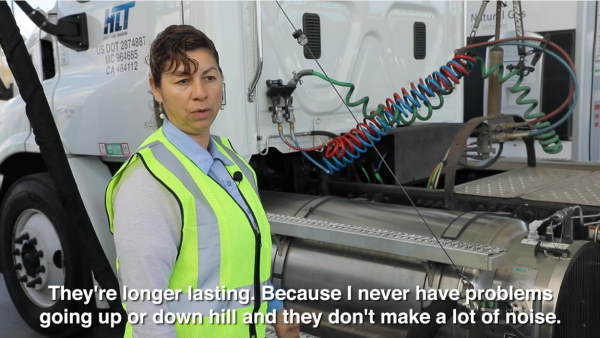
Renewable natural gas driver says RNG fueled HGV Trucks last longer.


Redeem® is described as the world’s first renewable fuel made entirely from organic waste for use in commercial vehicles. Redeem® is a biomethane fuel which is cost-efficient, and available in North America and up to 70% cleaner than gasoline and diesel, making it a smart choice for natural gas vehicle fleets including heavy-duty trucks.


Clean Energy® has seen what must surely be a golden opportunity to reduce the environmental impact of vehicle fuel use in a wonderfully pragmatic way. 

Conclusion


Thanks to the efforts of six progressive harbor trucking firms that are demonstrating with today’s near-zero emission natural gas trucks, that the US can slash transportation emissions immediately and cost effectively.

The result has been that:

Clean Energy is the largest provider of natural gas fuel for transportation in North America, fueling over 46,000 vehicles each day at over 530 fueling stations throughout the United States and Canada.

Saturday, March 07, 2020

How Assisting Biomethane Could Cut 1/3 Off Hardest to Cut C02 Emissions

Wondering how to cut carbon emissions? New report says that assisting UK biomethane production could cut 1/3 off the carbon emission from the hardest to decarbonise sectors. Hopefully the UK, and other governments, are currently thinking hard on how to cut it!

The new report says that assisting biomethane production could cut just under 1/3 of the UK's 2030 carbon target if used in the toughest sectors.

Some people have been dismissing the use of anaerobic digestion recently, as having any role at all in reducing the global carbon emissions blamed for causing rising temperatures.

They point to the rapid introduction of wind energy, and solar, and allude to biogas as being high-cost.

They just don't get it...

At some level, possibly even subconsciously, they connect biogas with "waste" and smells that they find distasteful.

Politicians think of badly implemented government subsidies which have either been over generous and hence over subscribed, or frankly not been thought through properly in the first place.

That's unfair!

These attitudes need reconsidering.

It jeopardizes the ability to comply with net Zero 2030 targets toward 2025 Net Zero.

And, it is now urgent that they are, in this time of unheard of intensities of forest fires, drought and flooding.

The anaerobic digestion and biogas industry does not seek hand-outs. It seeks recognition for what it can do. Plus, a level playing field to further develop tried-and-tested technologies to save carbon emissions in the most difficult to decarbonise sectors (such as heavy goods transport, and heating homes and business via the gas grid) where:
  • few opportunities exist to reduce carbon emissions using currently available technologies
  • quite apart from the carbon reducing opportunity, the wholesale introduction of biomethane can also bring enormous additional benefits (e. g. in jobs, air quality improvement, and reducing other emissions such as polluting forms of nitrogen).
Biogas as biomethane is NOT promoted any longer as a competitor with wind and solar. No longer does the biogas industry seek to be promoted for electricity generation in competition with lower cost technologies (although many contest that they are cheaper overall).

It's how to cut carbon emissions with "The no regrets option for the hardest to decarbonise sectors".

Read on and find out where biogas (biomethane) has a unique role in the Press Release which follows:

ADBA Press Release (3 March 2020):

Biomethane could deliver 30% of the UK’s 2030 carbon budget in hardest to decarbonise sectors, provide green heat to 6.4 million homes and create 30,000 jobs by 2030, says report

  • With a supportive policy environment, anaerobic digestion (AD) technology could produce 8 billion m3 biomethane/year, enough to heat 6.4 million homes, by 2030.
  • This would deliver a 6% reduction in total UK greenhouse gases emissions, specifically within the hard-to-decarbonise sectors of heat, transport, waste management and agriculture, and 30% of the reduction needed by 2030 to meet our legally binding carbon budget.
  • The industry would directly create 30,000 green jobs and become a leading exporter of innovation, technology and professional expertise.
  • The report sets out the pathway to full deployment by 2030 and identifies policy asks to stimulate growth.
Artists impression of assisting biomethane to cut carbon emissions.
Alan Whitehead MP today hosted the launch of Biomethane: the pathway to 2030, a major report by the Anaerobic Digestion and Bioresources Association (ADBA), which highlights the potential for biomethane to cut emissions in the hardest to decarbonise sectors of the UK economy such as heat, transport, waste management and agriculture, and achieve the country’s Net Zero target.
Fully deployed, the biomethane industry could deliver a 6% reduction in the UK's greenhouse gas emissions by 2030 - a third of the 5th Carbon Budget target - and provide heating for 6.4 million homes.  It would also create tens of thousands of jobs, boost energy and food production security, attract investment into the green economy and enhance Britain's competitiveness on the international sustainable technology market. vision of "How to cut carbon emissions with Anaerobic Digestion in 2030.

Unlocking this potential however requires a supportive policy environment and the report identifies the key policy asks that will enable the industry to flourish:
  • immediate support for biomethane production beyond 2021
  • extension of the Renewable Transport Fuel Obligation beyond 2032
  • funding for innovation
  • establishment of resource hierarchies for all organic wastes with AD as the optimal recycling technology
  • development of a renewable biofertiliser obligation
  • support for local circular economy projects around food waste recycling through AD into heat and power generation
Charlotte Morton, ADBA Chief Executive, said:
"Our sector has seen periods of very strong growth in the last decade as a direct result of supportive policy, but this has stalled in recent years due to the withdrawal of support.  The next ten years, dubbed the climate decade, are our last chance to reverse the climate crisis. To reach its full potential by 2030 and make a real impact, the industry must grow faster than it has ever done.  We therefore need robust and immediate support from government to capitalize on the sector's wide-ranging environmental and social benefits, and to unlock a commercially viable, world-class AD industry with goods, services and expertise that can be exported around the world.  In the face of the climate emergency, AD is not an option, it's a necessity, and a technology that needs to be fully deployed NOW to create the healthy environment and healthy green economy that the UK needs."
The report has been sponsored by Air Liquide, Privilege Finance and SNG.

Industry Comments on How to Cut Carbon Emissions the ADBA Way

Chris Winward, Chief Commercial Officer at Privilege Finance, commented:
"Now is the time for us to ensure policy makers understand the potential for energy from waste technologies to contribute towards achieving net zero and the creation of a more circular economy. Sending waste to landfill that could be used for energy production needs to be seen as socially unacceptable. Existing anaerobic digestion technologies offer a solution to both the problem of producing materials that ultimately end up in landfill, and the need to decarbonise our energy system.”
An alternative vision of "cutting carbon emissions without Anaerobic Digestion in 2030! (As used on the ADBDA report cover.)[/caption]
John Morea, CEO of SNG, said:
“The injection of further biomethane into the gas network is key to decarbonise heating through the 2020s and involves no disruptive changes for customers. We hope this report will raise the profile of the potential for biomethane to deliver a third of the carbon savings necessary to meet the UK’s legally binding fifth carbon budget and allow for the necessary policies to be introduced from when the Renewable Heat Incentive ends in March 2021.”
David Smith, Chief Executive of Energy Networks Association, said:
“We welcome this report that clearly shows the benefits of biomethane and anaerobic digestion which must play a critical role in helping us get to net zero. They are good for the environment, good for the economy and good for the public who will benefit from a low carbon, low cost energy system. In the run-up to COP 26 this year, what we now need is a commitment to roll-out the world’s first zero-carbon gas grid.”
ADBA Press Release Ends

Saturday, February 29, 2020

Major Emissions Reductions by 2030 Pledged by WBA in Talks as their Climate Change Commitment

The WBA is in Talks on their Climate Change Commitment to major emissions reductions by 2030. At last! We have been saving for more than 10 years that it's about time real plans were made to reduce the impact of global warming, and all the time carbon emissions have in fact been escalating year on year.
At last the WBA and the biogas industry are in talks to how vague promises can be translated in real action to make a difference.

We are pleased to publish below the WBA's latest Press Release which explains how this is happening:

World Biogas Association meets with UNFCCC in Bonn to discuss the industry's Biogas and Climate Change Commitment Declaration to deliver major emissions reductions by 2030

  • Declaration sets out ambition to reduce global greenhouse gases emissions by 12% by 2030
  • Meeting discusses how to gain world governments' commitment to unlock this potential
  • WBA representatives arrive on board a biomethane-powered car.
Bonn - 18 February 2020 - David Newman, President, and Charlotte Morton, Chief Executive of the World Biogas Association (WBA) , today met with H.E. Ovais Sarmad, Deputy Executive Secretary, UN Climate Change - the secretariat for the United Nations Framework Convention on Climate Change (UNFCCC) - to discuss the implementation of the Biogas and Climate Change Commitment Declaration that was presented to Mr Sarmad at COP25 in Madrid in December.


Signed by WBA and major biogas stakeholders from 11 countries, the Declaration sets out the ambition for the industry to deliver 12% reduction in global greenhouse gases (GHG) emissions by 2030, subject to world governments' removing current barriers to growth and investing fully in the technology as part of their contribution to meeting their Paris Agreement commitment. The 12% potential equates to the total US GHG emissions in 2012 or that of the EU in 2017.

David and Charlotte arrived at the UNFCCC offices in Bonn on board a biomethane/Bio-CNG-powered Audi Q5, accompanied by Harmen Dekker of DMT Environmental Technology, a biogas solutions provider and member of the WBA Advisory Board, who supplied the car. They were greeted by Niclas Svenningsen, Manager, Global Climate Action, UN Climate Change, who had called for all Paris Agreement signatories to include biogas in their Nationally Determined Contributions at the World Biogas Summit last July, and who also joined the meeting.

WHO leaders beside a biomethane powered car at climate change reduction talks in Bonn.

David said: "We are greatly encouraged by the progress made since Niclas' speech at the Summit only 7 months ago. The global biogas industry is determined to play its part in addressing the climate emergency.

However, delivering on its huge potential requires the political will from all world nations to move away from fossil fuel subsidies and invest in this mature, readily available technology that can not only significantly mitigate the climate crisis, but also form a cornerstone of global sustainable development.

Research has shown that our industry can help meet nine of the 17 UN Sustainable Development Goals. Gaining the support of UNFCCC in raising awareness and securing commitment from world governments is a major milestone towards achieving our 12% GHG emissions reduction goal. 2020 has been declared the Year of Action and we must act, now."

Talking about the biomethane car that brought the delegation to Bonn, Harmen Dekker said: "This retrofitted Audi Q5 is a great example of the positive impact that the car manufacturing industry can immediately have in decarbonising transport. The technology to adapt diesel and petrol cars to biomethane/Bio CNG is available, and DMT has some very successful example projects done already.

The biogas sector is ready to generate the biomethane needed to power them. What is urgently required to deploy this technology fully is direct support from policy makers and investors for the best well-to-wheel solutions and for biomethane".

- PR ENDS -

Sunday, January 19, 2020

Anaerobic Digestion vs Landfill Which is Best

Assessing the advantages of anaerobic digestion vs landfill as a means of disposing organic waste is an important step.

Businesses need to know for sure that if they move from landfill to anaerobic digestion as the means of disposal of their waste there are not known issues which may prove a risk to the reputation of their organisation.

Image illustrates an AD plant illustrating the article on Anaerobic digestion vs Landfill
Members of the public who spend a lot of their time each day separating their kitchen waste, putting it in a caddie and leaving their scraps out for their council's kerbside collection, also need to know that their efforts are worthwhile.

If you are one of those, read-on because we are about to answer your question! If not, and your motive for seeking this article out is other than mentioned above, keep reading as well! The answer is most likely, also here.

Anaerobic Digestion vs Landfill for Waste Disposal

The starting point for the comparison of Anaerobic Digestion vs Landfill is the assumption that an individual/ organisation has organic waste (biological waste or waste biomass) which needs to be disposed of responsibly. Many people simply wish to "get rid of" their waste as cheaply as possible, but by asking this question, it implies that the enquirer accepts that they have a social responsibility to use the best method.

In this article our assumption is that the "best" method of waste disposal (getting rubbish taken away and out of sight) also includes doing it in a sustainable way from the point of view of avoiding as far as possible:

  • causing a risk of environmental harm to the local environment, and
  • minimising carbon emissions in the light of climate change as witnessed by rising temperatures and extreme weather conditions (as occurred in 2019 and to a lesser extent in the preceding years).

Now, let's consider both anaerobic digestion and landfill as waste disposal methods separately.

Having clarified both as waste management techniques we will provide our comparison of these two very different methods, and give our opinion on which is "best".

First, it is necessary to understand the basics of the anaerobic digestion process:

What Happens to Waste During Anaerobic Digestion

Organic waste which can range from inedible food (food waste) to cow manure, out-of-specification food crops to chicken feathers, can all be suitable for disposal by fermentation in the anaerobic digestion (AD) process. The AD process is simply controlled "rotting" (decomposition) without air.

This incidentally also produces an energy output in the from of "biogas". The biogas is sold for profit, or used to make electricity which when not needed to power the plant, is also sold.

This provides a very important environmental benefit because biogas is a renewable energy source. In fact, a well-run AD facility can be a net-negative carbon emitter, putting back carbon into the soil each year where it will stay, and replacing fossil fuel use. In other words, anaerobic digestion can ultimately help reverse greenhouse gas emissions.

Disposal of the waste is also achieved during anaerobic digestion. Some of the waste mass (carbon and hydrogen (CH4) is converted to methane during the process. This is called "mass destruction" in the waste industry. What remains is converted to simpler substances after the cell walls of plant matter are ruptured.

These simpler (shorter chain molecules) are the building blocks of biology. Unsurprisingly, they can be used as a natural fertiliser (subject to human health safety controls) and soil improver.

In addition to liquid fertiliser, anaerobic digestion process output (digestate) occurs in the form of a solid phase. The digester output of solids comprises fibres, husks etc., and a small proportion of inert material, plus unwanted contaminants such as plastic materials.

Subject to compliance with regulatory removal of unwanted contaminants, and public health related regulatory compliance, the ultimate destination (disposal point) for anaerobic digestion residues is onto land for a beneficial use (e.g. a fertiliser). When this is coupled with an agricultural spreading plan to avoid build-up of certain chemicals, this form of disposal can continue for an indefinite period on the same land. Thus waste disposal via anaerobic digestion is classed as a long-term sustainable form of waste disposal.

Recycling takes place on two levels during anaerobic digestion. The production of biogas which recycles energy as the first level. The remaining liquid and fibre output (digestate) recycles the fertilising materials which new crops need to grow healthily.

What Happens to Waste When Placed in a Landfill

Tequask [CC BY-SA]
Modern landfills are designed to be lined and capped and to subject the environment to the minimum actual harm, and risk of harm through pollution of their surroundings, as possible.

Waste is usually pre-sorted for recyclable materials before it is dumped in a landfill and the organic content may be removed, but this is rare. In general, only the valuable materials in solid waste, such as metals (e.g. iron, copper, tin etc), paper, and glass are removed before tipping in a landfill.

Paradoxically, this practise also creates conditions in the waste where uncontrolled anaerobic digestion occurs, producing landfill gas (a biogas - but not so clean as AD plant biogas). The biogas can, and usually is collected and used. But the proportion of the biogas collected over the long lifetime in which an old landfill produces biogas, is seldom above 60%.

The nutrients that remain, far from being usable as a fertiliser contain many contaminants which for a well-controlled landfill may not be inherently toxic in themselves are at very high strengths. The high strength "leachate" results in a highly toxic effect should the ever be a leak.

Of course, there will be leaks to all landfill membrane containment systems. Nothing lasts forever, and even if the materials used to hold the leachate inside didn't deteriorate geological changes will occur. Through erosion, earthquakes, and other effects the earth's crust never stops being modified.

So, those are the fates of waste materials when subjected to the anaerobic digestion process, and for all rubbish 'disposed" to landfill.

A comparison of Anaerobic Digestion vs Landfill

The important differences between anaerobic digestion and landfill follow:

1. "Treatment" versus "Hiding Out of Sight"

Anaerobic digestion treats waste. It converts the waste into a form which can be used again. It is a form of recycling in which the original chemicals in plant matter (organic chemicals as well as mineral-based compounds) are decomposed and become available to provide for re-growth of a next generation of plants.

Landfill, while a form of slow anaerobic digestion does occur within them, is mostly a form of entombment. The trash is effectively hidden under a restored surface such as grassland or a park. Where it works well, our old possessions may well still be there for future archaeologists to dig-up in 2,000 or even 3,000 years time.

Where landfill doesn't work well, the linings will cease to contain the leachate, and the landfill gas will escape. The leachate will contaminate the subterranean water and render wells undrinkable for future generations. The gas will cause a risk of explosions as it escapes, and when it gets into the atmosphere continue to cause even further global warming than current predictions allow for.

2. The Need for Ever More Space for Landfills

The anaerobic digestion process needs no more space than the footprint of the tanks and equipment, plus short-term storage bays for the incoming waste. There is no additional land needed no matter how long the biogas facility will continue to operate.

Landfill constantly fills up huge void spaces. Land area is finite, and suitable land for landfilling only a small proportion of all available land. As cities become larger and are intensively developed waste has to be transported ever further out to where new landfill space can be created. Costs rise while this is possible, but in some countries they are already unable to find suitable land for new landfills.

3. The Need for Ever More Resources to Replace Materials Placed in Landfills

Anaerobic digestion is a mainly resource neutral process, and is based upon recycling the same mineral and organic resources time and again with no end-point.

The consequence of landfilling is the need to constantly replenish the materials placed in them, with new materials constantly to be won from the ground quarries multiply. But mineral resources are finite. They become progressively harder to find, and need more energy to extract the lower grade minerals.

Just as far the landfills themselves the available land will inevitably run out.

Anaerobic Digestion vs Landfill - The Verdict

Anaerobic digestion technology is not yet fully developed and far from perfect as a recycling method. It is in general more expensive than the average cost globally of landfilling, especially if landfill taxation is allowed for. There are limitations on for how long individual fields can be fertilised from digestate in any period of time, before it is necessary to move on. Care is needed to prevent air pollution during spreading, and there are health risks if basic safeguards are not applied.

Nevertheless, in the long-term the anaerobic digestion method is one which shows no reason why it should not be applied for thousands of years. It needs no energy to fuel it as it is easily capable of providing its own power and much more besides. Environmental damage from anaerobic digestion is limited to such errors as digester tank leakage, or an explosion of the stored methane. Such damage can be severe at the time and costly. However, costs for AD plant repair would generally be in the range $100k to $2million.

In comparison, landfill cannot be sustained for long, and in some of the largest and oldest urban nations it is already not a viable option for reasons already described, such as space and land availability. It requires a lot of fuel to develop and fill landfills, much of the biogas if used only pays back on the embedded carbon emissions from its construction. What landfilling has been completed also provides a future threat to the local environment which can be very costly for future generations. Clean up costs for landfills range from $500k to $billions, as has occurred already in the United States (Clean-Up Superfund).

Therefore, on the grounds of sustainability and risk of future environmental damage anaerobic digestion is best.

On the grounds of reputation risk to businesses deciding to change their organic (biological) waste disposal from landfill to an AD plant, each will make their own decisions. Individual biogas plants will inevitably fail, but in principal the risk of that is offset by awarding the contract to a well-established and well-run biogas organisation.

Friday, December 27, 2019

Cow Dung and Anaerobic Digestion

Cow Dung and Anaerobic Digestion


To get biogas, farmers are creating their own, by using cow dung and building a bio-digester. 
The end products are also a good source of fertilizer for crops. Making their own biogas saves hundreds of US$ per year in fuel costs for fuel that is used to run small water pumps.

Introduction

A biogas digester plant relies on bacterial decomposition of biomass, waste material which is biological in origin, ranging from kitchen scraps to cow dung. 
As anyone who has walked past a poorly maintained outhouse or compost pile is aware, when anaerobic conditions develop in a collection of biomass, they attract bacterial organisms which emit a number of distinctive gases.
These are most notably methane, which is produced in the process of digestion. These gases are usually viewed as a symptom of inefficiency and they are vented away for disposal, but they can actually be very useful.

Why is Cow Dung Often Used to Start Up Biogas Digesters?

Most biogas digesters use cow dung to produce biogas. There are many other organic materials as mentioned above that can be used to produce biogas. Like left over food scraps, vegetation etc.
For this reason, cow dung is commonly used to start the process of biogas production. You can change the organic material to be used to produce biogas after the production has been kicked off by cow dung.

How Much Biogas is Produced?

A one-cubic-meter digester, primed with cow dung to provide bacteria, can convert the waste generated by a four-person family into enough gas to cook all its meals and provide sludge for fertilizer. 
A model this size costs about $425 but many testimonials suggest that such a facility will pay for itself in energy savings in less than two years. 
Admittedly, that's still a high price for most Indians, even though the government recently agreed to subsidize about a third of the cost for these family-sized units.
For the equipment to produce gas, the digester is filled halfway with bio-degradable materials, like cow dung mixed with water in equal ratio. It is then refilled with smaller amount every day, or at intervals no longer than to 2 weeks. The equipment can start producing gas after seven days.

Gober Gas

Gober gas (also spelled gobar gas, from the Urdu, Punjabi and Hindi word gober for cow dung) is biogas generated from cow dung. 
A gober gas plant is an airtight circular pit made of concrete with a pipe connection. First, manure is dumped in the pit. Then, water or wastewater is added to the manure and the concoction is sealed in the airtight concrete pit with a gas pipe leading to stove unit in the kitchen serving as the only egress for gas. When the control valve on the gas pipe is opened the biogas is combusted for cooking in a largely odourless and smokeless manner.
Cow Dung graphics and explanation.

The image above shows the fixed dome digester design often used for cow dung, chicken manure and human excreta. 

Fixed Dome Digesters

Fixed dome plants were chosen because they can last for over fifty years and they are easily insulated and scum fosrmation is less due to the digester slurry that is displaced (pushed out) by incoming feed (influent). 
A fixed dome digester is an underground biogas digester lined with brick, with a dome-shaped cover made from concrete. The cover is fixed and held in place with earth piled over the top to resist the pressure of the gas inside. A second pit, the slurry reservoir, is built above and to the side of the digester.

Final  Size of the Biogas Plant

The size of the biogas plant is to be decided based on availability of raw material. It is generally said that, average cattle yield is about 10 kg dung per day. For eg. the average gas production from dung may be taken as 40 lit/kg. of fresh dung. The total dung required for production of 3 m3 biogas is 3/0.04= 75 kgs. Hence, a minimum of 4 cattle is required to generate the required quantity of cow dung.
A one-cubic-meter digester, primed with cow dung to provide bacteria, can convert the waste generated by a four-person family into enough gas to cook all its meals and provide sludge for fertilizer. A model this size costs about $425 but will pay for itself in energy savings in less than two years. That's still a high price for most Indians, even though the government recently agreed to subsidize about a third of the cost for these family-sized units.